

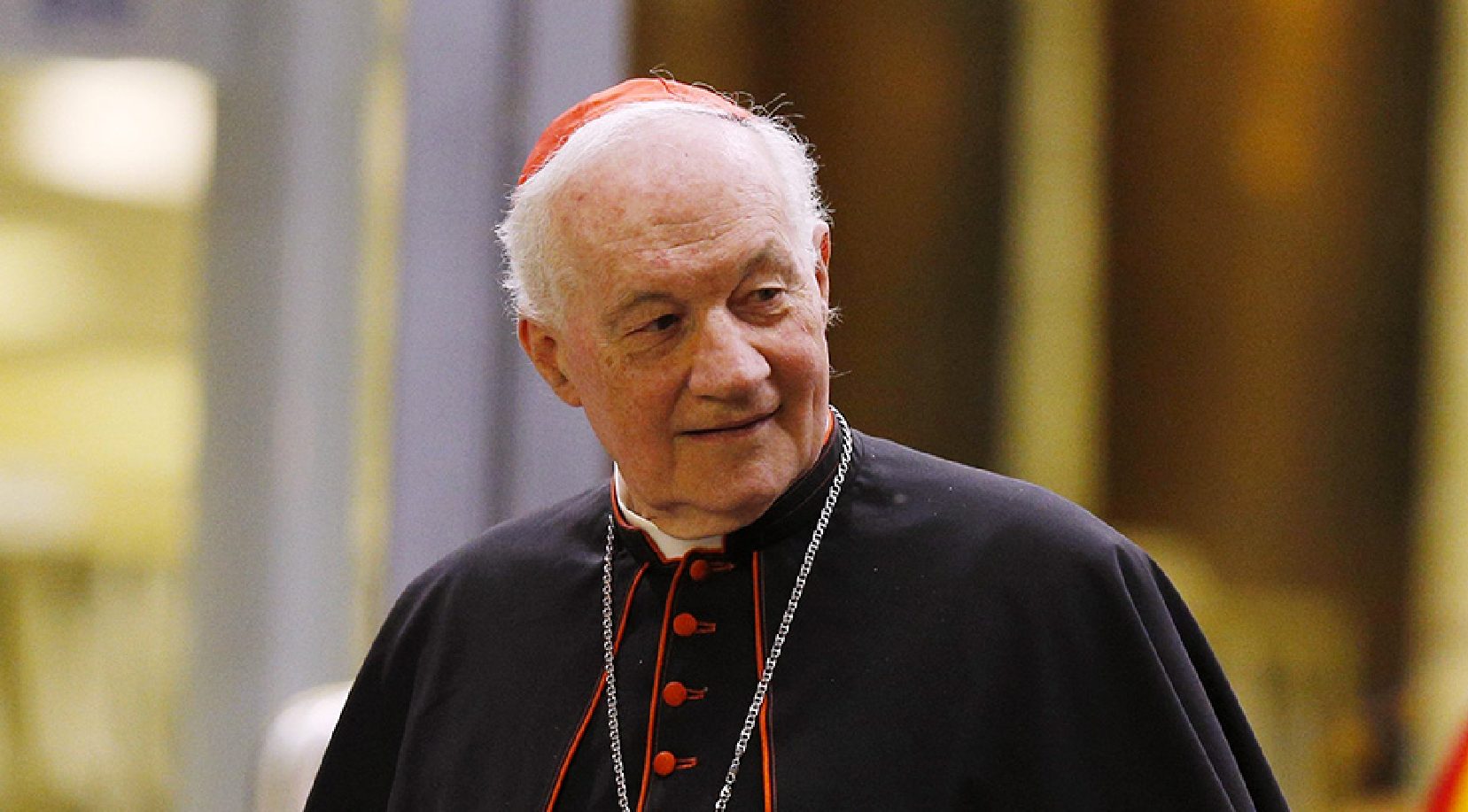
(ZENIT News / Montreal, 03.18.2026).- In Montreal this March, Cardinal Marc Ouellet appeared in Quebec Superior Court to defend himself against allegations of sexual misconduct, as part of a broader defamation lawsuit he filed against his accuser. The case has reopened attention to a series of claims first publicized in a 2022 class-action lawsuit involving 101 individuals alleging abuse by clergy or staff within the Archdiocese of Quebec.
Ouellet’s defamation suit seeks 100,000 Canadian dollars from Paméla Groleau, formerly identified in public filings as “F.,” who served as a pastoral assistant. Groleau claims that Ouellet touched her inappropriately on multiple occasions between 2008 and 2010, including an incident in which he allegedly touched her lower back and buttocks after a mass in an empty cathedral. She also described repeated unwanted contact, such as forced shoulder massages and persistent attention at church events over more than a year.
During the proceedings, Ouellet categorically denied all allegations of sexual misconduct, insisting that he has never engaged in criminal behavior and emphasizing that he should not be equated with clergy who have abused minors. He explained that his defamation suit is intended to protect his personal and professional honor, and that any award would be donated to support Indigenous survivors of sexual abuse.
The trial has also featured testimony from other women with contrasting perspectives. Three former colleagues defended Ouellet’s character, describing him as affectionate, caring, and fraternal, noting that greetings involving handshakes, hugs, and shoulder touches were customary within the archdiocesan community. In contrast, two additional witnesses presented new claims of inappropriate conduct, spanning incidents as far back as 1992 and as recently as 2014. One recounted that Ouellet, then rector of a seminary, allegedly touched her buttocks while preparing liturgical books. Another testified that he placed a 50-dollar bill inside her sweater during an embrace.
These allegations arrive alongside other cases mentioned in the 2022 class-action lawsuit, which include bishops who either faced accusations of sexual abuse or were deceased at the time of litigation. Bishop Jean-Pierre Blais of Baie-Comeau, for instance, was accused of sexually abusing a minor but denied the charges and retired in 2025 upon reaching the Church’s customary retirement age of 75. The lawsuit also references the late bishops Clément Fecteau of Sainte-Anne-de-la-Pocatière and auxiliary bishop Jean-Paul Labrie of Quebec.
A Vatican preliminary investigation, ordered by Pope Francis in 2022, reportedly found insufficient evidence to pursue a formal canonical trial against Ouellet. No criminal charges have been filed in Canada. Ouellet continued to serve as Prefect of the Dicastery for Bishops until his retirement at age 78, maintaining his official duties despite public scrutiny.
The case is unfolding at a moment of heightened attention to accountability within the Catholic Church in Canada, highlighting the complexities of balancing legal rights, canonical procedures, and the reputational and moral stakes for high-ranking clerics. Observers note that the trial’s outcome could have ramifications for how allegations of misconduct are addressed both in civil courts and within Church structures, particularly in cases involving defamation claims intertwined with historical abuse allegations.
Thank you for reading our content. If you would like to receive ZENIT’s daily e-mail news, you can subscribe for free through this link.

Publicaciones relacionadas:
 Woman Wins Lawsuit Against Two Bishops in Belgium for Refusing to Accept Her for Diaconal Formation
 Andorra will approve abortion despite the fact that its head of state is a Catholic bishop
 “Serious and false”: the response of the Diocese of Cádiz to accusations of abuse against its bishop
 This is how the Venezuelan dictatorship revoked the cardinal’s passport and prevented him from leaving the country
