

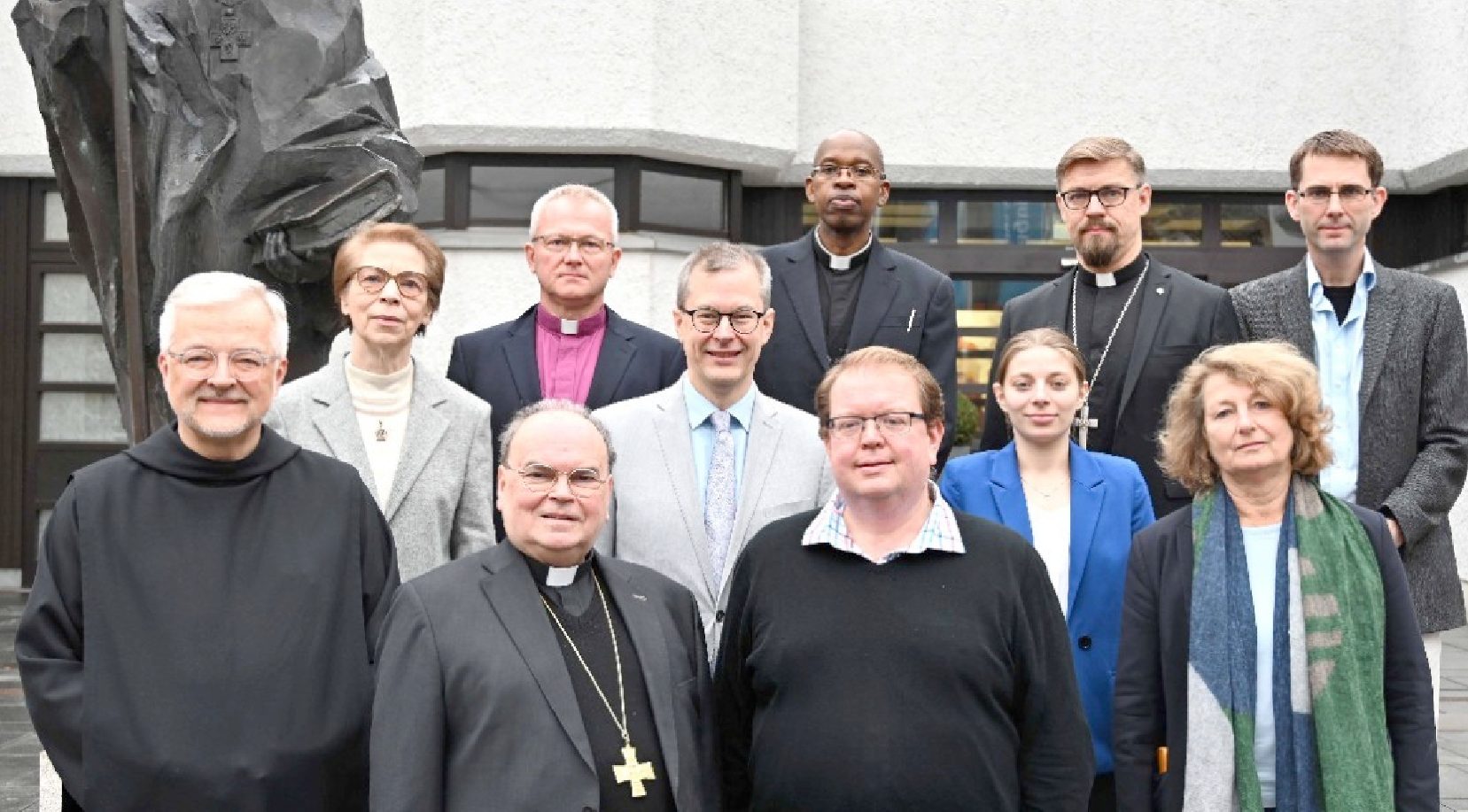
(ZENIT News / Rome, 06.30.2026).- The Vatican and the Communion of Protestant Churches in Europe have agreed to place their formal theological dialogue on hold for approximately two years, a decision that reflects not a breakdown in ecumenical relations but a shared recognition that the search for Christian unity sometimes requires a period of careful reflection before new progress can be made.
The temporary moratorium, announced in a joint statement on June 24, was discussed during a meeting between representatives of both delegations in Rome on December 9, 2025, and later endorsed by the Communion’s Council during its meeting in Doorn, the Netherlands, on May 29, 2026.
Far from signaling the end of cooperation, both sides stressed that the interruption is intended to evaluate the experience accumulated over recent years and clarify the conditions under which the dialogue might continue more effectively. No date has yet been fixed for its resumption, although a new meeting is expected during 2027 or 2028 to determine the future format of the discussions.
The announcement is noteworthy because relations between the Dicastery for Promoting Christian Unity and the Communion of Protestant Churches in Europe have produced substantial theological progress despite the absence of spectacular breakthroughs. According to the joint communiqué, the conversations have deepened mutual understanding, enabled both parties to formulate important theological affirmations that can be recognized in common, and helped identify those issues that still require further clarification.
The dialogue officially began after the Protestant Communion’s General Assembly in Basel in 2018, which sought to present to the Catholic Church an ecumenical model that had already transformed relationships within European Protestantism itself.
That model emerged from the Leuenberg Agreement of 1973, one of the most significant ecumenical achievements of the twentieth century. Before its adoption, Lutheran and Reformed Churches remained separated by theological disputes dating back to the sixteenth-century Reformation, including disagreements over Christ’s presence in the Eucharist, predestination and aspects of Christology.
Rather than eliminating those doctrinal differences, the Leuenberg Agreement concluded that they no longer constituted reasons for ecclesial division. As a result, member Churches established full pulpit and altar fellowship, allowing ministers to preach across denominational boundaries and believers to receive Holy Communion in one another’s congregations. Methodist Churches later joined this communion as well.
Today, the Communion of Protestant Churches in Europe brings together 96 Lutheran, Reformed, Methodist and United Churches across more than 30 countries in Europe and South America, representing approximately 40 million Protestant Christians. Yet the very structure that has become one of its greatest ecumenical successes has also complicated its relationship with Rome.
Unlike a single denomination, the Communion possesses neither a unified confession of faith nor a central governing authority. Instead, it functions as a fellowship of Churches that recognize one another while preserving their distinct theological traditions and systems of governance. Its guiding principle is often described as «unity in reconciled diversity.»
That ecclesial model does not fit easily within the Catholic Church’s traditional approach to ecumenical dialogue, which has generally developed through bilateral conversations with clearly defined confessional bodies, such as the Lutheran World Federation, the Anglican Communion or the Orthodox Churches.
Rita Famos, the Swiss theologian who serves as president of the Communion, has acknowledged that this difference lies at the heart of the current impasse. According to her, Catholic representatives frequently ask a fundamental question: who exactly is the Communion speaking for? Because it includes Lutheran, Reformed, Methodist and United Churches while remaining none of these individually, its identity does not correspond to the categories through which the Vatican has historically conducted theological dialogue.
Paradoxically, what Rome finds institutionally difficult to classify is precisely what the Communion considers its defining characteristic. The Protestant body was created to demonstrate that Churches with different confessional traditions can remain fully themselves while sharing ecclesial communion. Presenting that experience as a possible contribution to the broader ecumenical movement was one of the dialogue’s original ambitions.
The pause therefore reflects more than an organizational adjustment. It highlights one of the central questions facing modern ecumenism: how should Christian unity be understood? Is it primarily communion among distinct Churches, visible institutional unity, or some combination of both? While Catholics and many Protestant communities share a deep commitment to overcoming centuries of division, they often approach that goal through different ecclesiological frameworks.
For now, neither side appears willing to abandon the journey. The decision to suspend formal talks was reached jointly rather than unilaterally, and both partners explicitly affirmed the value of the work already accomplished. In ecumenical history, periods of reflection have frequently preceded new advances, allowing difficult theological questions to mature before negotiations resume.
Thank you for reading our content. If you would like to receive ZENIT’s daily e-mail news, you can subscribe for free through this link.

Publicaciones relacionadas:
 Catholics and Orthodox: Commission Agrees on Synodality and Primacy in the Second Millennium and Today
 «Salvation Army» opens to informal dialogue with Catholic Church at Pope’s house
 Vatican welcomes representatives of Assyrian church and advances ecumenical dialogue
 Coptic Pope Receives in Egypt Prefect of the Dicastery for the Doctrine of the Faith: Discussion on “Homosexual Blessings” (Declaration Fiducia Supplicans)
