

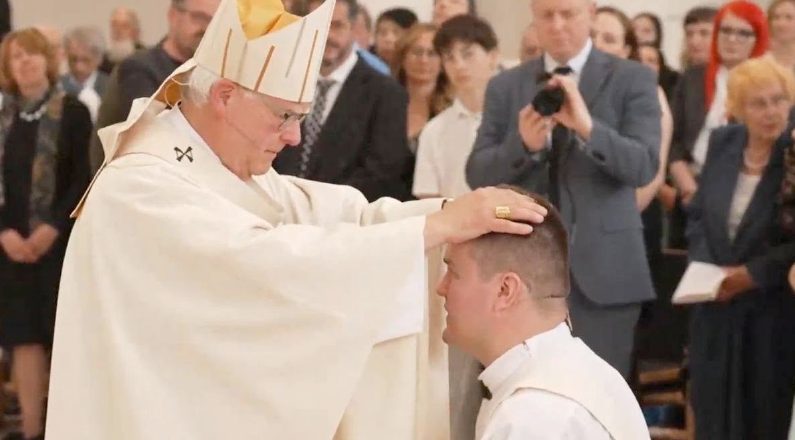
(ZENIT News / Berlin, 07.15.2026).- Around seven million Muslims live in Germany. One of them was Senad Mrkaljevic. He converted to Catholicism a few years ago and is now a priest. This makes him an exception.
When he entered a church for the first time in his life, in his early twenties, he initially felt unsure. «It was quite an ordeal for me to go in there,» says Senad Mrkaljevic. «I asked myself: ‘Is what you’re doing right?'»
This 41-year-old man has been a Catholic priest for a few weeks now. He was ordained at St. Hedwig’s Cathedral in Berlin by Archbishop Heiner Koch. This makes him a rare exception in Germany; apparently, there are no other Catholic priests in the entire country with a similar background.
However, this does not mean such things never happen elsewhere in the world: Antuan Ilgit, born in Bavaria to Turkish parents and raised in Turkey, was appointed Auxiliary Bishop of Anatolia by Pope Francis in 2023. An economist by training, he converted from Islam to Christianity as an adult and is the first Jesuit with Turkish citizenship.
There are also similar life stories that go the other way: Rabeya Müller (1957–2024), for instance, a Catholic woman from Bavaria who converted to Islam as an adult, later became a liberal imam in Germany.
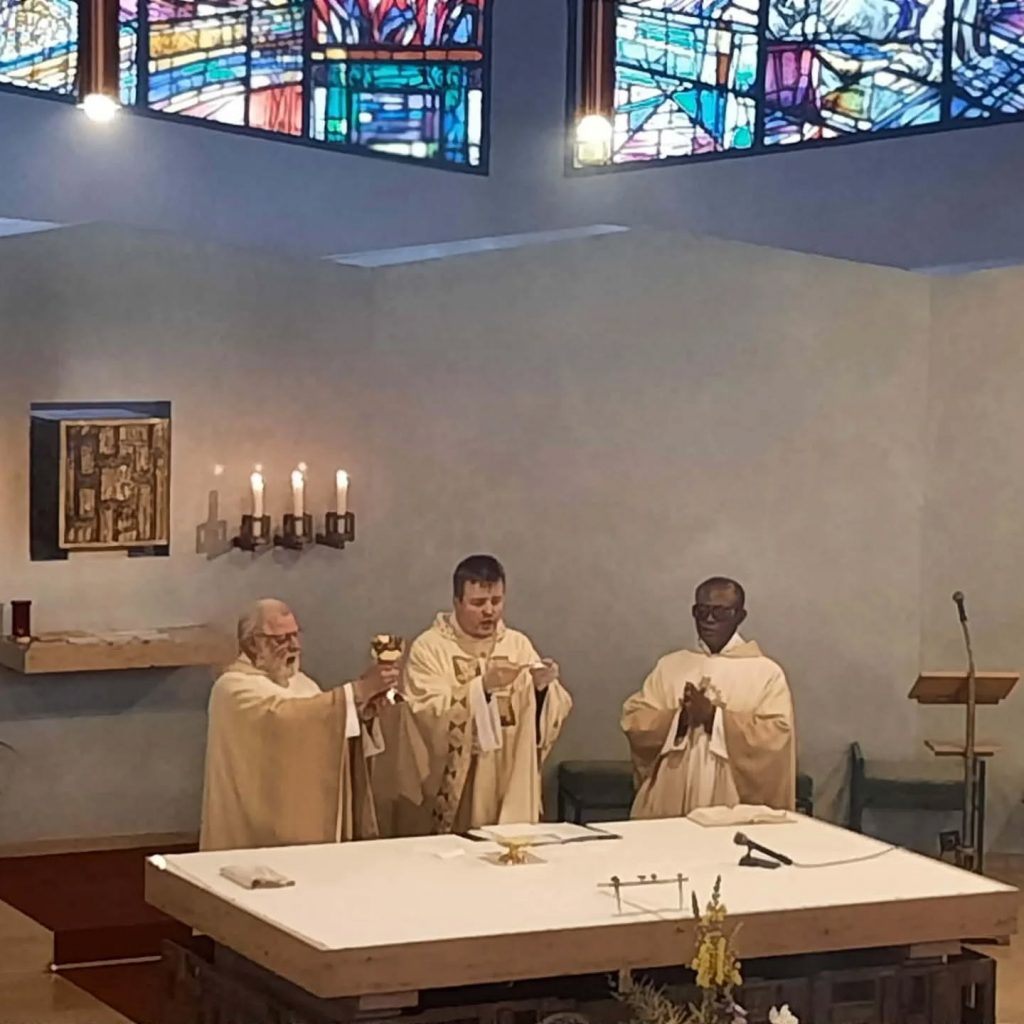
On a summer day in Berlin, Senad Mrkaljevic recounts his life story, which has not always been easy. He was born in Brčko, in what is now Bosnia and Herzegovina. «I remember that coexistence between religions worked well in my neighborhood back then. For example, as a child, I watched an Orthodox Christian liturgy on television at our Serbian neighbors’ house, and afterwards I said, ‘I want to be an Imam.’ The neighbor replied, ‘Why don’t you become a parish priest?’ We laughed together; a few years later, when the war broke out, that would no longer have been possible.»
Senad and his family fled the civil war in their conflict-ravaged hometown, heading first to Vienna. Later, they moved to Berlin. «It wasn’t an easy time,» he recalls. «I struggled to adapt to school.»
The Muslim faith had not played a major role in his family. «Curiously, as a teenager, I was the only one who fasted during Ramadan,» he says with a laugh. He admits that he has perhaps always been «a religious seeker.» At the age of 23, he began reading the Bible. He also started attending church on Sunday mornings at 8:00 a.m. «At first, I did it in secret. Back then, I was living with my older brother. When I got back from church, he was still asleep.»
But eventually, it became a burden. «I didn’t want to lead a double life.» When he considered being baptized as a Catholic, he also decided to tell his family about this new direction in his life. «It was a particular problem for my mother. She gave me a real dressing-down,» Senad recalls.
Nevertheless, he stood firm in his plan and was baptized. He fully understood their reservations: although his Muslim family had never been particularly religious, Islam had naturally provided them with a sense of identity while living in a foreign country. «When Yugoslavia fell apart, the Muslim faith gave us an identity.»
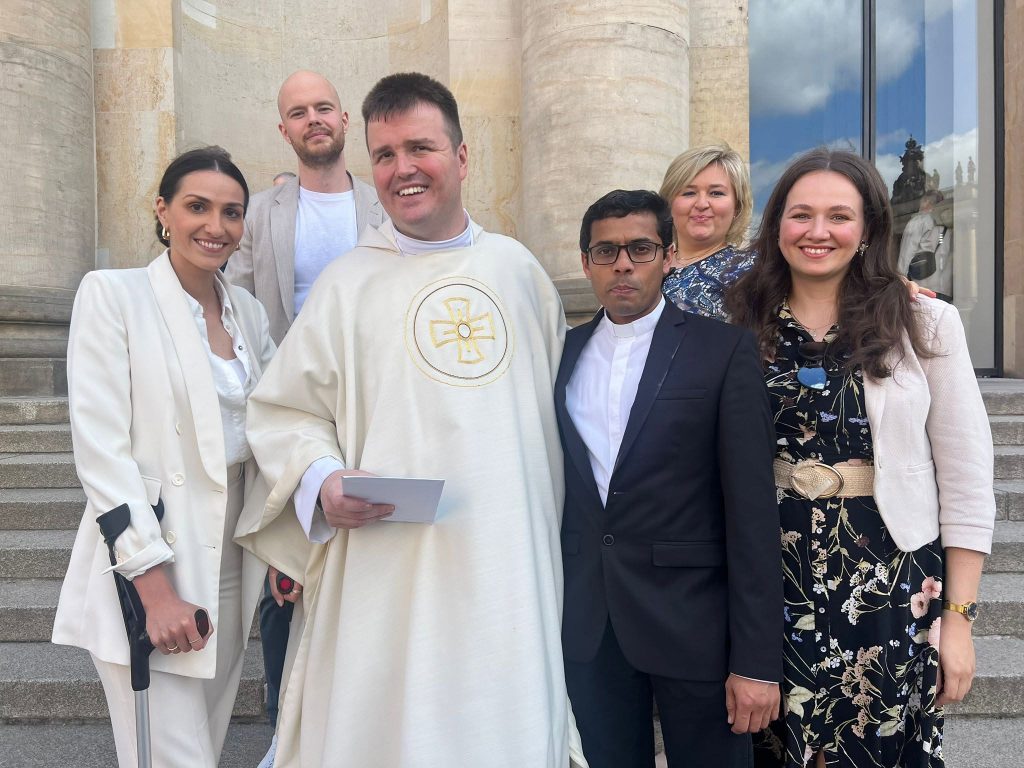
«I thought long and hard before deciding if this was the right path for me,» he says. Yet, he was certain that he also needed to maintain contact with his mother, who still disapproved of his plan. «I knew that cutting off contact wouldn’t be good for my soul. And my life wouldn’t have turned out well then.»
He completed his studies in 2023. He states that he persevered, «with God’s help», against all odds; giving up was never an option. «That is something I want to convey to others in my work as a priest,» he says.
He also emphasizes: «Just as with Christians, there are many secular Muslims who adhere to Islam primarily out of family tradition.» Consequently, he views himself as a bridge between the two religions. «Interestingly, my conversion and my decision to be ordained as a priest met with great approval from my Muslim family in Bosnia as well as from my siblings,» Senad notes.
His background is reflected in his assignment as chaplain to the St. Edith Stein parish in Berlin-Neukölln, a district with a high Muslim population. «For me, it is about tolerance among Christians, Jews, Muslims, and non-believers,» says Senad, who enjoys attending Hertha Berlin soccer matches with parishioners and likes pork “currywurst.”
His mother has come to accept his life as a priest; like his siblings, she attended his ordination a few weeks ago.
Other Cases of Conversion
In recent decades, the visibility of individuals born into Muslim families who have converted to Catholicism has increased. Although there are no precise global statistics, because in many countries to convert from Islam can entail discrimination or even graver risks such as death, various studies and testimonies indicate that such conversions are taking place in Europe, Africa, the Middle East, and the Americas.
Some well-known converts include:
– Magdi Cristiano Allam: Born in Egypt into a Muslim family, he was baptized by Benedict XVI at St. Peter’s Basilica during the 2008 Easter Vigil. His conversion garnered significant international attention.
– Joseph Fadelle: Of Shiite background, recounts the process of his conversion to Catholicism and the persecution he endured as a result in his book “The Price to Pay.”
– Mario Joseph: Raised in a Muslim family, he later converted to Christianity. He became a Catholic priest and has publicly shared his testimony.
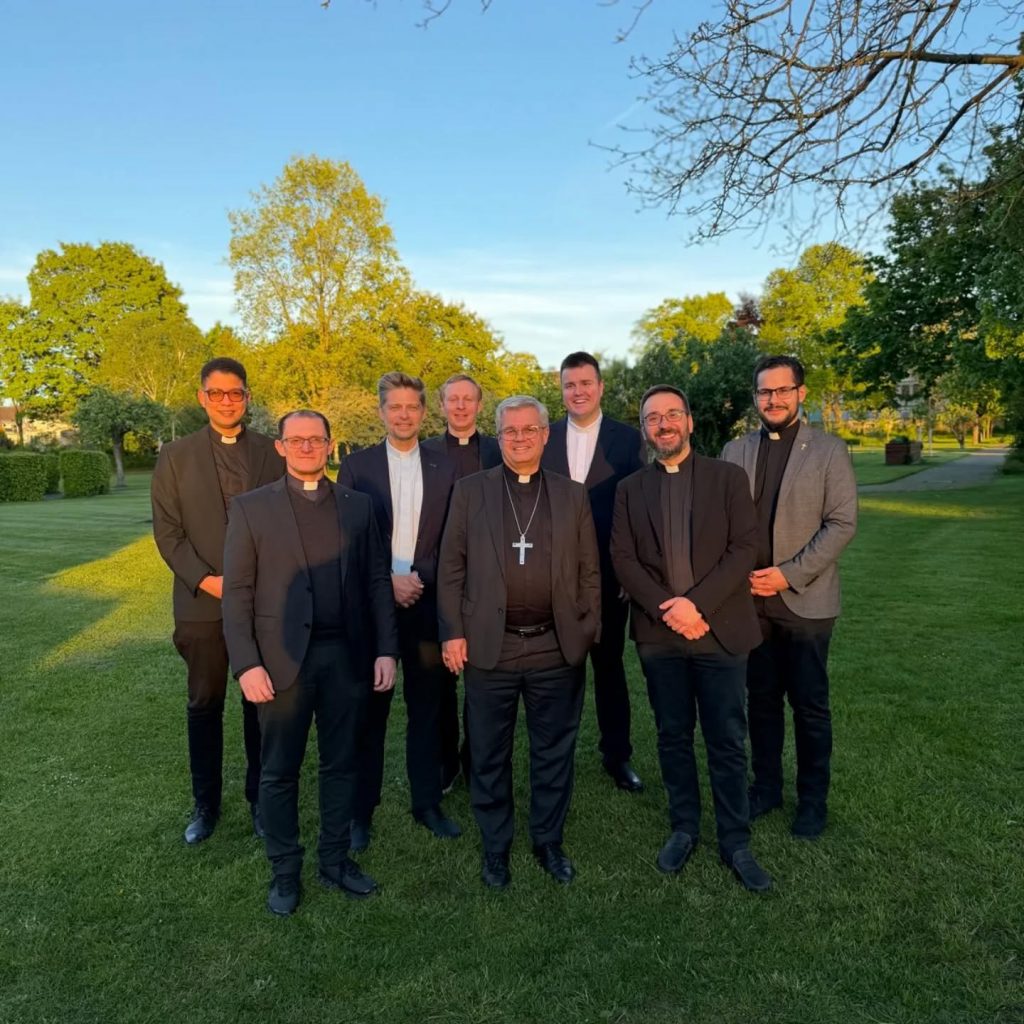
There are also numerous lesser-known accounts of people who have embraced the Catholic faith in countries such as France, Italy, Spain, and Germany. In some cases, they receive Baptism during the Easter Vigil following a period of catechumenate, and various European dioceses have reported an increase in Baptisms of adults from Muslim families in recent years.
Some women born into Muslim families have publicly shared their journeys toward the Catholic Church. Their stories vary widely, yet they often share a common thread: a profound search for truth, an encounter with the figure of Jesus Christ, and, in some instances, a high personal cost resulting from their decision.
Derya Little was born in Turkey into a culturally Muslim family. Following her parents’ separation, she declared herself an atheist and embarked on an intense intellectual quest. While studying Christianity, she first connected with an Evangelical community but later discovered the historical and sacramental richness of the Catholic Church, into which she was eventually received. In her book “From Islam to Christ”, she recounts how the person of Jesus and the historical continuity of the Church were decisive factors in her conversion.
Nikkei Kingsley was a practicing Muslim for some forty years. She describes seeking a deeper relationship with God; upon entering a Catholic church, she began a process of prayer and discernment that culminated in her joining the Church. In interviews, she states that the Eucharist and the intercession of the Virgin Mary played significant roles in her spiritual journey. She is the author of the book “Thirst for Truth: From Muhammad to Jesus.”
Belkiz (whose surname is withheld for security reasons) was born in Turkey into a Muslim family and learned the Quran as a child. She became an atheist during her teenage years but, years later, resumed her search for God. She read the Gospels, encountered Christian communities, and eventually asked to be received into the Catholic Church. Her testimony was published by the Catholic News Agency in 2024, with her anonymity preserved due to potential family and social repercussions.
Common elements in these individuals’ conversion journeys have included, for instance, the impact of the figure of Jesus Christ as portrayed in the Gospels, the experience of personal prayer, the discovery of the Eucharist and Catholic liturgy, and the example of Christians whose lives sparked their interest, among other factors.
In a world marked by polarization, these conversions serve as a call to value religious freedom and respect for the dignity of every person. For the Church, every conversion is, above all, the work of God’s grace, which continues to touch hearts in unexpected ways. These new Catholics coming from Islam remind all believers that the Gospel continues to awaken hope, transform lives, and demonstrate that Christ, today just as in the past, continues to call those who wish to respond with a free and generous «yes.»

Publicaciones relacionadas:
 Sister Clare: the young Irish actress who became a nun goes to the altars
 The Moving Story of a Religious Congregation with Sisters Who Have Down Syndrome
 World’s Highest IQ Holder Publicly Professes Christian Faith, Citing Quantum Physics and the Mystery of Consciousness
 Mother, Social Activist, and Harvard Graduate: The Path to Sainthood: The Case of a Former Abortion Advocate
