

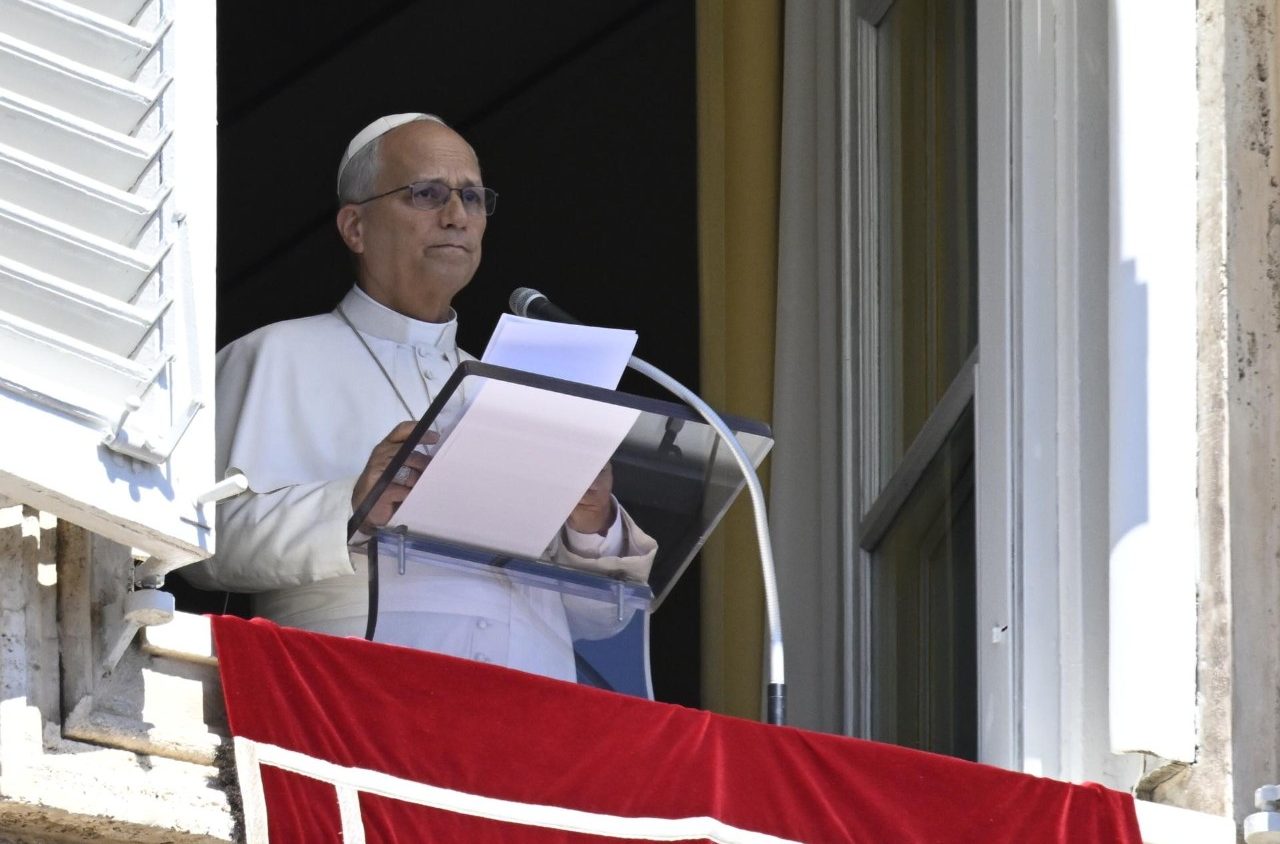
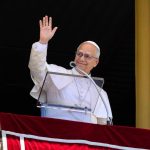
(ZENIT News / Vatican City, 09.13.2026).- At noon on Sunday, September 13, Pope Leo XIV recited the Marian prayer of the Angelus from the balcony of the papal apartment, with hundreds of pilgrims gathered in St. Peter’s Square. In his Sunday address, based on the Gospel reading designated by the liturgy for that Sunday, the Holy Father explored a theme that so many people experience as either a necessity or a gift: that of forgiving or of having been forgiven. Below are the Pope’s remarks, translated into English.
***
Dear brothers and sisters, Happy Sunday!
Today’s Gospel speaks to us of forgiveness, which is a fundamental feature of the Christian life. Jesus taught and exemplified forgiveness even on the cross, where he prayed to the Father for his persecutors with the familiar words: “Forgive them, for they do not know what they are doing” (Lk 23:34).
In today’s passage, Peter asks the Master precisely about this question: “Lord, how often shall my brother sin against me, and I forgive him? As many as seven times?” (Mt 18:21). His words reveal a generous heart, for the number seven symbolizes fullness in the Bible, and “forgiving seven times” means forgiving abundantly. Jesus’ response, however, goes even further: “I do not say to you seven times, but seventy times seven” (v. 22); in other words, beyond all limits, without measure.
To clarify his point further, the Savior tells the parable of a servant who owed his master a large debt that was practically impossible to pay. Although his own debt was forgiven out of pure mercy, he did not extend the same mercy toward one of his fellow servants, and for this he was rebuked and severely punished (vv. 23-30).
With these words, Jesus reminds us that gift and forgiveness are the foundation of our existence. All things are given to us by God out of pure love, and none of us can claim to be perfect in responding to such goodness. For this reason, gratuitousness — which is the source of our existence — is also the best rule for our life together. We experience this every day. Forgiveness is indispensable, and without it, we cannot live in peace. Sooner or later conflicts, accusations, grudges and acts of vengeance emerge in our hearts and among people, and these acts destroy relationships, divide families and unleash wars.
Only forgiveness sets us free and restores the light, even where human material and moral poverty has darkened the horizon and made the path uncertain. Forgiveness, like a gentle breeze, sweeps away even the thickest clouds until the sun shines once more. Saint Peter himself experienced this many times in his life; in particular, when — after denying and abandoning Jesus during the Passion — he encountered the risen Lord on the shore of the lake and heard him ask just one question: “Simon … do you love me?” (Jn 21:15). This was accompanied by an invitation, “follow me!” (v. 19), which was the same invitation given on the occasion of their first encounter. It was as if nothing had happened. This love, which forgives and heals, would mark for the first of the Apostles, the confirmation of his mission.
Let us therefore ask the Virgin Mary, Mother of Mercy, to help us forgive — always, even when it is difficult to take the first step — and to spread, with courage and perseverance, the serene and healing light of love that overcomes hatred and disarms all resentment.
Thank you for reading our content. If you would like to receive ZENIT’s daily e-mail news, you can subscribe for free through this link.

Publicaciones relacionadas:
 Why Does Jesus Say the Door of Salvation Is Narrow? Pope Leo XIV Responds
 How can the weight of the cross be “easy” and “light”? Leo XIV explains it
 The Parable of the Sower, as Explained by Pope Leo XIV
 How Can We Recognize God’s Presence? Leo XIV Offers a Thoughtful Response Based on a Passage from the Gospel
