

(ZENIT News / Rome, 09.13.2026).- For the Catholic Church, the credibility crisis caused by clerical sexual abuse cannot be solved by finding better words after a scandal breaks. The deeper challenge is to change the way the institution listens, decides, accepts responsibility and communicates long before a crisis reaches the headlines.
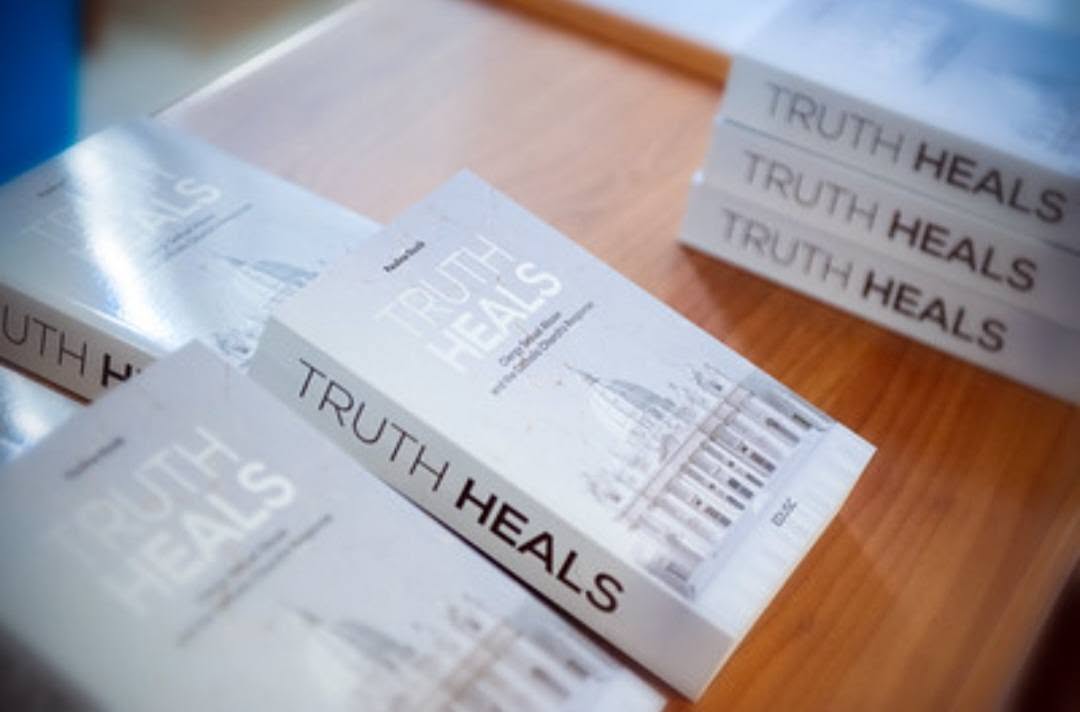
That is the argument of Paulina Guzik, professor of media and communication studies at the Pontifical University of John Paul II in Krakow, in her new book Truth Heals: Communication, Trust and the Catholic Church’s Response to Clerical Sexual Abuse. Drawing on five years of research, the book proposes a model in which communication is not a public-relations operation added to crisis management, but part of the Church’s responsibility toward victims and its own institutional reform.

Guzik’s starting point is deliberately uncomfortable: survivors must never be treated primarily as a legal, financial or reputational problem. The first response should be to listen to those who suffered, acknowledge the seriousness of their experience and pursue justice. Only from that foundation, she argues, can apologies, compensation, legal decisions and public communication acquire credibility.
Her research examines responses during the pontificates of John Paul II, Benedict XVI and Francis, looking at how transparency, leadership and media narratives have affected the Church’s credibility. It also challenges the assumption that a carefully constructed public message can repair an institutional failure. Public relations cannot substitute for integrity.
The scale of the disconnect is illustrated by one of Guzik’s findings: only 23 percent of bishops worldwide regularly meet with victims. Yet 83.33 percent of child-protection delegates surveyed said that direct contact with survivors had strengthened their commitment to prevention. Another figure points toward what many in the Church may see as the decisive factor: 73.33 percent of episcopal representatives identified courageous episcopal leadership as the most effective element in confronting the abuse crisis.
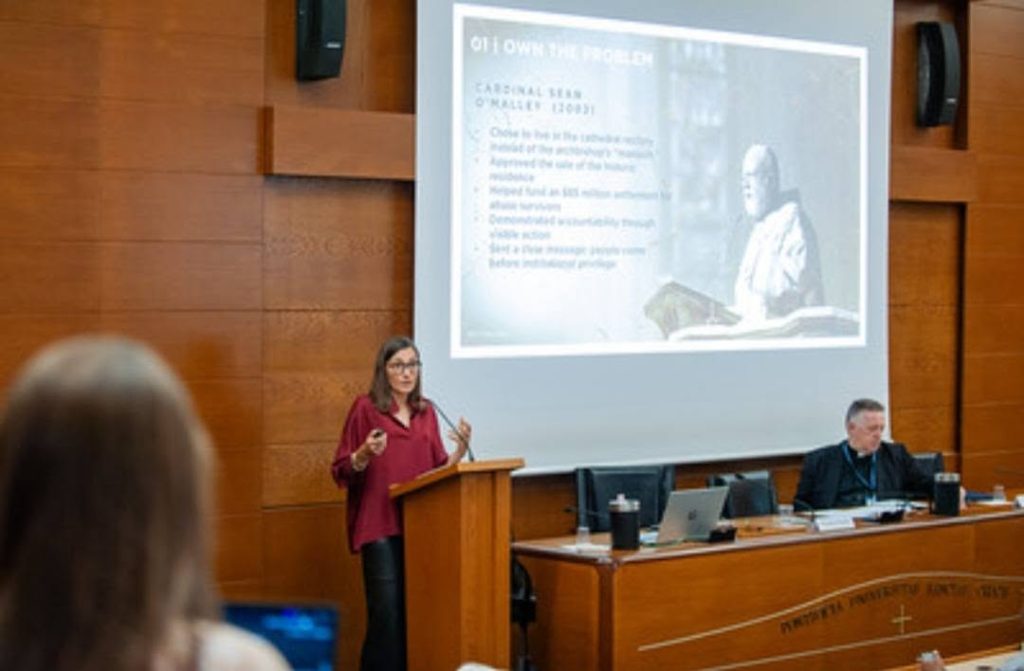
The implication is significant. Listening is not merely an exercise in compassion or an obligation toward the past; it can alter how the Church understands prevention in the present.
Guzik organizes her proposed response around ten principles:
- acknowledging the problem;
- putting victims first;
- listening continuously;
- showing emotional empathy;
- communicating from the audience’s perspective;
- treating transparency as the only viable path;
- preserving the Church’s identity as a loving mother;
- giving perceptions the same attention as facts;
- distinguishing judicial processes from public opinion; and
- treating the media seriously and fairly.
These principles are complemented by a five-stage process for rebuilding institutional trust:
- assess the wrongdoing,
- accept responsibility,
- restore justice,
- introduce reforms and
- communicate transparently.
The order is important. Communication comes at the end of a chain of responsibility, but it must also be woven through the entire process.
That is why Guzik calls for what she describes as a collaborative structure inside the Church. Communication professionals should not be summoned only when a scandal becomes public. They should work alongside legal advisers, safeguarding officials and ministries assisting victims as decisions are being made. Serious failures, she argues, should be disclosed proactively rather than left for leaks or investigative reporting to define the story.

The concept also explains the unusual image chosen for the book’s cover: kintsugi, the Japanese art of repairing broken pottery while leaving the fractures visible through gold. For Guzik, the metaphor offers an alternative to the instinct to conceal institutional wounds. Repair does not mean pretending that the break never occurred. The damaged places remain visible precisely because they have been acknowledged and repaired.
Her research began during a period at The Catholic Project at The Catholic University of America in Washington, where she interviewed 30 people, including cardinals, bishops, communication professionals and survivors. She subsequently surveyed episcopal child-protection delegates and Vatican journalists. The study was supported by the United States Conference of Catholic Bishops, Renovabis, Aid to the Church in Need and the Knights of Columbus.
The broader challenge raised by Truth Heals reaches beyond crisis communications. In cases of abuse, the Church faces two different judgments that must not be confused: the judgment of a court and the judgment of public opinion. Legal procedures determine responsibility according to law; public confidence is shaped by whether an institution appears truthful, accountable and genuinely concerned for those who were harmed.

For a Church that understands itself not merely as an institution but as a community entrusted with the care of persons, that distinction is decisive. Transparency is not valuable because it makes a crisis look better. It is valuable when the underlying reality deserves to be brought into the light.
Guzik’s proposal therefore turns the conventional logic of crisis management upside down. The objective is not first to control the narrative and then restore confidence. It is to create the conditions in which confidence can reasonably return: listening before defending, responsibility before reputation, justice before image and reform before reassurance.
Thank you for reading our content. If you would like to receive ZENIT’s daily e-mail news, you can subscribe for free through this link.

Publicaciones relacionadas:
 Jesuits Position Themselves with a Statement About Father Mark Ivan Rupnik, S.J.
 Father Marko Rupnik Corrects the Society of Jesus: He Asked to Leave First and with Him All the Jesuits of the Aletti Center
 Case of mismanagement of abuse allegations could halt canonization of Jesuit Pedro Arrupe
 Pontifical Commission for the Protection of Minors and Ending Clergy Abuse Hold First Structured Dialogue in Rome
