(ZENIT News / Rome, 09.13.2026).- Answered by Legionary of Christ Father Edward McNamara, professor of liturgy and sacramental theology at the Pontifical Regina Apostolorum university.
Q1: I’ve been attending a local daily Mass where there are a priest and a deacon. For distribution of Communion, the priest has been cleaning the vessels while the deacon distributes the hosts. Should it be the other way around? — T.F., Cortland, New York
Q2: May a permanent deacon, in the absence of a priest, preside the Benediction with the Blessed Sacrament at the conclusion of the time of exposition? — N.F., Nouméa, New Caledonia
A: Since both questions refer to what a deacon may or may not do, we will take them both.
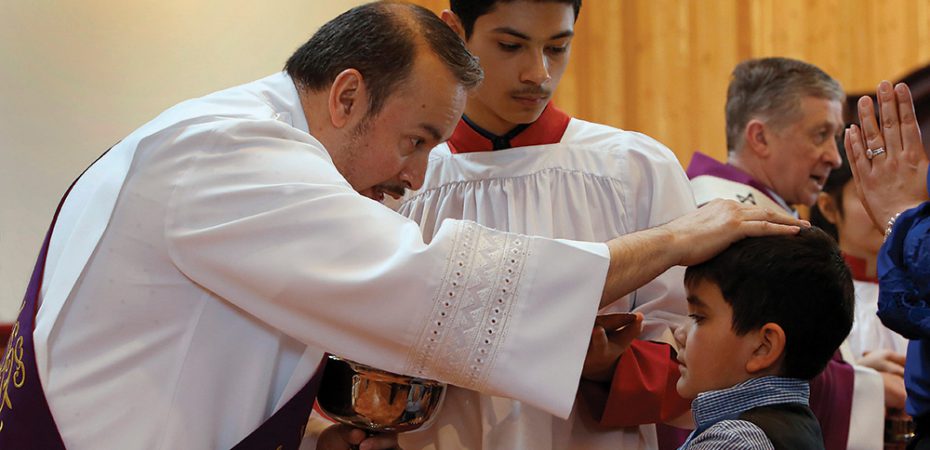
With respect to the first question, there are several documents which could be called upon to illustrate why this practice of a priest not distributing Communion, even with a deacon present, is inappropriate.
One possible document is the 1980 instruction, approved by Pope St. John Paul II, Inaestimabile Donum. No. 10 of this document states:
“The faithful, whether religious or lay, who are authorized as extraordinary ministers of the Eucharist can distribute Communion only when there is no priest, deacon or acolyte, when the priest is impeded by illness or advanced age, or when the number of the faithful going to Communion is so large as to make the celebration of Mass excessively long. Accordingly, a reprehensible attitude is shown by those priests who, though present at the celebration, refrain from distributing Communion and leave this task to the laity.”
It is true that the deacon is an ordinary, rather than an extraordinary minister of Holy Communion. But the underlying principle is that the priest, as the one who has performed and completed the holy sacrifice in receiving Communion, should be the one who primarily distributes the sacrifice to the faithful. Thus, in normal circumstances, the deacon may assist him but not substitute him.
A possible exception to this general principle could be the case of an elderly or infirm priest, or even a priest in the initial stages of a contagious flu who wants to limit all possible transmissions of the ailment.
Likewise, the rubrics for purification of the sacred vessels assign this task principally to the deacon, who is to do so at the credence table. The priest should not substitute him in this task unless the number of vessels is so large that he requires further help.
There is also an official «Responsa ad Dubia Proposta» (Response to a doubt) issued by the Congregation (now Dicastery) for Divine Worship and the Sacraments that might help throw light on this subject. The situation is not quite the same as the one mentioned in our question, but I think it helps us to grasp the underlying theological principles involved.
This response answered the following question for which we offer an approximate translation of the official Latin original published in Notitiae 45 (2009) pages 242-243:
«Whether it is licit for the celebrating priest to take Communion only after the Holy Eucharist has been administered to the faithful or distribute Holy Eucharist and communicate at the same time as the faithful?
«Response: Negative to both»
After the official reply, there is a brief explanation of the reasoning behind it. Summing up, these arguments are:
All existing and traditional rites of the Church foresee that the bishop or priest first receive Communion. After the celebrant receives Communion, the various ministers receive according to their hierarchical order and then the faithful.
The priest receives first, not because of a human protocol but in virtue of the dignity and nature of his ministry. He acts in the person of Christ, for the purpose of the integrity of the sacrament and for presiding the people gathered together: “Thus when priests join in the act of Christ the Priest, they offer themselves entirely to God, and when they are nourished with the body of Christ they profoundly share in the love of him who gives himself as food to the faithful (Presbyterorum Ordinis, No. 13).”
The present missal foresees the priest as receiving Communion first.
Finally, the document repeats the precise norm of the 2004 instruction Redemptionis Sacramentum, No. 97: “A Priest must communicate at the altar at the moment laid down by the Missal each time he celebrates Holy Mass, and the concelebrants must communicate before they proceed with the distribution of Holy Communion. The Priest celebrant or a concelebrant is never to wait until the people’s Communion is concluded before receiving Communion himself.”
While the priest in our question did not commit the error of delaying his communion, the reflections above regarding his action in the person of Christ show that it behooves primarily on him to nourish the faithful with the body and blood of Christ.
With respect to the second question as to whether the deacon (permanent or transitional) may impart Eucharistic Benediction, we can say the following.
A general rule of thumb found in the liturgical books for most sacraments and sacramentals is that whenever a deacon acts as presider in a liturgical celebration in the absence of a priest, he follows the same liturgical practices as the priest.
Some distinctions should be made. Although the deacon is an ordained minister, he is of a lower grade than a priest and therefore he should not preside over the community if a priest is present.
Therefore, in normal cases a deacon may not give a blessing, and even less so Benediction, if a priest is present and available. As mentioned in some recent articles, this is a general hierarchical principle and not a rigid or absolute rule. A deacon can impart blessings with a priest present if the numerous people are requesting blessings at the same time.
Likewise, the deacon can also give blessing, even Benediction of the Blessed Sacrament, if the priest is absent or even legitimately impeded; for example, if the priest were hearing confessions during exposition of the Blessed Sacrament and could not leave the confessional to impart Benediction.
He may also do so even if the absence of a priest is totally foreseen. A parish with an available deacon may organize exposition, adoration and Benediction even when a priest will be unavailable. It is enough that the parish priest, or in some cases the bishop, approves of the activity. He does not have to authorize or delegate the deacon as this falls within the range of the deacon’s habitual faculties.
In those cases, the rubrics foresee that deacon may wear the same vestments as the priest: the stole (albeit worn in the manner of a deacon), the cope and the humeral veil. He may also recite or sing the same prayers as the priest.
* * *
Readers may send questions to zenit.liturgy@gmail.com. Please put the word «Liturgy» in the subject field. The text should include your initials, your city and your state, province or country. Father McNamara can only answer a small selection of the great number of questions that arrive.
Thank you for reading our content. If you would like to receive ZENIT’s daily e-mail news, you can subscribe for free through this link.