

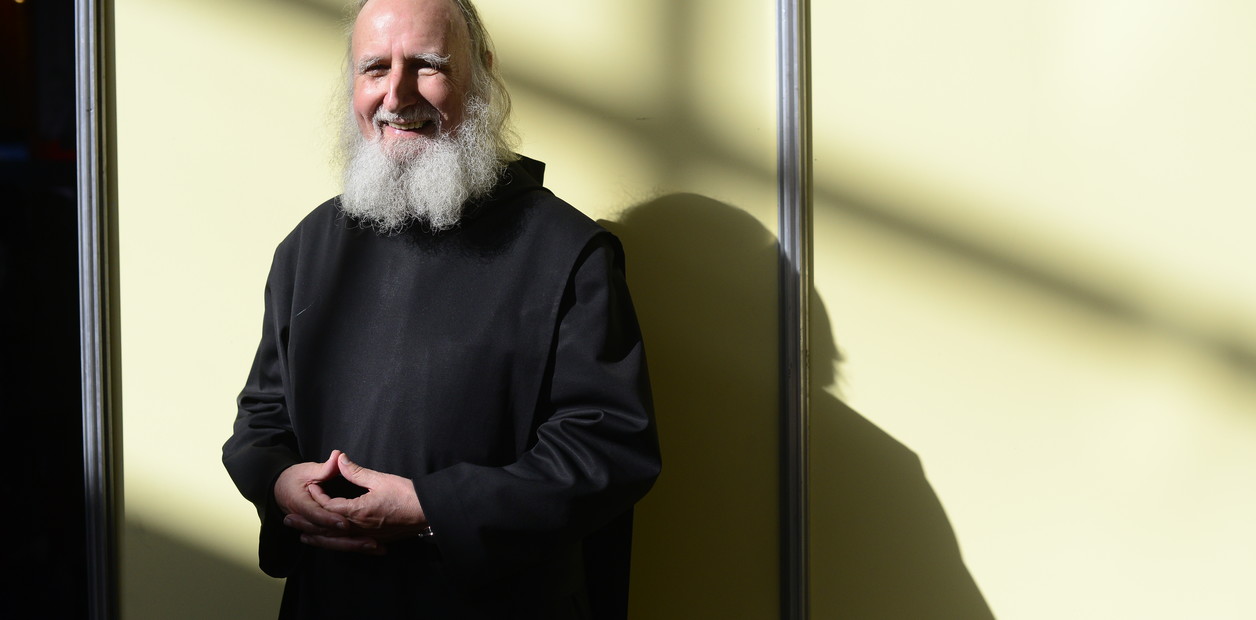
(ZENIT News / Paderborn, 09.17.2026).- A dispute over one priest’s return to pastoral ministry in the 1990s has reopened uncomfortable questions about how the Catholic Church in Germany handled accused and convicted abusers — and about the role played by a renowned spiritual center that was supposed to help troubled clergy.
Anselm Grün, the 81-year-old Benedictine monk whose spiritual books have sold around 20 million copies, has categorically rejected allegations that he intervened on behalf of a priest who had sexually abused a 16-year-old boy. But the Council of Victims of the German Bishops’ Conference is calling for the matter to be examined beyond the individual case, including through an independent investigation into whether other clergy accused or convicted of abuse were helped to return to pastoral work through the Recollectio-Haus.
The controversy concerns a period when the Church’s understanding of sexual abuse, its consequences and the safeguards required to prevent further harm was markedly different from that which has developed through subsequent investigations. Precisely for that reason, establishing what was known, who made decisions and on what grounds is central to the present dispute.
According to the fourth annual report of the Independent Commission for the Investigation of Sexual Abuse in the Archdiocese of Paderborn, Grün became involved in the case of a priest from that archdiocese during the early 1990s. The priest had sexually abused a 16-year-old and admitted his guilt during criminal proceedings.
After spending time at the Recollectio-Haus, the report says Grün indicated to officials in Paderborn that he was prepared to receive the priest at Münsterschwarzach Abbey. In the meantime, he allegedly proposed that the priest continue working in a parish in the Diocese of Würzburg. Würzburg accepted the transfer in September 1992. The priest remained there until 2009 and subsequently moved to the Diocese of Erfurt.
The Paderborn report also says that Grün assured officials that the priest was not homosexual. The Council of Victims has singled out this alleged argument as particularly troubling because it reflects a distinction that, according to the council, could place a priest’s sexual orientation above the gravity of the abuse itself and the protection of those who had been harmed.
Grün disputes the account. Speaking to the Catholic News Agency on September 4, he said he did not remember the case and rejected the allegation. He also stated that he had never issued endorsements, recommendations or favorable assessments for people who came to the Recollectio-Haus for assistance.
That leaves a fundamental factual conflict: an official investigation attributes an intervention to Grün that he says he neither remembers nor accepts. Resolving that contradiction requires documentary evidence and testimony rather than assumptions based either on Grün’s reputation or on the seriousness of the allegations.
The Recollectio-Haus itself adds another layer to the story. Located at Münsterschwarzach Abbey in Bavaria, the center provides psychological and spiritual accompaniment to priests, religious and Church employees experiencing crises, exhaustion or other personal difficulties. Grün currently has spiritual responsibility for the institution.
Its former director, theologian and psychotherapist Wunibald Müller, led the house from 1991 to 2016. In an interview published in 2024, Müller acknowledged that priests and religious accused of sexual abuse had also been treated there. He rejected the idea that the center was a facility specifically intended for abusers, explaining that such clergy were sent by their diocesan or religious superiors.
Müller made an important institutional distinction: the Recollectio-Haus could provide psychological treatment and assessment, but the decision about whether a priest would subsequently return to pastoral ministry belonged to the responsible diocese or religious order.
He also stressed that a pedophilic orientation could not simply be cured and that, in such cases, therapy was concerned with controlling impulses. Müller had himself spoken publicly about the scale of sexual abuse in the German Church during the 1990s and later described resistance within Church circles to his efforts to confront the problem. His experience included therapeutic work with abuse survivors.
The Council of Victims nevertheless wants the historical question pursued further. In its September 6 statement, it called for an independent investigation into whether the Recollectio-Haus was involved in other cases in which priests accused or convicted of sexual abuse subsequently returned to pastoral ministry.
That request changes the scope of the controversy. The issue is no longer simply whether Grün personally intervened in one case in 1992. It is whether the procedures surrounding the treatment, assessment and subsequent deployment of clergy with histories of sexual abuse were sufficiently separated from decisions about their suitability for ministry — and whether similar cases occurred.
Germany has spent more than a decade constructing mechanisms to answer precisely such questions. The renewed scrutiny of the Catholic Church’s handling of abuse accelerated in 2010, eventually producing diocesan investigations, independent commissions and the landmark MHG study commissioned by the German Bishops’ Conference. Presented in September 2018, the study examined sexual-abuse cases involving clergy between 1946 and 2014.
The passage of time makes accountability more difficult, but it also makes institutional memory especially important. A contemporary investigation cannot simply impose today’s procedures on decisions made three decades ago. It can, however, establish what happened, identify who held authority, examine the information available to them and determine whether safeguards were followed.
That is ultimately what is at stake in the Grün controversy.
Thank you for reading our content. If you would like to receive ZENIT’s daily e-mail news, you can subscribe for free through this link.

Publicaciones relacionadas:
 Timeline of Investigations into Allegations Against Father Marko Rupnik
 France: Civil Justice Files Investigation against Cardinal Jean-Pierre Ricard Due to Expiration
 France: Lourdes Shrine Announces a Period of Reflection to Decide Whether To Keep or Remove Jesuit Marko Rupnik’s Works
 USA: bishops make sex abuse data and their struggle transparent in 2022 annual report
