

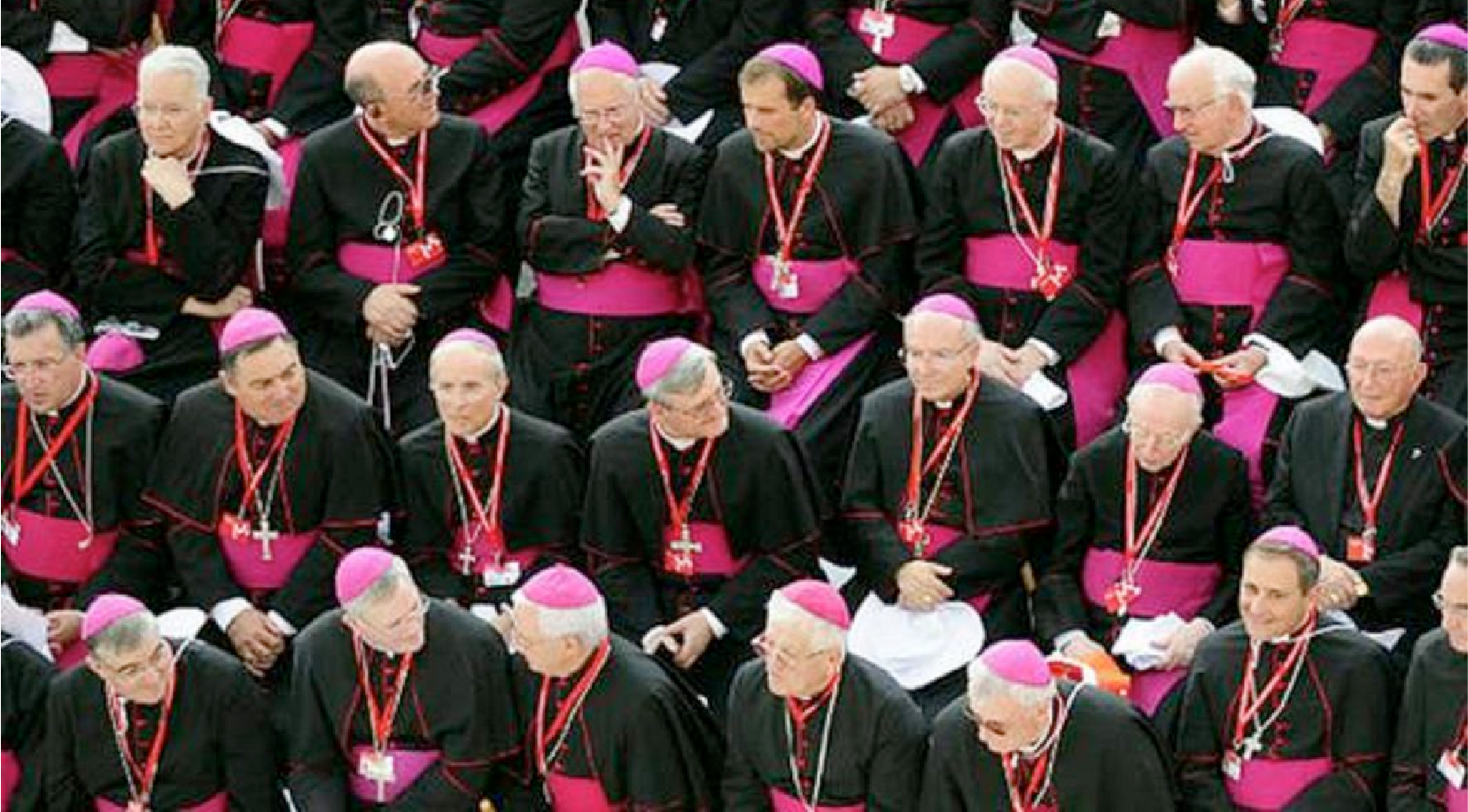
(ZENIT News / Washington, 09.17.2026).- With the 2026 midterm elections approaching, the U.S. Catholic bishops are asking priests to do something more demanding than tell Catholics to vote: help them understand why their faith should shape the way they participate in public life.
The United States Conference of Catholic Bishops has issued a new formation guide for dioceses, offering priests and deacons practical material for teaching what the Church calls “faithful citizenship.” The document does not endorse candidates, parties or particular electoral choices. Instead, it seeks to equip clergy to present Catholic social teaching as a framework for moral discernment before Catholics enter the voting booth.
The timing is deliberate. The November 2026 elections will determine control of both the Senate and the House of Representatives, but the bishops’ document attempts to place electoral politics inside a much wider understanding of Christian responsibility. The guide describes faithful citizenship not as an activity performed every few years, but as a way of living the Gospel through the responsibilities of public life.
The USCCB provides outlines for either a three- to five-hour formation session or a more concise one-hour session, alongside preaching material and a video featuring several bishops. The initiative emerged from conversations among bishops after some requested more guidance for clergy on how to address the subject with their congregations.
At its center is a simple but consequential premise: Catholics do not cease being disciples when they enter the political sphere.
Archbishop Alexander Sample of Portland says Catholics should be “agents of transformation” in society, drawing on the dignity and worth of every human person. Bishop Daniel Flores of Brownsville, meanwhile, emphasizes that Catholics are called to build communities that reflect what God has revealed in Christ. Both arguments shift the focus away from electoral tactics and toward the character of the witness Catholics bring to civic life.
The framework draws on five principles of Catholic social teaching highlighted in Pope Leo XIV’s May 2026 encyclical Magnifica Humanitas: the common good, the universal destination of goods, subsidiarity, solidarity and social justice. The encyclical itself describes these principles as criteria for reading contemporary social challenges and discerning appropriate forms of Christian action.
That first principle, the common good, challenges the notion that politics is simply a competition between private interests. Catholic teaching defines it in terms of the social conditions that allow individuals and communities to pursue their proper fulfillment.
The universal destination of goods introduces another important distinction. The Church upholds private property, but does not treat ownership as an unlimited entitlement detached from the needs and dignity of others. In Magnifica Humanitas, Leo XIV places this principle within a wider tradition of Catholic social teaching that goes back to Leo XIII’s Rerum Novarum.
Subsidiarity, meanwhile, asks whether decisions are being made at the appropriate level rather than automatically transferring responsibility to higher authorities. The guide connects this principle to the protection of family life and the dignity of families from undue governmental interference.
Solidarity widens the horizon again. Inspired by the Good Samaritan, it treats the neighbor not as someone belonging to one’s own social, political or cultural camp, but as a person whose dignity imposes a claim upon the Christian conscience.
Finally, the bishops distinguish social justice from the more familiar idea of simply having “social awareness.” Drawing on Leo XIV, the guide directs attention toward the structures and institutions that can perpetuate injustice, not merely toward individual acts between one person and another.
That breadth is significant because the bishops’ approach does not reduce Catholic political engagement to a single issue. The guide mentions abortion, racial equality, economic inequality, criminal justice, euthanasia, family life, immigration, political participation, war and peace, among other questions.
The underlying message is that these issues cannot be detached from a coherent vision of the human person.
For Catholics, that can make electoral discernment more complicated rather than less. A voter may find himself in agreement with a candidate on one major moral question and in disagreement on several others. The bishops’ framework does not provide a mathematical formula for resolving that tension. Instead, it asks Catholics to form their consciences through the whole body of Catholic teaching and then make prudential judgments about concrete political choices.
That distinction is particularly important in an increasingly polarized American political environment. The Church can speak clearly about the dignity of unborn children, the integrity of marriage and family life, the needs of migrants, poverty, religious freedom, war and peace, or the treatment of prisoners and the vulnerable without becoming identical with any political party.
Leo XIV’s Magnifica Humanitas makes a related point in a different context: Catholic social teaching is intended to provide “principles for thinking, criteria for discernment and orientations for action,” rather than a substitute for personal responsibility.
The USCCB’s new material therefore presents “faithful citizenship” as something considerably larger than voting. It encompasses the habits, relationships and responsibilities through which Christians participate in society between elections as well as during them.
That may be the most important element of the bishops’ intervention. The ballot is an instrument of citizenship, but it is not the whole of citizenship. For the Church, political participation begins earlier—with the formation of conscience—and continues afterward, in the way Catholics defend human dignity, serve their neighbors, strengthen families, seek justice and work for the common good.
As Bishop Flores puts it, the Catholic’s first task in political and social life is to offer an authentic witness to Christ. The eventual electoral choice remains the responsibility of the individual voter.
The bishops’ task, as this new formation initiative makes clear, is not to make that choice for Catholics, but to help them approach it with a conscience formed by the faith.
Thank you for reading our content. If you would like to receive ZENIT’s daily e-mail news, you can subscribe for free through this link.

Publicaciones relacionadas:
 Israeli Radicals Seek to Appropriate Properties of the Church, Alerts Catholic Patriarch of Jerusalem
 Nigeria: 15 Days Later, A New Massacre in Two Churches of the Country
 Barcelona: Antonio Gaudí’s Beatification Process Advances
 USA: Catholics Make a Positive Impact by Showing Solidarity with the Church in Latin America
