

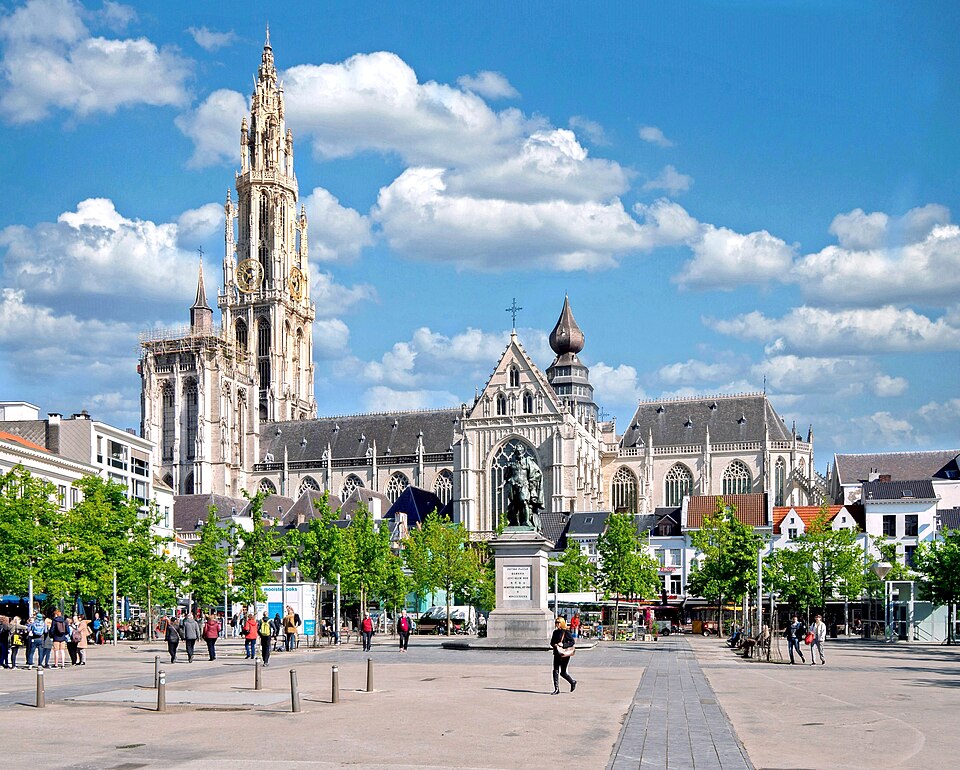
(ZENIT News / Antwerp, 09.24.2026).- A proposal that began as a public declaration in March 2026 has moved into a more concrete phase in the Diocese of Antwerp: Bishop Johan Bonny says several married men have been selected and are already receiving theological and pastoral formation, as he seeks Rome’s authorization to ordain them in 2028.
Bonny’s initiative is driven, he says, by a shortage of local clergy that is increasingly affecting the Church’s ability to serve communities beyond parish life. Antwerp has fewer than 70 priests under the age of 70, according to figures cited by the bishop, and around two-thirds of them come from abroad. The diocese no longer has priests assigned exclusively to hospitals, youth movements or schools, while only one of the province’s five prisons has a permanent chaplain.
“The need obliges me,” Bonny told La Libre Belgique, describing a situation in Flanders in which, in his view, the pool of unmarried men seeking ordination has dwindled to almost nothing. He has acknowledged the contribution of foreign-born priests, but argues that relying on them cannot become the ordinary answer to the decline in local vocations.
The candidates now being prepared are following a program comparable to that of seminarians. Bonny says the process is being conducted “transparently but discreetly,” away from media attention. The criteria resemble those for permanent deacons: candidates must be at least 35, have their wives’ consent, maintain a stable family life and not have very young children.
The practical preparations are underway, but the canonical question remains unresolved. During a visit to Rome in June 2026, Bonny presented his plans to Cardinal Lazarus You Heung-sik, prefect of the Dicastery for the Clergy, and Cardinal Mario Grech, secretary general of the Synod of Bishops. He says both agreed to raise the matter with Pope Leo XIV. No public authorization from the Holy See has been announced.
The distinction matters. In the Latin Catholic Church, celibacy is the ordinary discipline for priests, though the Church also has traditions and limited provisions under which married men may be ordained. Bonny’s proposal would require a decision from Church authorities; training candidates does not itself grant permission to ordain them. Archbishop Luc Terlinden of Mechelen-Brussels, president of the Belgian bishops’ conference, has also clarified that the specific plan is Bonny’s initiative, even though the question of married priests has previously been discussed among Belgian bishops and during their ad limina visit under Pope Francis.
In a pastoral letter published on March 20, Bonny argued that the question was no longer whether the Church could ordain married men, but when and by whom. He has described the issue as a matter of conscience and said the coming two years would be devoted to preparing the project in consultation with the Holy See and the Belgian bishops’ conference.
The debate is part of a broader discussion about the relationship between priestly ministry, family life and the Church’s response to changing pastoral needs. Bonny has also expressed support for reconsidering other aspects of Catholic discipline and teaching, including the question of women’s ordination, and has publicly advocated blessings for same-sex couples. Those positions have drawn criticism. They also mean his proposal is being watched not only as a local response to a shortage of priests, but as part of a wider conversation about the boundaries of reform.
Thank you for reading our content. If you would like to receive ZENIT’s daily e-mail news, you can subscribe for free through this link.

Publicaciones relacionadas:
 At 76 Years Old, This Is Cardinal Dolan’s New “Job”: New York Police Chaplain
 Cardinal Ouellet Faces Defamation Lawsuit in Canadian Court Over Abuse Allegations
 Holy Land: Cardinal Pizzaballa Says Palm Sunday Mass Ban in Jerusalem Was a Misunderstanding
 Pope Leo XIV to Chaldean Bishops: Key Points for Electing a New Patriarch and Strong Exhortations on Money and Chastity
