

(ZENIT News / Rome, 10.02.2026).- The most revealing criticism of the Catholic Church’s synodal experiment may not come from its opponents, but from bishops who have embraced it and are now asking what, precisely, it has produced.
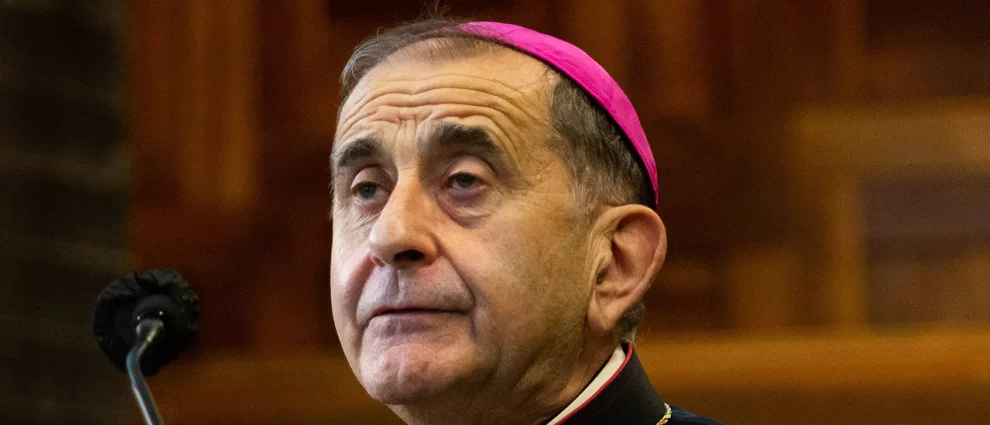
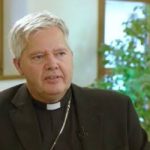
Archbishop Mario Enrico Delpini of Milan is one of them. In his pastoral proposal for 2026–27, he does not call for an abandonment of synodality. On the contrary, he describes it as indispensable for the Church today. But his assessment of the years since Pope Francis launched the present synodal process is notably unsparing: fatigue, excessive documentation, repeated discussions, clerical skepticism and participatory structures that have sometimes made little visible difference to parish life.
That diagnosis exposes a central vulnerability of synodality: a process intended to make the Church listen more effectively can itself become another ecclesial activity requiring people to listen, meet, discuss, document and deliberate — without necessarily producing corresponding changes in Christian life.
Delpini identifies the problem with unusual precision. The process has generated “voluminous” documents that must be considered simultaneously, while some of its recurring emphases have been contradicted by actual practice. Among sections of the clergy, he acknowledges, skepticism has contributed to a general “climate of fatigue.”
The problem becomes more concrete when he examines pastoral councils, synodal assemblies and other participatory bodies in the Archdiocese of Milan. There is, he says, an impression that much of the synodal journey has remained at the level of vague and abstract concepts without significantly affecting the daily life of communities. His proposed remedy is not another theoretical discussion but formation, time for assimilation, practical experience and criteria capable of measuring results.
That is perhaps the most important warning contained in his assessment. A process designed to renew the Church can become self-referential if the discussion about how the Church should function begins to consume the attention that ought to be directed toward evangelization, worship, catechesis and the ordinary needs of Catholics.
Delpini himself appears to recognize precisely this danger. He argues that the time has come to move from discussions about synodality to its disciplined daily application and says the concept must finally be rescued from the “obsessive repetition” of the term and the theory.
A second warning comes from Archbishop Anthony Randazzo, the new prefect of the Dicastery for Legislative Texts. His concern is different but complementary: synodality can become problematic when it is interpreted as permission to discard elements of Catholic tradition simply because they appear outdated.
Randazzo compares the Church to an old tree. Renewal can produce new green shoots without destroying the wood that sustains them. But he warns that overly enthusiastic interpretations of synodality may treat the present moment as an opportunity to cut away what some regard as “dead wood,” potentially causing unnecessary damage.
This touches one of the most consequential ambiguities surrounding contemporary synodality. Listening and participation are not, in themselves, a new doctrine of the Church. Randazzo points out that the principles now associated with synodality — communion, participation and accompaniment — already have foundations in canon law. The Code recognizes the equal dignity of the faithful, their right and, in certain circumstances, duty to express their views to pastors, and the Church’s responsibility to provide pastoral assistance to families.
The danger therefore lies not in listening itself but in what listening is presumed to authorize.
If consultation becomes confused with decision-making, participation with governance, or pastoral accompaniment with changing doctrine, synodality can generate expectations that the Church has neither the authority nor the intention to fulfill. Randazzo’s insistence that renewal should mean “regeneration” rather than rupture is aimed precisely at preserving continuity with Scripture and Tradition.
There is a related risk in the language surrounding evangelization. Bishop Robert Barron has questioned the contemporary use of the word “proselytism” in the context of interreligious dialogue. His intervention does not reject dialogue or defend coercive conversion. The Vatican document he was discussing explicitly rejects religious relativism and maintains that dialogue does not require abandoning the truth of the Catholic faith.
Barron’s concern is subtler: if “proselytism” becomes such a broadly negative term that ordinary Catholics begin to regard any desire to lead another person toward faith as suspect, the Church could unintentionally weaken its own missionary instinct.
Christian evangelization cannot mean coercion. Freedom of conscience is essential. But evangelization also cannot mean an indefinite suspension of the conviction that Christ should actually be proclaimed. Barron argues that the Church can respect another religion, recognize what is true and holy within it, and still believe that Jesus Christ is the universal Savior.
This distinction matters for synodality because a Church perpetually occupied with listening can eventually become uncertain about speaking.
The irony is that neither Delpini, Randazzo nor Barron is calling for the Church to close itself to dialogue. Their concerns point instead toward a different question: what happens when ecclesial methods become more prominent than ecclesial purpose?
Delpini wants synodality to produce discernible missionary fruit rather than more meetings and documents. Randazzo wants renewal without severing the Church from her inherited identity. Barron wants dialogue that remains genuinely missionary rather than becoming an exercise in religious coexistence stripped of proclamation.
Taken together, their interventions expose three potential weaknesses of an excessively process-driven Church: synodality can become bureaucratic, participation can be mistaken for doctrinal change, and dialogue can become detached from evangelization.
The test, ultimately, is not how much the Church talks about synodality but whether synodality helps the Church do what she exists to do. Delpini puts the question in terms of fruits and resistance, insisting that uncomfortable questions cannot simply be censored.
That may be the most useful standard as the synodal period moves into its next phase. A Church that listens without acting will exhaust its people. A Church that reforms without roots will lose its identity. And a Church that dialogues so cautiously that it becomes reluctant to proclaim Christ risks forgetting that listening was never supposed to be the destination.
The point of synodality, if it is to endure, cannot be synodality itself. It must be the mission of the Church.
Thank you for reading our content. If you would like to receive ZENIT’s daily e-mail news, you can subscribe for free through this link.

Publicaciones relacionadas:
 The Current State of Ecclesiastical Universities in Rome: Numbers, History and Formative Offer
 The Ten Countries That Contributed the Most Pilgrims to the Jubilee and Other Surprising Interesting Data
 Leo XIV turns the consistory into a laboratory for mission and governance
 A “synodality” that fails to convince: the best-articulated doubts of bishops and cardinals who are speaking out and appealing to Pope Leo XIV
