

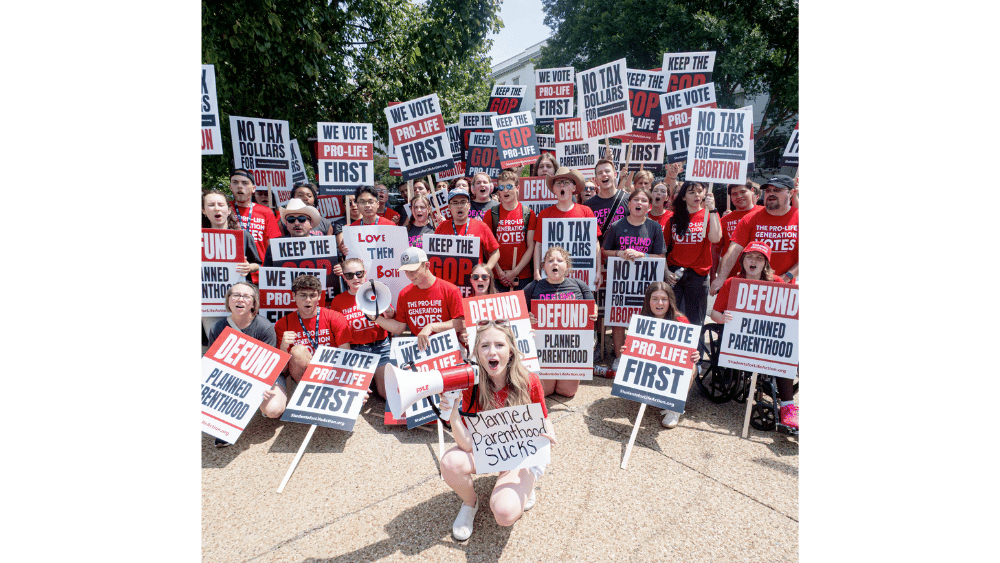
(ZENIT News / Reno, 10.06.2026).- The American abortion debate is no longer confined to presidential campaigns or Supreme Court decisions. It is now unfolding simultaneously in political institutions, state constitutions and popular culture, with Catholic leaders trying to defend the protection of unborn life in an environment where public opinion, political spending and cultural narratives often work against them.
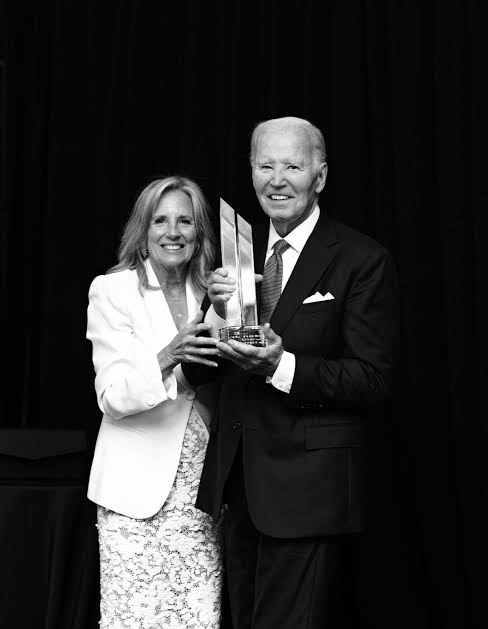
That tension was on display on September 24, when former President Joe Biden received the Sonia Schorr Sloan Service Award at Planned Parenthood of Delaware’s 22nd annual Chocolate & Champagne Gala in Claymont. Presented by his wife, former first lady Jill Biden, the award honored Biden for a record he used his acceptance speech to defend explicitly, including his efforts to preserve abortion access after the Supreme Court overturned Roe v. Wade in 2022.
The award itself carried a symbolic message. Sonia Schorr Sloan, who led Planned Parenthood of Delaware from 1980 to 1984 and remained chair of its board until her death in 2019, had become a longstanding figure in the organization’s history. Biden recalled their friendship and portrayed her as someone who would have responded to the Supreme Court’s decision not with resignation but with renewed political action.
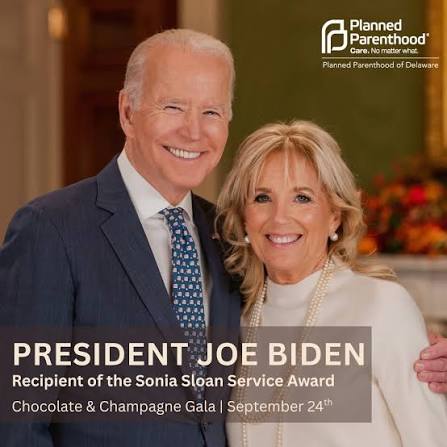
He then described his own response after Dobbs v. Jackson Women’s Health Organization, including an executive order intended to protect reproductive health care and assistance for women seeking abortions in states where the procedure remained legal. His remarks ended with a call not to give up the struggle, prompting applause from the audience.
The Church holds that human life deserves protection from conception, while the abortion-rights movement treats access to abortion as an essential component of reproductive autonomy. Biden’s public identification as a Catholic therefore makes his position especially significant in a debate in which questions of political allegiance and religious identity frequently collide.
His administration reversed the Mexico City Policy, withdrew the United States from the Geneva Consensus Declaration and repeatedly sought to eliminate federal restrictions on abortion funding, including the Hyde Amendment and the Dornan Amendment. Those decisions help explain why abortion-rights advocates continue to regard Biden as an important ally and why pro-life leaders have sharply criticized his record.
Yet the more revealing battlefield in 2026 may be outside Washington.
On November 3, voters in Virginia, Nevada, Idaho and Missouri are expected to decide measures that could significantly reshape abortion policy in their states. Catholic bishops and state Catholic conferences have responded with educational materials, videos, prayer cards, lawn signs and public statements, attempting to persuade voters that protecting unborn children should remain a political and moral priority.
The challenge is considerable. In Virginia, the campaign supporting the proposed constitutional amendment has reportedly raised almost $3 million, compared with less than $1 million for the pro-life side. In Nevada, 64 percent of voters approved a constitutional abortion-rights measure in 2024, although state rules require constitutional amendments to be approved twice.
Missouri offers a particularly close contest. A September SLU/YouGov poll found 43 percent support for the initiative, 44 percent opposition and 13 percent undecided. That narrow division gives opponents of the measure some hope, especially because the campaign opposing it has raised more than three times as much money as the campaign supporting it. The 2024 amendment that established abortion protections in Missouri passed by fewer than three percentage points.
Idaho presents another difficult environment. A January Boise State University poll found that 60 percent of residents supported the proposed abortion-rights measure. In Virginia, a 2025 survey found 62 percent support for a constitutional amendment protecting abortion rights.
These numbers illustrate the scale of the cultural challenge facing Catholic Church. A recent national survey found that 61 percent of Americans believe abortion should be legal in most or all circumstances, while only 36 percent believe it should be illegal in most or all circumstances.
The bishops therefore face a task that goes beyond mobilizing Catholics on Election Day. Archbishop George Leo Thomas of Las Vegas has said that Catholic educational efforts are intended to explain Church social and moral teaching and encourage people to discuss it with relatives, friends and colleagues. In other words, the contest is being fought not merely over legislation but over the assumptions that voters bring with them to the ballot box.
That cultural dimension is becoming increasingly visible in entertainment and celebrity discourse as well. On September 30, actress Sharon Stone told Michelle Obama that she had undergone an abortion at 18. Their subsequent conversation included the familiar argument that abortion would be effortlessly available if men could become pregnant. The exchange illustrates how abortion is increasingly discussed not only as a legal question but as part of a broader cultural narrative about gender, power and personal autonomy.
Public revelations by celebrities have become part of that narrative. Other prominent figures, including Olivia Plath, Zara Larsson, Christina Applegate and Justene Alpert, have spoken publicly about their own abortions in 2026. Such accounts can make abortion less abstract for audiences, but they can also contribute to its normalization by presenting the procedure primarily through the language of personal experience rather than through the moral question of what happens to the unborn child.
For the Catholic Church, this is precisely why the abortion debate cannot be reduced to a referendum on one law or one politician. Its pro-life position begins with the conviction that two lives are involved in every pregnancy: the mother and the child. Defending that principle also requires addressing the fears, economic pressures, medical circumstances and social isolation that can make pregnancy appear impossible for a woman who feels she has no alternative.
The American pro-life movement is consequently confronting an asymmetrical struggle. Its opponents possess substantial financial resources and, in many places, a favorable political climate. The bishops are trying to persuade voters in states where abortion-rights initiatives have repeatedly prevailed since the Supreme Court overturned Roe. At the same time, popular culture continues to shape how millions of Americans understand the procedure before they ever encounter a ballot measure.
The outcome of the November votes will matter beyond four state capitals. More than a dozen states have already held abortion-related votes since Dobbs, and 2024 was a record year, with voters in 10 states considering 11 such measures. Seven measures protecting legal abortion passed and three failed.
The pattern shows why the Catholic Church’s current campaign is about more than reversing individual laws. It is an attempt to change the terms of the conversation itself: from whether abortion should be permitted to whether a society can protect women and children at the same time.
Thank you for reading our content. If you would like to receive ZENIT’s daily e-mail news, you can subscribe for free through this link.

Publicaciones relacionadas:
 Andorra will approve abortion despite the fact that its head of state is a Catholic bishop
 Cardinal O Malley’s era at the head of the important diocese of Boston in the USA comes to an end: here is the successor
 Capuchin Bishop Who Supported a Transgender Hermit Is Recognized by LGBT Activist Group in the USA
 Pope Leo XIV accepts resignation of bishop whom Pope Francis appointed cardinal, but who “did not want” to receive the appointment
