

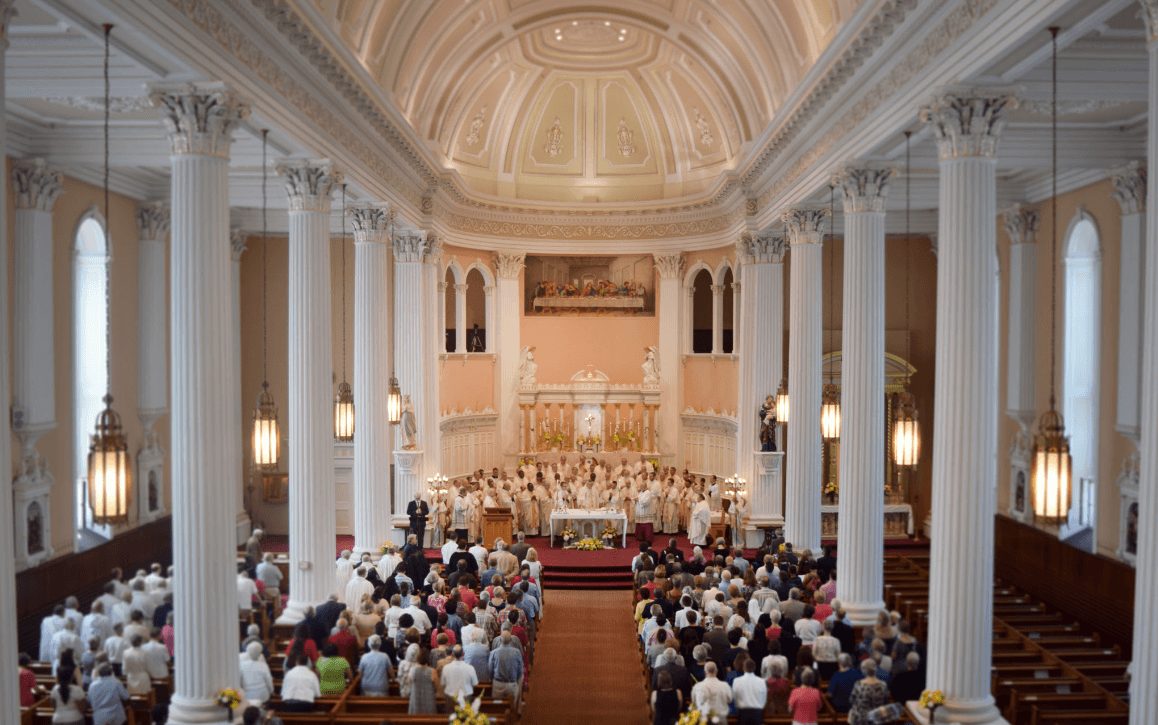
(ZENIT News / Burlington, 08.17.2026).- The bankruptcy of the Catholic Diocese of Vermont has entered a potentially decisive phase: a federal court has opened the door for survivors of clerical abuse to challenge whether as much as $500 million in parish property can be placed on the table to help finance settlements.
The ruling does not transfer a single parish building or bank account to abuse claimants. Instead, Bankruptcy Judge Heather Cooper has authorized them to bring what the court calls an adversary proceeding to establish whether properties belonging to nearly 70 parishes can legally be reached by creditors.
That distinction is crucial. The immediate battle is not over who owns the churches, rectories and other parish assets, but over whether those assets are legally separate from the diocese for purposes of its Chapter 11 reorganization.
Cooper’s July 28 order seeks to resolve that question before it becomes an even more expensive dispute. Without a determination, she warned, years of litigation could consume millions of dollars in legal fees that might otherwise be available to compensate legitimate abuse claims.
The stakes are unusually high for a diocese whose financial resources have already been severely depleted.
Vermont filed for Chapter 11 protection in the fall of 2024 after settling a series of clergy misconduct cases. According to court records cited in the material, the diocese has paid $34.5 million to resolve 67 claims over the past two decades, while another 119 claims dating back to 1950 remain outstanding.
Those settlements helped reduce its most valuable financial assets by roughly half, leaving about $35 million.
The survivors’ committee argues that this figure does not represent the full economic resources of the Catholic organization. It places the collective value of property belonging to 66 parishes at as much as $500 million and contends that these assets should also be available for negotiations.
The diocese strongly disagrees.
Its attorneys filed an 18-page objection on July 21, warning against allowing parish assets to become part of the bankruptcy estate. The diocese has already spent approximately $2 million on legal fees during the past two years and argues that prolonged litigation could leave it without sufficient resources either to continue defending itself or, more importantly, to compensate survivors.
The conflict is complicated by an effort made in 2006 to protect local parish properties by placing them in trusts. Whether those arrangements legally prevent the assets from being reached in the current bankruptcy is now one of the central questions before the court.
For the survivors’ committee, the issue is one of accountability. Its attorneys represent more than 100 abuse claimants and have asked the court to declare that all church assets are potentially available to creditors. Without such a ruling, they argue, the diocese could continue avoiding what they describe as its moral, financial and legal responsibility toward survivors.
The diocese, meanwhile, faces a difficult financial equation. Under federal bankruptcy law, a Chapter 11 reorganization plan requires approval from both the court and the creditors. Every dollar spent establishing the legal status of disputed property is a dollar that cannot ultimately go toward settlements or the operation of the diocese.
The geography of the dispute makes the issue particularly sensitive.
The properties at stake are not simply abstract financial holdings. They include local parish communities spread across Vermont, from St. Edward the Confessor in Derby Line, a community of 687 people near the Canadian border, to St. Joachim in Readsboro, where the population is 702.
For parishioners, a church building is simultaneously property, a place of worship and a center of community life. For bankruptcy creditors, however, the question is whether such property constitutes an asset that can legally contribute to resolving outstanding claims.
That tension is at the heart of the case.
The diocese has already sold significant properties to raise money. Its former headquarters in South Burlington brought $3.13 million, while the former Loretto Home senior residence in Rutland sold for $1 million. It is also seeking court approval to transfer the Rice Memorial High School campus in South Burlington to a new nonprofit group for $4.3 million.
These transactions illustrate the shrinking financial landscape in which the bankruptcy negotiations are taking place. The diocese is attempting to reorganize while preserving enough resources to continue its mission and address claims arising from decades of alleged abuse.
The survivors’ committee has now asked the court to settle the property question rather than allow the parties to spend years fighting over it piecemeal. Its attorney, Brittany Michael, told Cooper that determining the actual legal status of the disputed assets is necessary if the parties are to reach a resolution.
The court has not yet announced the next steps or a timetable.
For now, the parties have two broad choices: pursue a negotiated solution through mediation, with private discussions scheduled this week, or continue litigating the ownership and availability of parish assets.
Neither path is simple.
The survivors are seeking meaningful compensation for abuses that span generations. The diocese argues that exhausting its remaining resources in litigation could ultimately harm those same survivors by reducing the money available for settlements.
That is the paradox now confronting Vermont’s Catholic Church: the larger the pool of assets potentially available to creditors, the greater the financial exposure of the institution that must continue functioning; but the smaller that pool becomes, the more difficult it may be to provide adequate compensation to those who suffered abuse.
The bankruptcy court has therefore been asked to resolve more than a technical question of property law.
It must determine where the financial boundary lies between a diocese and the parishes that make up its visible presence in Vermont — and, once that boundary is established, how much of the Church’s remaining patrimony can legitimately be directed toward settling the claims of survivors.
The numbers make the dilemma unmistakable: approximately $35 million in major diocesan assets, up to $500 million in disputed parish property, $34.5 million already paid to settle 67 cases, and 119 additional claims still pending.
Behind those figures are victims seeking justice and parish communities wondering what will remain of their churches.
The court’s next decisions will determine whether those two realities can be reconciled.
Thank you for reading our content. If you would like to receive ZENIT’s daily e-mail news, you can subscribe for free through this link.

Publicaciones relacionadas:
 Two Cardinals, Abuses and Pope’s Investigation
 New Zealand Cardinal acquitted by Vatican and Police in unproven abuse case
 Breaking the silence: the nun who shows her face and accuses an Indian bishop of ongoing sexual abuse
 Presumption of innocence returns for priests: U.S. bishops approve revision of anti-abuse “charter”
