

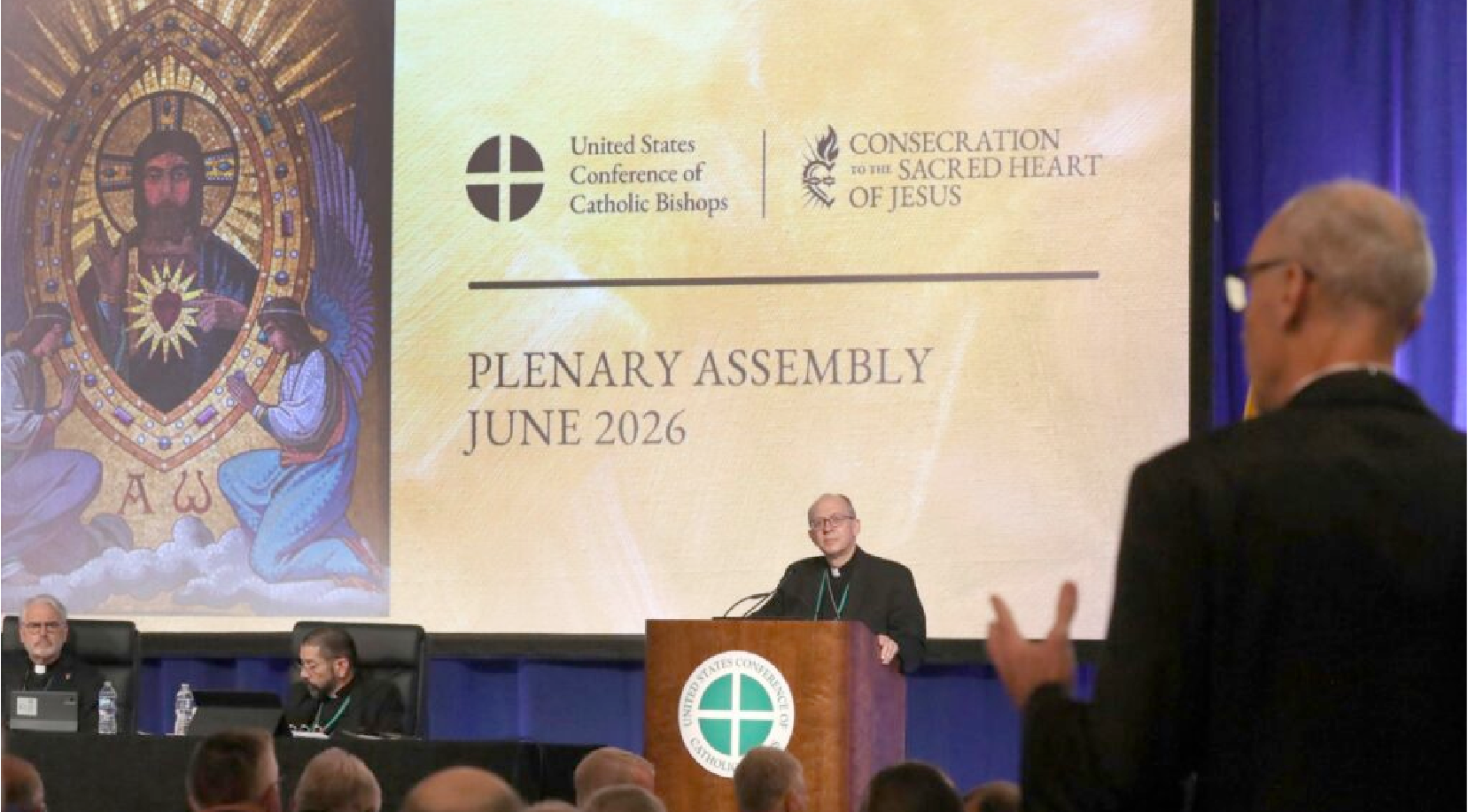
(ZENIT News / Orlando, 06.13.2026).- The U.S. Catholic bishops have voted overwhelmingly to update the Charter for the Protection of Children and Young People, reaffirming a document that has shaped the Church’s response to clergy sexual abuse for more than two decades while exposing continuing disagreements over how far reform efforts should now extend.
Meeting in Orlando during their spring plenary assembly, the bishops approved the revised text by a decisive margin of 176 votes to 22, with six abstentions. The vote marks the latest chapter in the evolution of the Charter, commonly known as the Dallas Charter, first adopted in 2002 amid the unprecedented abuse crisis that shook the Church in the United States and reverberated around the world.
Although the revisions are relatively limited, they touch on issues that have become increasingly sensitive both inside and outside the Church. For the first time, the Charter explicitly affirms the right of an accused cleric to the presumption of innocence, language drawn from recent revisions to Book VI of the Code of Canon Law. The updated text also authorizes electronic letters of suitability for clergy and adds a specific reference safeguarding information protected by the seal of confession.
These additions may appear technical, yet they reflect broader debates affecting Catholic institutions across the Western world. The inclusion of explicit protections for the sacramental seal comes at a time when legislators in several countries have proposed measures that could compel priests to disclose information received in confession. Likewise, the reaffirmation of the presumption of innocence addresses concerns that some clergy have faced lengthy restrictions from ministry following allegations that remained unresolved for years.
The vote, however, followed a significant debate about whether the document should have undergone further consultation before approval.
Archbishop Shawn McKnight of Kansas City, Kansas, emerged as the leading advocate for delaying the decision until the bishops’ November meeting. He argued that a matter carrying such moral and pastoral consequences deserved additional discussion with diocesan review boards, presbyteral councils, abuse survivors, and other stakeholders.
His proposal attracted notable support from several bishops, including Bishop Earl Fernandes of Columbus, Archbishop Paul Etienne of Seattle, and Bishop Oscar Cantú of San José. Together they argued that a short delay could strengthen confidence in the final document and better reflect the Church’s increasingly emphasized commitment to synodal consultation.
Their effort ultimately failed. The motion to postpone was defeated by 126 votes to 73, with five abstentions. Supporters of immediate approval maintained that extensive consultation had already taken place and that additional discussions were unlikely to produce substantial revisions.
Yet the debate revealed a deeper question that remains unresolved: whether the Charter should expand beyond its original focus on minors.
Advocates for abuse survivors have long urged the bishops to include protections for adults who may be vulnerable to spiritual, psychological, or sexual exploitation by clergy and Church leaders. The revised Charter does not do so. According to Bishop Barry Knestout of Richmond, chairman of the bishops’ Committee for the Protection of Children and Young People, abuse involving adults falls outside the Charter’s current scope. Instead, a separate initiative is expected to address professional conduct standards involving adults.
That distinction has not satisfied survivor advocacy groups.
Awake, a Wisconsin-based organization supporting survivors, expressed disappointment that the revisions failed to confront what it described as an urgent and continuing problem. Its leadership argued that adults can suffer devastating abuse in situations of vulnerability and that many victims continue to struggle for recognition of their experiences.
BishopAccountability.org voiced similar concerns, calling the revision process a missed opportunity. Representatives of the organization argued that the new text reflects less urgency than characterized the Church’s response in the aftermath of the 2002 crisis and warned against any perception that accountability efforts have reached completion.
Even among critics, however, there was recognition that the debate itself may have lasting consequences. More than one-third of voting bishops supported delaying the measure, suggesting that concerns about adult safeguarding, survivor engagement, and broader consultation remain significant within the episcopate.
The discussion over abuse policies unfolded alongside another prominent theme of the Orlando assembly: ecclesial unity.
As part of celebrations marking the 250th anniversary of the United States, the bishops consecrated the nation to the Sacred Heart of Jesus. During reflections preceding the act of consecration, Archbishop Shelton Fabre challenged his brother bishops to examine not only institutional policies but also their relationships with one another.
Warning that divisions among bishops weaken the Church’s witness, he urged them to resist reducing one another to ideological labels and to cultivate a spirit of genuine fraternity. His remarks came at a time when public disagreements among American bishops have occasionally spilled into national debates, revealing tensions that mirror broader political and cultural polarization.
The juxtaposition was striking. On one hand, bishops were debating how best to protect the vulnerable, support victims, and ensure justice. On the other, they were being reminded that credibility in those efforts depends not only on policies but also on the unity and integrity with which Church leaders carry them forward.
More than twenty years after the Dallas Charter transformed the Catholic Church’s response to abuse, the latest revisions suggest that the document remains both a cornerstone of reform and a focal point for ongoing questions about accountability, transparency, due process, and pastoral care. The overwhelming vote demonstrated consensus on preserving that foundation. The debate surrounding it revealed that many believe the next phase of reform is still being written.
Thank you for reading our content. If you would like to receive ZENIT’s daily e-mail news, you can subscribe for free through this link.

Publicaciones relacionadas:
 France: Civil Justice Files Investigation against Cardinal Jean-Pierre Ricard Due to Expiration
 France: Lourdes Shrine Announces a Period of Reflection to Decide Whether To Keep or Remove Jesuit Marko Rupnik’s Works
 [Photo Gallery] This is How Rupnik’s Mosaics in Lourdes Have Been Covered, and Here is the Bishop’s Explanation
 German government recognizes the Catholic Church as a model in the fight against child sexual abuse
