

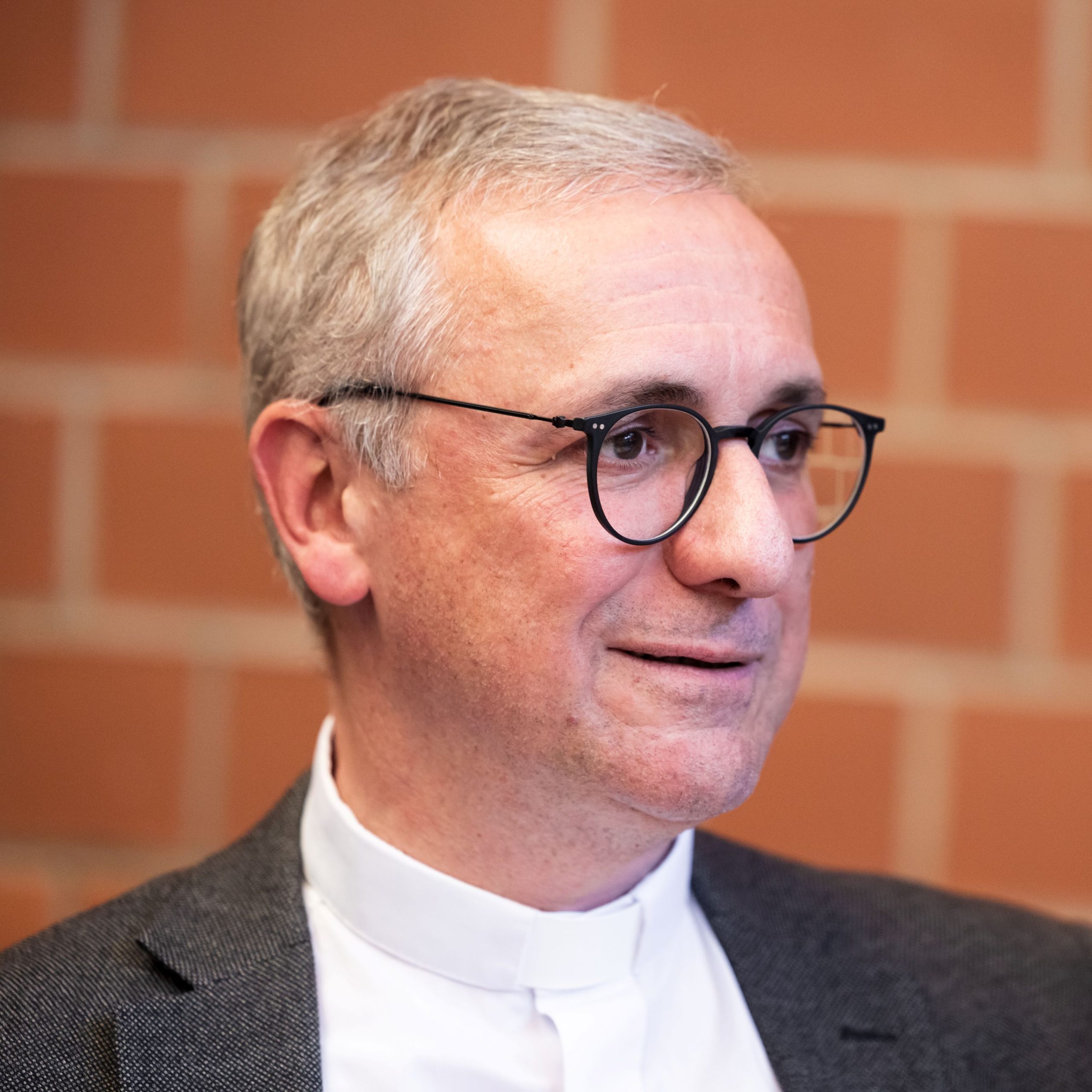
(ZENIT News / Hamburg, 08.16.2026).- A dispute over sex education in Hamburg’s Catholic schools is rapidly becoming a broader test of who should have the decisive voice in Catholic education: diocesan authorities, parents or Rome.
The Archdiocese of Hamburg is preparing to introduce new guidelines on sexual education in all 15 of its Catholic schools on August 20. The 33-page framework, titled “Men, Women, Diversity: Framework for Sexual Education in Catholic Schools of the Archdiocese of Hamburg,” is intended to guide teaching during the 2026-27 academic year. But hundreds of parents say they were not adequately consulted before its adoption and argue that important elements of the program conflict with Catholic teaching on sexuality, marriage and the family.
What began as a local disagreement has since reached the Vatican. In February, a parents’ network sent an appeal to Pope Leo XIV through the apostolic nuncio in Germany, asking him to intervene. Roughly two months ago, the families also filed a canonical complaint against Hamburg Archbishop Stefan Heße with the Dicastery for Bishops, headed by Archbishop Filippo Iannone. According to the material provided, neither appeal has received a response, despite almost six months having passed since the families first approached Rome.
The controversy centers less on whether Catholic schools should educate children about sexuality than on the anthropology and moral framework that should govern that education. The Hamburg document calls for the acceptance of diversity concerning sexual orientations and gender identities and explicitly includes transgender, intersex and nonbinary identities. It also states that biological sex need not correspond to social identity and calls for students to become informed about legal provisions concerning gender identity and transition.
Archdiocesan officials present the initiative differently. Father Sascha-Philipp Geißler, the archdiocese’s vicar general, has described the approach as an attempt to offer a contemporary understanding of love, relationships, marriage, family and sexuality based on relational ethics. Christopher Haep, the official responsible for school and higher education, has argued that social perspectives and value systems have changed and that schools therefore need contemporary responses to young people’s questions.
That explanation, however, has not persuaded the parents who have organized themselves as a “Child Protection and Prevention Network.” Their objections include the introduction of interactive sexual education from the early years of primary school, cooperation with outside organizations and activists, and uncertainty over whether parents may withdraw their children from lessons dealing with LGBT-related subjects. They also object to what they see as the presentation of different family structures alongside, rather than within the distinct Christian understanding of marriage and family.
Former students of Hamburg’s Sophie-Barat Catholic school have joined the criticism, arguing that the framework departs substantially from the Church’s binding teaching on sexual morality. Particular controversy surrounds its language concerning the acceptance of different sexual orientations and family structures, as well as sections dealing with children’s early experiences and physical development. Critics have also questioned the intellectual foundations of the framework, including its reliance on theories associated with sexologist Uwe Sielert.
The parents say they did not immediately turn to Rome. They first sought dialogue with the archdiocese and, after repeated requests, met Archbishop Heße in December 2025. According to their account, the meeting produced no substantive changes to the central elements of the framework. The decision to appeal to the Pope therefore came after the families had attempted to resolve the dispute locally.
Their appeal to Leo XIV was framed not simply as a dispute about school policy but as a plea concerning the Catholic identity of the institutions they had chosen for their children. The families asked the Pope to stop the initiative and help them protect their children’s faith and innocence. They also raised a particularly revealing concern: some Catholic immigrants, they told him, no longer feel that the Catholic Church in Germany is a place they can regard as their spiritual home when schools bearing the Catholic name adopt educational approaches they believe contradict their convictions.
That dimension deserves attention. Catholic schools are not merely private schools with religious decoration. Their identity is precisely what distinguishes them from other educational institutions. Parents who enroll their children in them can reasonably expect the school to operate within the intellectual and moral framework of the Catholic faith. At the same time, Catholic education also has a responsibility to teach children with care, prudence and respect, including when dealing with difficult questions surrounding sexuality and personal identity. The legitimate debate, therefore, is not whether young people should be treated with dignity, but how that dignity is understood and taught within a Catholic institution.
The dispute also raises a question about synodality itself. The Hamburg framework draws on the controversial German Synodal Way, particularly its work on relationships, sexuality and partnership. Yet the parents’ experience illustrates a paradox at the heart of the German Church’s reform debate: a movement that has placed considerable emphasis on consultation and participation is now being accused by a large group of lay Catholics of having failed to listen to them before approving a major educational policy.
For Archbishop Heße, the controversy adds another chapter to a complicated ecclesial record. In 2021 he offered his resignation after questions surrounding his handling of abuse-related matters during his previous service as vicar general in Cologne. The Vatican referred to organizational and procedural shortcomings, but Pope Francis rejected his resignation and Heße remained Archbishop of Hamburg.
Now the decisive question is whether Rome will respond before the new framework takes effect.
The date is already fixed: August 20, when the guidelines are scheduled to become operational across Hamburg’s 15 Catholic schools. The families have exhausted, at least according to their account, the most obvious channels of local dialogue and have placed their concerns before both the Pope and the Dicastery for Bishops.
Whatever judgment Rome ultimately reaches on the substance of the Hamburg framework, the case presents a broader pastoral challenge that cannot easily be dismissed. Catholic parents are not merely consumers of education; they are the primary educators of their children. When they approach their bishop, organize collectively, and finally appeal to the Holy See, their request for a hearing deserves an answer.
The immediate issue is Hamburg. The deeper issue is trust — and whether, in a Church that speaks so frequently about listening, Rome will now listen to the people who have been asking to be heard.
Thank you for reading our content. If you would like to receive ZENIT’s daily e-mail news, you can subscribe for free through this link.

Publicaciones relacionadas:
 Bishop Accepts and Backs First Transgender “Man” (Biologically a Woman) in Catholic Hermitic Life
 Parents ask Supreme Court to protect daughter from secret social transition at public school
 “Not in my name”: German bishop turns his back on document full of gender ideology from his country’s episcopate
 German priests loyal to the Pope respond to their own bishop (and cardinal), who is pressuring them to bless same-sex couples in a major diocese
