

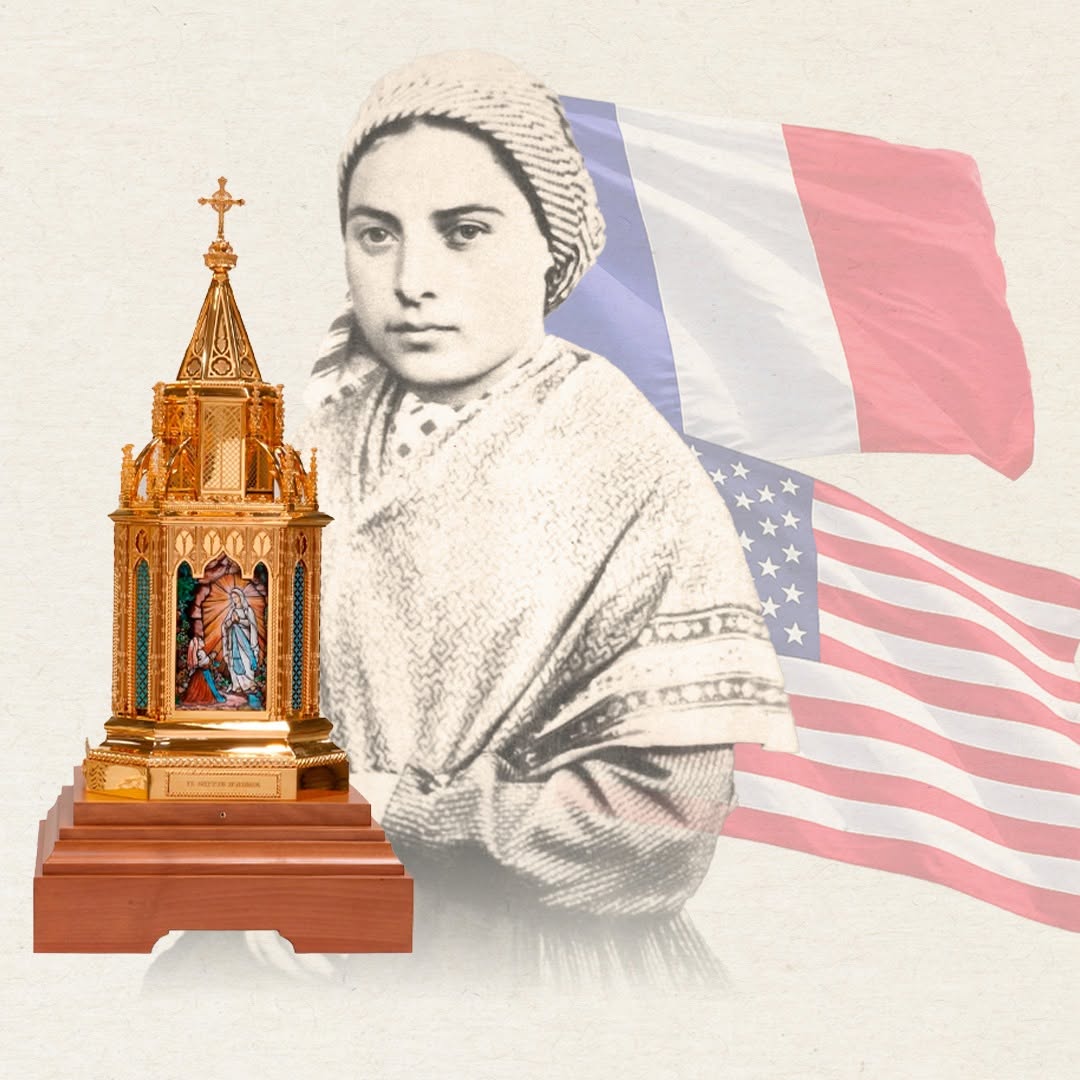
(ZENIT News / Washington, 09.12.2026).- Nearly 170 years after a 14-year-old girl became the unlikely center of one of Catholicism’s most enduring pilgrimage stories, Bernadette Soubirous is preparing to return to the United States.
The journey will begin on September 18 at the Basilica of the National Shrine of the Immaculate Conception in Washington, D.C., and continue until August 2027. Called the “Path of Grace,” the pilgrimage will include almost 140 stops across the country, nearly twice as many as the first American tour in 2022.
That earlier journey visited 45 locations between April and August and revealed an appetite for popular Catholic devotions that surprised even some of the organizers. More than 3,000 people crowded into a parish in Mineral Wells, Texas, over a single weekend. In Port St. Lucie, Florida, a pastor described hearing confessions “without stopping,” while the pastor of Our Lady of Lourdes in Miami, Kenneth Schwanger, recalled that many smaller parishes had not seen such numbers for years.
The new pilgrimage is designed not merely to repeat that experience, but to broaden it. For the first time, Bernadette’s relics will also visit universities, bringing the story of Lourdes into places where Catholic faith is increasingly challenged to speak to younger generations. One of the scheduled stops is Villanova University in Pennsylvania, the alma mater of Pope Leo XIV.
The timing creates an intriguing coincidence. The Pope is scheduled to visit Lourdes on September 27, one day before Bernadette’s relics are due to arrive at Villanova. The American tour’s coordinator, Toni J. Pallatto, has described the university visits as an effort to reach young people, whom she calls “the future of Catholicism.”
The focus on Bernadette herself is significant. The Lourdes story began not with a powerful religious figure but with a poor adolescent who initially had no apparent reason to attract the attention of bishops, investigators or crowds.
Between February and July 1858, Bernadette reported 18 encounters with a mysterious woman at the Massabielle grotto outside Lourdes. The figure eventually identified herself as the Immaculate Conception and asked that a chapel be built at the site.
One of the most memorable episodes occurred on February 25, when Bernadette was instructed to drink and wash at a spring that did not yet exist. She dug into the muddy ground, eventually uncovering water that became the spring associated with Lourdes and, in time, one of the central devotional features of the sanctuary.
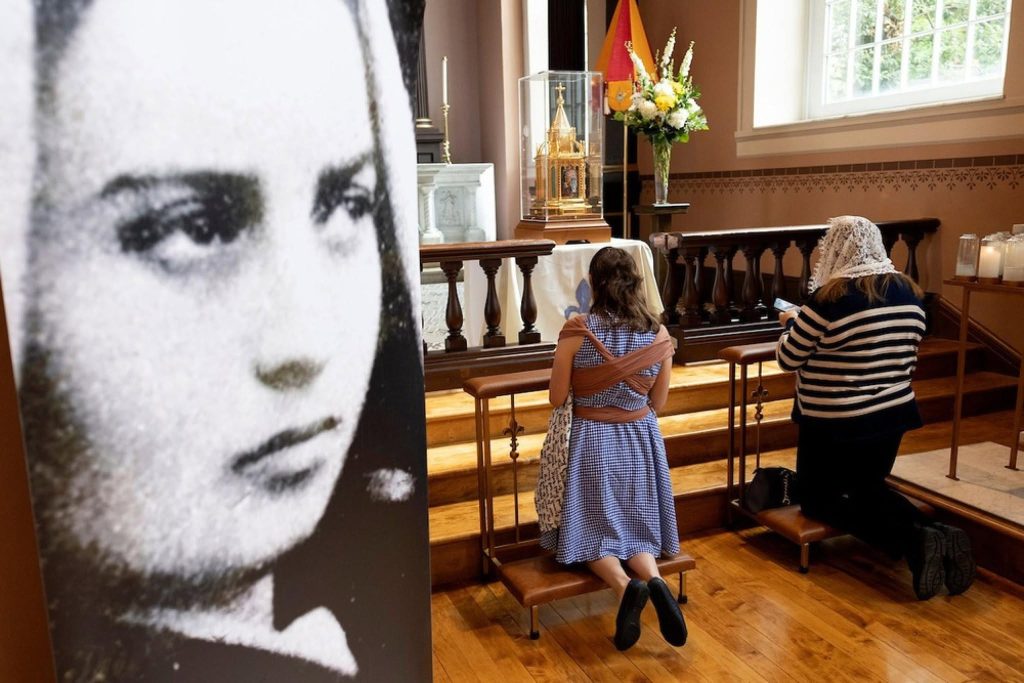
The Church’s approach to Lourdes has always involved a distinction between faith and claims of miraculous healing. More than 7,000 healings have been reported in connection with the shrine, while 70 have been officially recognized as miraculous. That careful distinction is important: the existence of numerous reported cures does not mean that every healing claim has received ecclesial recognition.
Bernadette herself did not become famous because she sought recognition. Her repeated response during questioning was that she had been entrusted with a message, not with forcing anyone to believe. She later entered religious life and died in 1879 at just 35 years of age. Her spirituality was summed up in her aspiration that her entire existence should be inspired by love. Pope Pius XI canonized her in 1933.
The American pilgrimage offers something different from a conventional tour of a religious object. Relics connect contemporary Catholics with a person whose life has become part of the Church’s collective memory, while pilgrimage creates an opportunity for that memory to be experienced communally rather than simply read about.
The organizers are also linking the physical journey across the United States with prayer beyond the places the relics actually visit. Through the official pilgrimage website, Catholics can follow the itinerary, subscribe to alerts, request Masses for specific intentions at the Sanctuary of Lourdes, light a candle remotely and submit prayer intentions that will be carried to France. Parishes interested in receiving the relics can also apply to host them, while an accompanying prayer journey is available through the Hallow app.
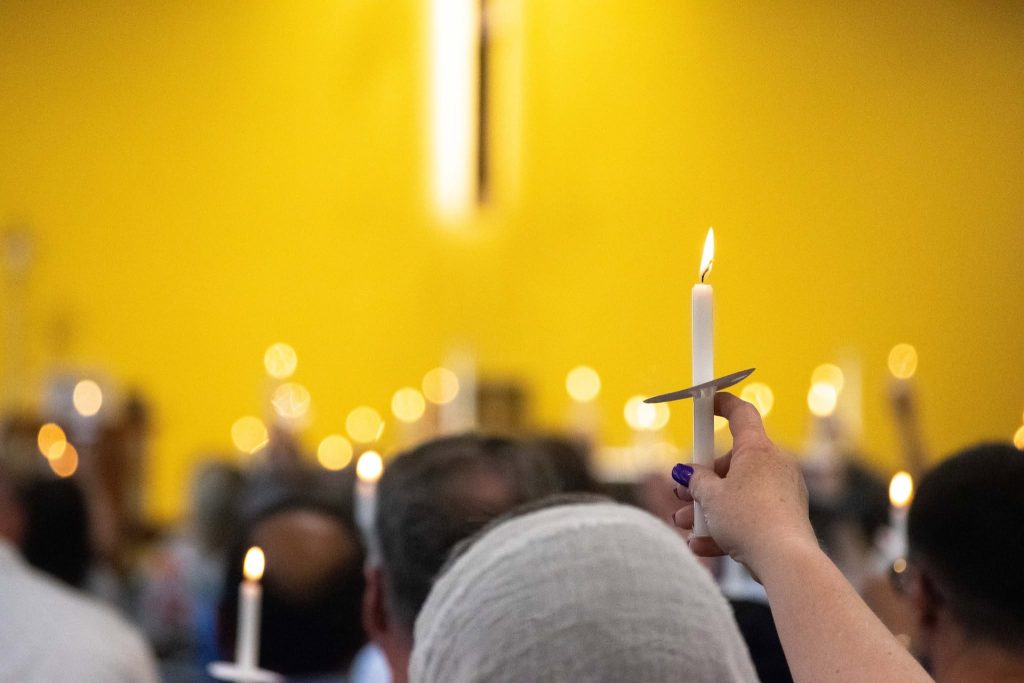
For Schwanger, who witnessed the extraordinary response to the 2022 pilgrimage, the attraction cannot be fully explained by statistics or historical information. “Information only takes you so far,” he said. “The real thing is the experience.”
That may ultimately explain why the story of a French teenager continues to travel so far. Bernadette did not set out to create a movement, and she never claimed authority to make people believe. She simply insisted on telling what she said she had seen.
Thank you for reading our content. If you would like to receive ZENIT’s daily e-mail news, you can subscribe for free through this link.

Publicaciones relacionadas:
 Shrine to Mary Undoer of Knots Is Erected Officially in Cancún, Mexico: It Welcomes on Average 15,000 People Weekly
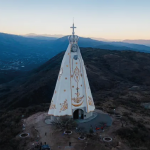 This is the largest statue of the Virgin Mary in the world, which is in Argentina
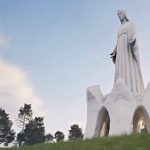 Europe’s Largest Statue of Virgin Mary Will Be in Poland, Financed by One of the Country’s Richest Men
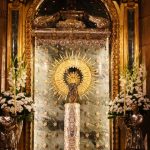 Zaragoza’s Basilica of the Pillar Marks Record-Breaking Global Pilgrimage Surge: Americans are the largest group
