

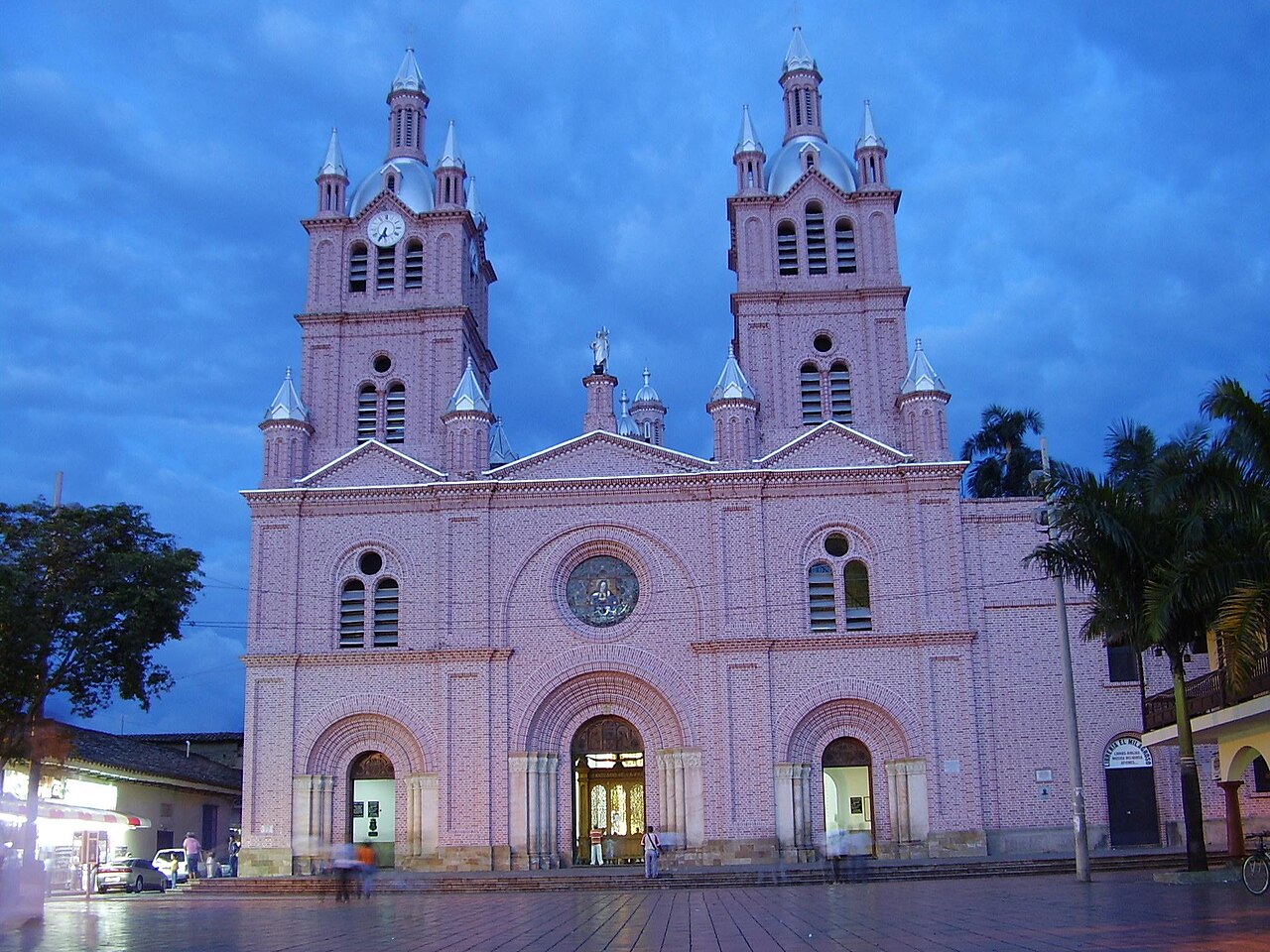
(ZENIT News / Bogotá, 09.12.2026).- Colombia is mobilizing public and private resources to repair one of the country’s best-known Catholic shrines after an earthquake damaged its dome, just days before thousands of pilgrims were expected to gather for the annual feast of the Lord of Miracles of Buga.
During a September 5 visit to the Valle del Cauca region, Colombian President Abelardo de la Espriella announced an initial government allocation of 1.2 billion pesos, approximately $320,000, for the restoration of the Minor Basilica of the Lord of Miracles in Buga. He said the government was also working with the private sector to raise a further 5 billion pesos, or about $1.6 million, for the broader reconstruction and repair effort.
The basilica was damaged by the August 10 earthquake, particularly in its dome. For safety reasons, Masses inside the church have been suspended. The liturgy is currently being celebrated in the town’s central square, transforming an extraordinary disruption into a highly visible expression of continued public worship.
The restoration will also have to meet requirements that go beyond ordinary building repairs. The basilica is legally designated as a cultural heritage site, meaning that restoration work must be supervised by Colombia’s Ministry of Culture.
De la Espriella said the state was committed to protecting “the spiritual symbols of the Colombian people,” while describing the restoration as an effort to honor the Black Christ of Buga and defend a symbol of faith and spirituality with profound significance for Colombians.
The timing gives the damage particular urgency. The feast of the Lord of Miracles is celebrated in Buga on September 14 and traditionally draws thousands of pilgrims. The earthquake therefore struck just as the city was preparing for one of its most important annual religious gatherings.
Yet the shrine’s devotional center has escaped the worst of the damage. In a video published on Facebook, Father Alcides de Jesús Orozco, rector of the basilica, explained that although the main church remains closed, the section where the image of Christ is enthroned was not damaged and remains accessible to the faithful.
That detail is significant because the history of Buga’s devotion is inseparable from the image itself. The crucified Christ, traditionally known as the Black Christ because of his dark skin, has made the basilica a major destination for Colombian pilgrims. The distinction between the damaged structure and the undamaged devotional space also means that, even while restoration is underway, worshippers have not been entirely separated from the image at the heart of the shrine.
For now, however, the basilica remains unable to host Masses in its principal interior. The central square has become the temporary setting for the Eucharistic celebration, while engineers, cultural authorities, Church officials and potential private donors face the task of determining how to return the sanctuary safely to normal use.
The immediate challenge is therefore both practical and symbolic. Colombia has committed the first 1.2 billion pesos and is seeking several times that amount from private sources. But beyond the figures lies a more difficult restoration: reopening a sacred place without compromising either its structural integrity or the devotional tradition that has made Buga one of the country’s most important pilgrimage destinations.
Thank you for reading our content. If you would like to receive ZENIT’s daily e-mail news, you can subscribe for free through this link.

Publicaciones relacionadas:
 Assisi, Land of Saint Francis, Breaks Pilgrimage Record: Here Are Last Year’s Numbers
 Belarus releases Discalced Carmelite friar accused of espionage
 U.S. Grants $240 Million to Catholic Humanitarian Aid Organization: The Government’s Trust in the Catholic Church
 Cuban and Panamanian nuns save Cuba from literally being left without Mass due to a shortage of Hosts for consecration
