

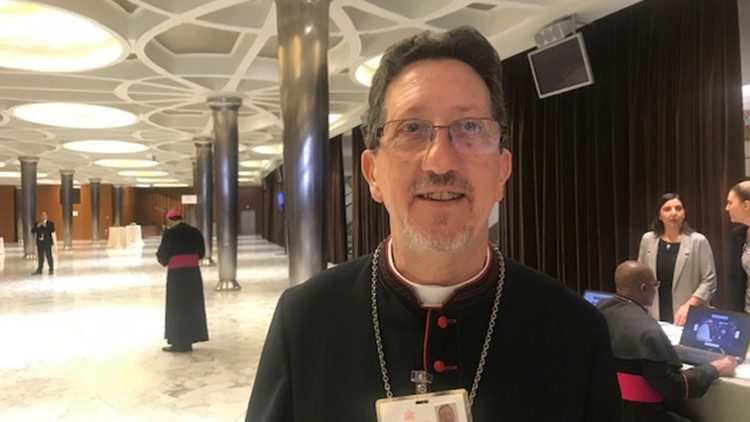
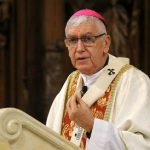
(ZENIT News / Córdoba, Argentina, 10.06.2026).- The Archdiocese of Córdoba, Argentina, announced on October 2 that Bishop Ricardo Seirutti had been removed from his offices as auxiliary bishop and vicar general following a canonical judicial process ordered by the Holy See’s Dicastery for the Doctrine of the Faith. The case began after two adults reported what the archdiocese described as conduct improper to his episcopal ministry, but the nature of the allegations has not been made public.
The process was conducted by the Interdiocesan Tribunal of Buenos Aires after being ordered by the Dicastery for the Doctrine of the Faith, and concluded in recent weeks with a ruling that stripped Seirutti of his offices and imposed additional restrictions.
Seirutti, 70, was ordained a priest for the Archdiocese of Córdoba in 1988 and was appointed auxiliary bishop by Pope Francis in 2015. His removal therefore represents a substantial change in the responsibilities he had exercised within the archdiocese, which is led by Cardinal Ángel Sixto Rossi.
The ruling does not, however, amount to a complete prohibition on his sacramental ministry. For five years, Seirutti may not receive formal appointments or new ecclesiastical offices, and he is forbidden to administer the sacrament of penance or reconciliation. The archdiocese specifically referred to Canon 976 of the Code of Canon Law in connection with this restriction. He retains permission to celebrate Mass and administer the other sacraments.
That distinction is important because Catholic bishops do not cease to be ordained simply because they are removed from an office. Canonical penalties can instead restrict what an ordained minister is permitted to do, while leaving other sacramental faculties intact. In Seirutti’s case, the ruling has removed him from institutional authority and sharply limited one particular sacramental ministry without eliminating his ability to celebrate Mass or administer the remaining sacraments.
The public information about the case remains deliberately limited. The archdiocese has not identified the two adults who made the accusations, nor has it disclosed what the alleged conduct consisted of. Consequently, the published decision does not provide a basis for drawing conclusions beyond the facts it has made public. What is clear is that the accusations were considered serious enough for the Dicastery for the Doctrine of the Faith to order a formal canonical process rather than leaving the matter solely to local ecclesiastical authorities.
For the moment, the limits of the public record are as important as the penalty itself. The Church has announced the outcome of a canonical process, but not the underlying allegations in detail. That leaves the central facts clear — the offices lost, the five-year restrictions imposed and the sacramental functions retained — while avoiding conclusions that the published information does not support.
Thank you for reading our content. If you would like to receive ZENIT’s daily e-mail news, you can subscribe for free through this link.

Publicaciones relacionadas:
 Pope Francis removes Belgian bishop convicted of abuse from the clerical state
 New Zealand Cardinal acquitted by Vatican and Police in unproven abuse case
 Cardinal Dolan takes insurer to court for non-compliance in sexual abuse cases
 Crisis Deepens in Lima Archdiocese Amid Abuse Allegations and Accusations of Mismanagement Under Cardinal Castillo
