

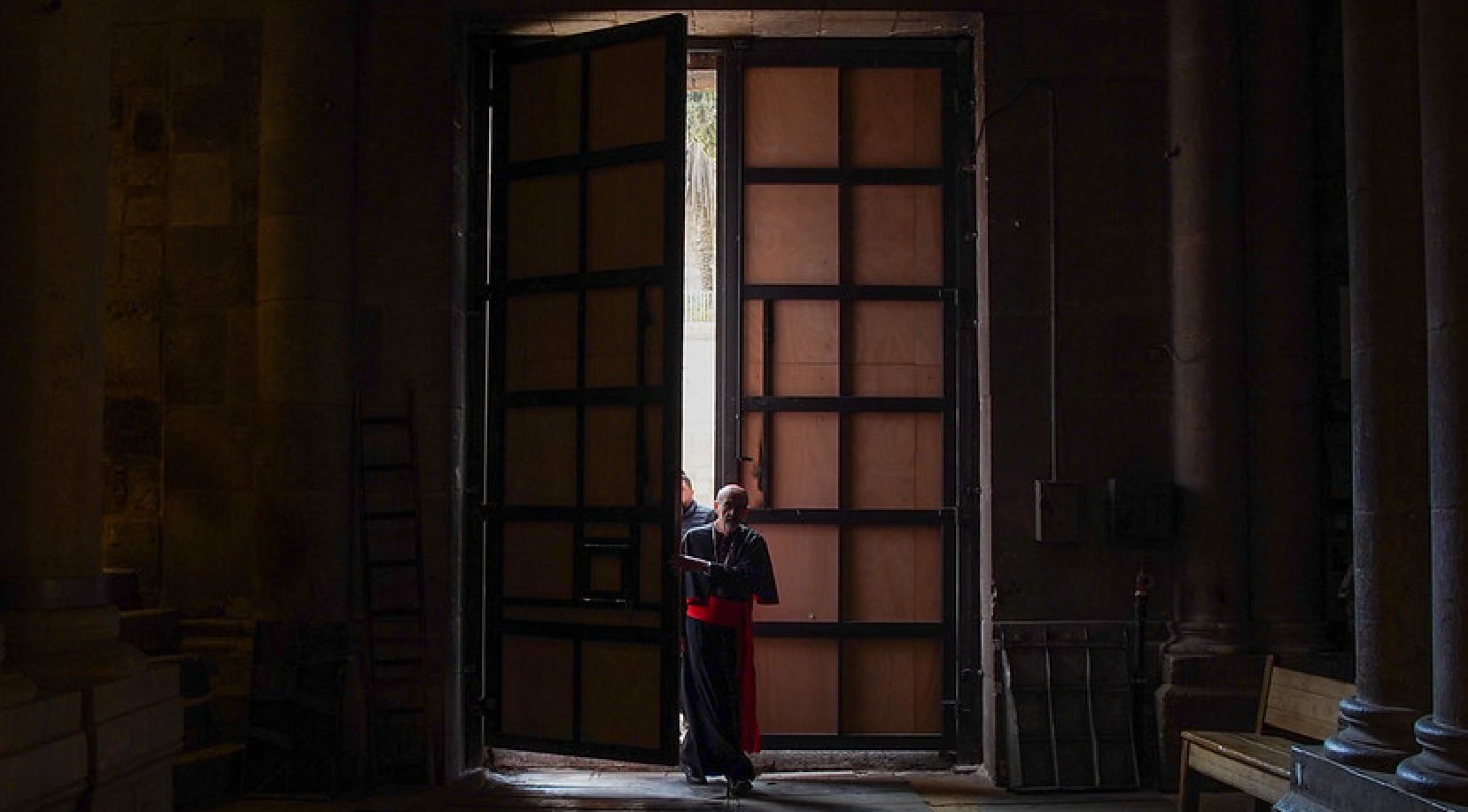
(ZENIT News / Jerusalem, 04.10.2026).- For six weeks, the spiritual heart of Jerusalem beat behind closed doors. Now, with the lifting of Israeli security restrictions following a pause in hostilities with Iran, the city’s most sacred spaces have reopened, allowing Jews, Christians, and Muslims to return to prayer in places that had stood largely inaccessible during one of the most sensitive liturgical periods of the year.
The decision, implemented on April 9, follows a period of extraordinary measures imposed at the end of February 2026, when authorities shut down access to the Old City’s principal holy sites—the Church of the Holy Sepulchre, the Al-Aqsa Mosque compound, and the Western Wall—citing the risk posed by missile attacks and the danger of mass casualties in crowded areas lacking adequate shelter. For forty days, entry was either severely restricted or limited to clergy, transforming what is typically a season of intense religious activity into an unprecedented experience of absence.
Since the early morning hours, Israel Police and Border Police units have been deployed across Jerusalem’s Old City. Our forces are working to ensure a safe environment for all citizens and visitors, including the thousands of Christians arriving for today’s Holy Fire ceremony. pic.twitter.com/zLyRQA12lB
— Israel Police (@israelpolice) April 11, 2026
The reopening immediately altered the atmosphere. Hundreds of police officers and volunteers were deployed across Jerusalem, but the dominant image was not one of control, rather of return: worshippers crossing thresholds that had remained closed through Lent, Ramadan, and Passover, three overlapping sacred periods that ordinarily draw vast numbers of pilgrims.
At the Al-Aqsa compound, administered by the Islamic Waqf, dawn prayers resumed with hundreds of faithful present for the first time in weeks. For many, the moment carried an emotional weight difficult to articulate. Some described the experience as a kind of rebirth, after what felt like a prolonged deprivation of spiritual nourishment. Others wept openly upon entering, expressing a mixture of relief and lingering grief over the interruption of religious life.
Following updated Home Front Command guidelines, all holy sites are now open to the general public, and the Israel Police has completed preparations for the Holy Fire ceremony taking place this Saturday in Jerusalem.
Officers will be present throughout the Old City and along… pic.twitter.com/x2UFvj0wnf
— Israel Police (@israelpolice) April 9, 2026
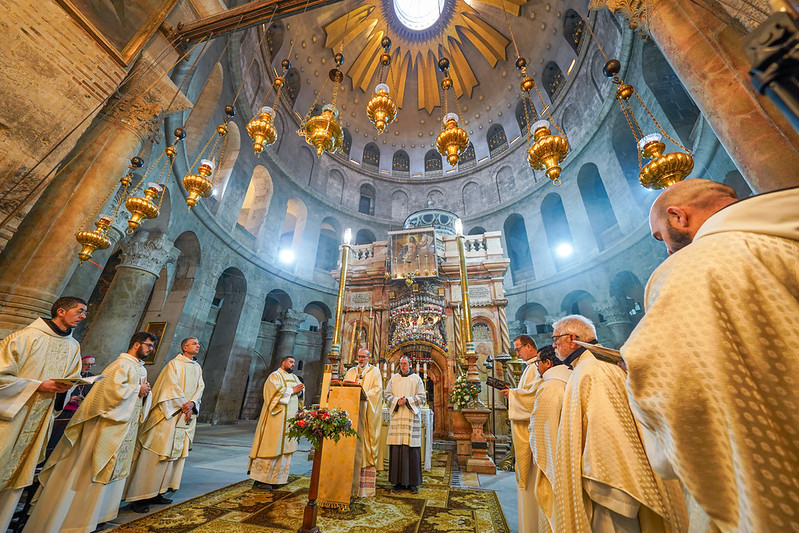
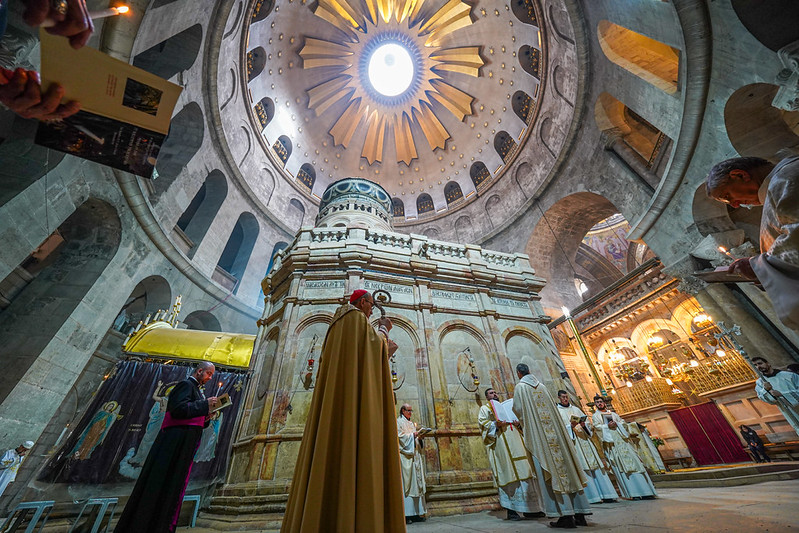
In the Christian quarter, the reopening of the Church of the Holy Sepulchre marked the end of a particularly austere Holy Week. The basilica, traditionally filled with pilgrims commemorating the Passion and Resurrection of Christ, had instead hosted reduced liturgies under tight capacity limits, with minimal international presence. The absence was felt acutely, especially on Good Friday and Easter, when the site normally becomes the focal point of global Christian devotion.
Now, attention turns to the upcoming Orthodox Easter, which will be celebrated days after the reopening. Thousands are expected to gather inside the twelfth-century structure for the ancient ceremony of the Holy Fire, a ritual in which a flame is ceremonially kindled and passed from candle to candle among the faithful. The timing of the reopening has made it possible for this event to proceed with broader participation, restoring a sense of continuity to a tradition that has endured for centuries.
Jewish worshippers, too, returned to the Western Wall, the most sacred site where Jews can pray. Scenes of men and women bowing, touching the ancient stones, and inserting written prayers into its crevices reappeared after weeks of absence. For residents of Jerusalem, the reopening was not only a religious moment but also a reminder of the city’s volatility. As one local observer noted, the ability to pray at the Wall cannot be taken for granted, as conditions can change rapidly.
The closure itself remains a point of contention. Israeli authorities have consistently defended the restrictions as necessary security measures in the face of credible threats, including missile strikes that repeatedly forced residents into shelters. From this perspective, limiting access to densely populated religious sites was a precaution aimed at preventing mass casualties.
Yet critics, including some religious leaders and local residents, have questioned whether the measures were proportionate or selectively applied. The decision to block access during key religious observances—among them the final days of Ramadan, the Eid al-Fitr prayers, and the Christian Holy Week—provoked frustration and, in some cases, diplomatic criticism. A particularly sensitive incident occurred when Catholic leaders were initially prevented from entering the Holy Sepulchre on Palm Sunday, an episode that drew international attention before access was later granted.
For Muslims, the restrictions also echoed earlier limitations. Even before the outbreak of the recent conflict, access to Al-Aqsa had been subject to quotas and age-based criteria, with only 10,000 Palestinians from the West Bank allowed entry during certain Ramadan prayers, and only under specific conditions. The war intensified these constraints, culminating in the full closure of the compound to the general public.
Economic consequences have also been evident. The Old City’s merchants, already affected by years of instability—from the pandemic to regional conflicts—have seen yet another peak season disrupted. The convergence of Ramadan, Easter, and Passover would ordinarily signal a surge in pilgrimage and commerce. Instead, shopkeepers reopened to uncertain prospects, aware that a temporary ceasefire may not translate into sustained recovery.
Despite the renewed access, the sense of normality remains tentative. Some residents and worshippers continue to question the durability of the current calm, while others accept the security rationale but lament the spiritual cost. The debate reflects a deeper tension intrinsic to Jerusalem itself: the coexistence of sacred significance and geopolitical fragility.
What the reopening has restored, at least for now, is the possibility of shared religious presence in a city where faith traditions intersect in a uniquely concentrated form. In the span of a single day, the sound of prayer returned to spaces that had fallen silent, reactivating rhythms that define Jerusalem’s identity.
Whether this moment marks the beginning of a more stable phase or merely a pause between crises remains uncertain. But for those who crossed the thresholds of the city’s holy places after forty days of absence, the act of return carried a meaning that transcended politics: the recovery of a spiritual practice interrupted, and the fragile hope that it might endure.
Thank you for reading our content. If you would like to receive ZENIT’s daily e-mail news, you can subscribe for free through this link.

Publicaciones relacionadas:
 Lebanon: Catholic churches shelter people displaced by Israeli invasion
 The Number of Israeli Citizens Identifying as Christian Is Growing. According to Government Data for 2025
 53 Humanitarian Organizations Denounce «False Narratives» to Sabotage Those Saving Lives in Palestine
 Between Drones, Settlers and Classrooms: How Violence and Administrative Israeli Pressure Are Reshaping Palestinian Life
