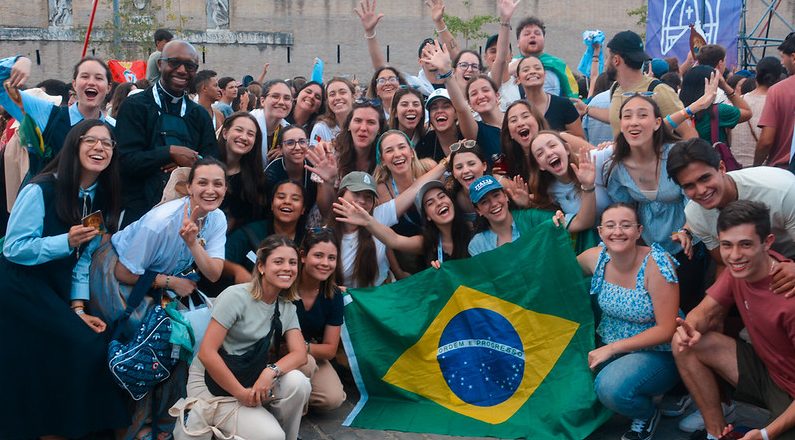
(ZENIT News / Brazilia, 07.22.2026).- A large-scale survey of young Catholics in Brazil has uncovered a generation that appears less interested in adapting the Church to the noise of contemporary culture than in finding within it something solid enough to resist that noise.
The findings of the 2025 National Survey on Youth Evangelization in Brazil, presented in June by the National Conference of the Bishops of Brazil through its Episcopal Commission for Youth, offer a revealing portrait of young people who are not abandoning religious faith but seeking a more serious, coherent and spiritually demanding experience of it.
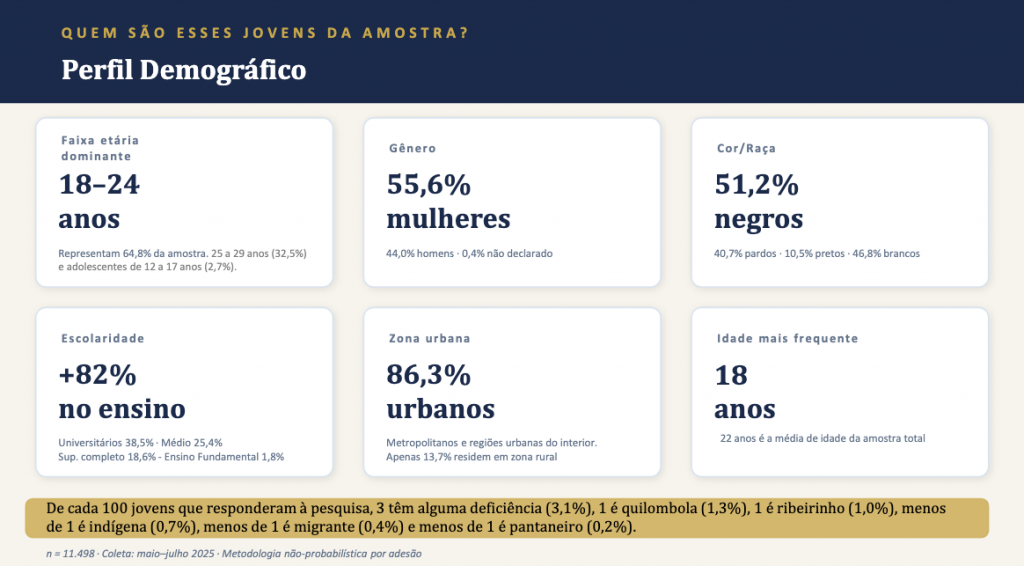
The study interviewed 11,498 adolescents and young adults from every region of the country between April and July 2025. Of those surveyed, 64.8 percent were between 18 and 24, 32.5 percent between 25 and 29, and 2.7 percent between 12 and 17.
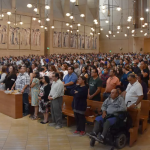
The sample was already strongly connected to Catholic life: 93.6 percent had received the sacraments of Christian initiation, while 68.5 percent attended Mass weekly. Yet the significance of the survey lies less in confirming the existence of committed young Catholics than in revealing what they are looking for—and what can cause them to disengage.
Their answers point toward an unexpected conclusion. In an age in which young people are often assumed to be primarily attracted by novelty, many of these Catholics are searching for depth, formation and continuity.
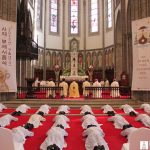
Sainthood and Christian faith ranked among the subjects that most interested participants. Many expressed a desire to learn more about the Word of God, the Eucharist and Catholic formation. They also highlighted the importance of a liturgy that is carefully and reverently celebrated.
For some young people, a beautiful liturgy offers precisely what the digital world increasingly fails to provide: silence, concentration, transcendence and a sense that not everything has to be reduced to entertainment. In the midst of the endless stream of brief videos, opinions and notifications, reverence can become a form of resistance to superficiality.
The survey also identifies a tension that will be difficult for the Church to ignore. Young Catholics reported that insufficient attention to the liturgy and an excessive emphasis on sociopolitical issues can become obstacles to participation in ecclesial life.
This does not mean that young Catholics are indifferent to social questions. Layla Kamila, a 29-year-old communications coordinator for the Episcopal Commission for Youth and a member of the research team, stressed that evangelization centered on Christ, spirituality, liturgy and formation does not diminish the Church’s responsibility toward the poor, justice, peace and human dignity.
The point, rather, is one of priority and integration. For these young people, social action cannot replace proclamation. The Church’s engagement with the world must flow from the Gospel rather than become a substitute for it.
The survey also offers an important corrective to the idea that young people’s religious lives are formed exclusively through digital media. The family remains the principal gateway to Catholic faith: approximately 61 percent said they first approached the Church through the religious experience of their parents and grandparents.
That finding is particularly significant in an era when many institutions have lost authority. The transmission of faith within the family remains one of the most powerful forms of evangelization—not through a campaign or a digital strategy, but through the lived example of relationships across generations.
The digital world, nevertheless, is central to the lives of these young Catholics. Religion and spirituality were the subjects most frequently searched for online, ahead of entertainment, education and politics. Social networks and messaging applications were the most widely used channels.
Even in this environment, the Church ranked as the third most important source of information for the young people surveyed, at 13.5 percent, ahead of influencers and YouTubers, who accounted for 12.4 percent.
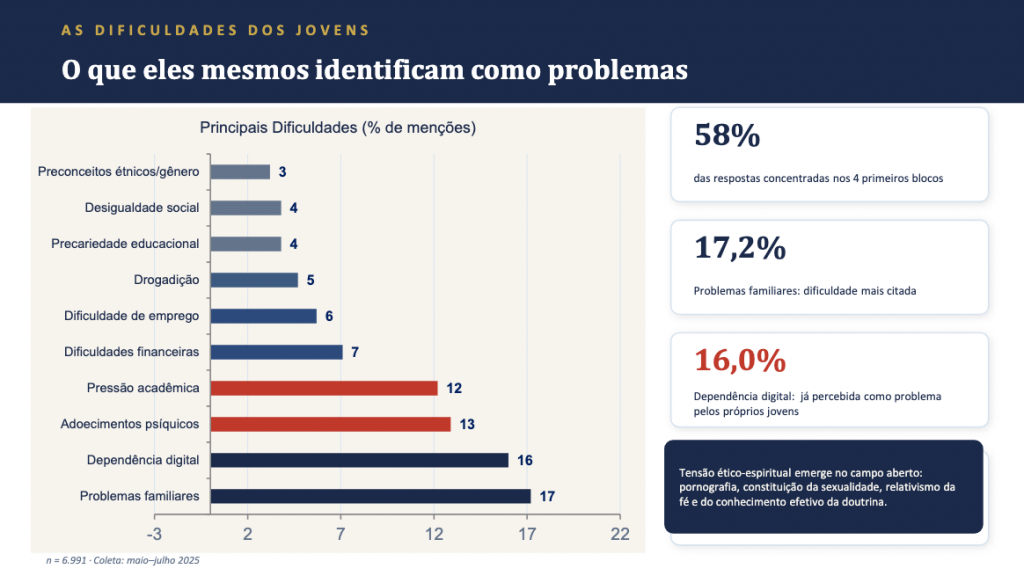
The figures suggest that the Church has not been expelled from the digital conversation. But they also indicate that presence alone is not enough. Young people are not necessarily looking for the Church to imitate the logic of social media. They may be looking for precisely what social media cannot give them.
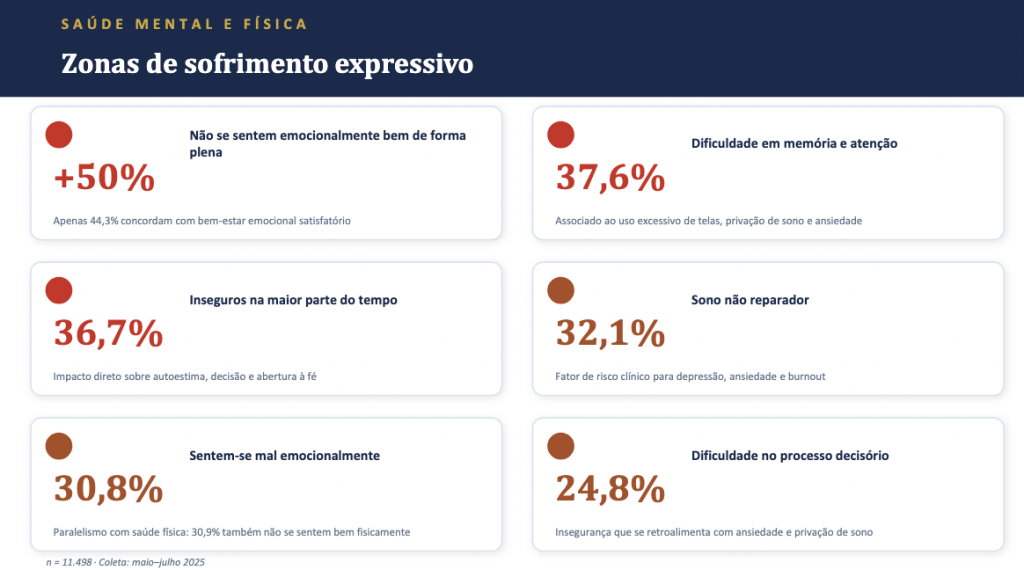
The spiritual dimension of their responses is equally striking. Sixty-four percent said spirituality helps them deal with everyday problems. Another 55.8 percent said they are strengthened by pastoral presence, while 43.4 percent maintain hope for the future despite difficulties. Some 22.8 percent said they speak with God, the Virgin Mary and the saints.
Behind these figures lies a generation confronting the familiar pressures of modern life: an overload of information, uncertainty about the future and a pervasive crisis of meaning. Patrícia Espíndola de Lima Teixeira, a psychopedagogue at the PUCRS Youth Observatory who coordinated the research, said that exposure to large amounts of superficial content appears to be generating a thirst for deeper relationships capable of giving meaning to life and strengthening faith.
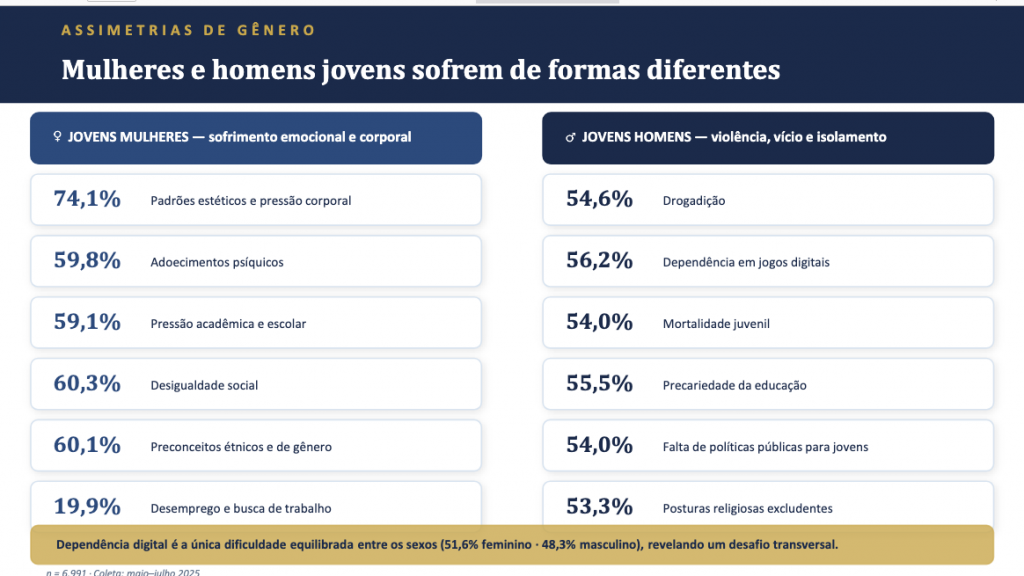
The survey’s message is therefore not simply that young Brazilians want more religion. It is that they want a faith they regard as authentic.
That demand also has consequences for the way the Church interprets its internal debates. Teixeira has warned against using the findings to reinforce the familiar divisions between conservatives and progressives. Instead, she argues that the results should encourage the Church to move beyond polarization and recover the unity expressed in the biblical image of the Body of Christ.
The challenge is substantial. A young Catholic who asks for reverence, doctrinal formation and a clearer proclamation of Christ should not automatically be treated as politically conservative. Nor should a young Catholic concerned about poverty, justice and human dignity be treated as spiritually suspect. The survey itself suggests that the categories often used to describe Church debates are too narrow to capture the aspirations of the people actually sitting in the pews.
What emerges is a generation that wants both roots and relevance.
The Brazilian Church now faces the task of listening carefully. The survey was conceived, according to its coordinators, not to impose a predetermined pastoral program but to listen before proposing solutions, in keeping with the synodal emphasis on listening and discernment.
The practical question will be what happens next. The National Conference of the Bishops of Brazil plans to distribute approximately 20,000 copies of the report so that dioceses, parishes, movements and pastoral groups can use its findings in shaping their work with young people.
The numbers may be useful for planning, but the researchers insist that they should not obscure the people behind them. Each statistic represents a face, a family and a personal journey of faith.
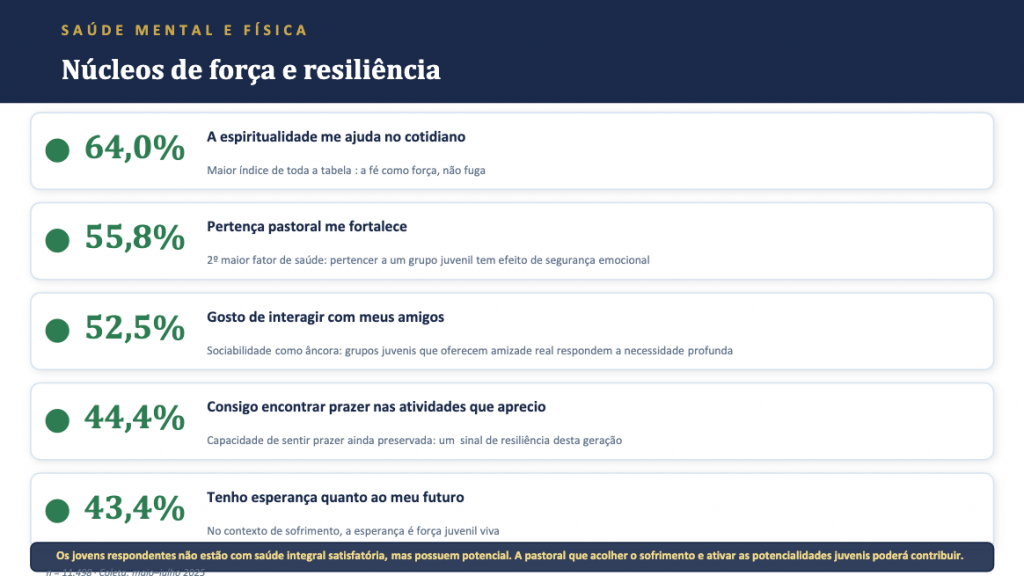
That may ultimately be the most important lesson of the survey. Brazil’s Catholic youth does not appear to be demanding a Church that merely follows the latest cultural trends. It is asking whether the Church still possesses the confidence to offer something different: a faith centered on Christ, a liturgy that opens the human spirit to transcendence, formation capable of confronting difficult questions and a community in which social commitment is inseparable from the Gospel.
In a culture increasingly defined by speed, fragmentation and constant noise, the young Catholics surveyed may be making a surprisingly traditional request.
They want the Church to give them something worth believing in—and to help them live it.
Thank you for reading our content. If you would like to receive ZENIT’s daily e-mail news, you can subscribe for free through this link.