

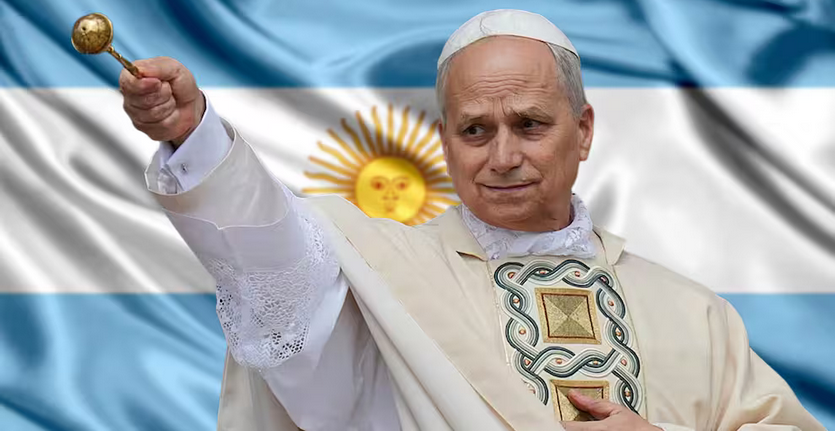
(ZENIT News / Buenos Aires, 10.21.2026).- Before Pope Leo XIV sets foot in Argentina on November 8, thousands of people across the country will already have begun their part in his visit. A total of 25,077 volunteers registered to help organize the papal events, a figure that exceeded the organizers’ expectations and offers an early indication of the scale of an apostolic journey expected to draw as many as seven million people.
The visit, the first by a pope to Argentina since John Paul II traveled there in 1987, carries particular significance. Pope Francis was born in Argentina but never returned after his election in 2013. Leo XIV’s arrival therefore represents an encounter long awaited by the country’s Catholics, at a time when the Church is preparing not merely to host a major religious event but to give it a broader missionary purpose.
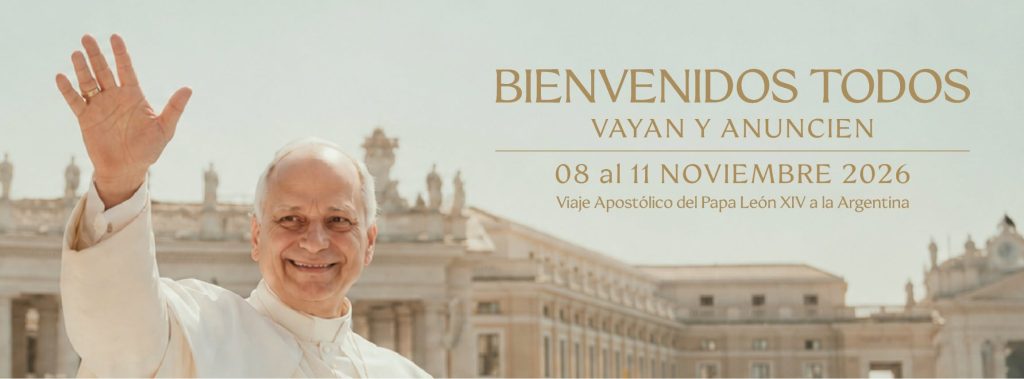
The Argentine leg forms part of Leo’s South American journey from November 6 to 17. After visiting Uruguay from November 6 to 8, he is scheduled to arrive in Argentina, where his program includes Buenos Aires, Córdoba on November 10, and the Marian shrine of Our Lady of Luján on November 11. He will then travel to Peru, where he spent nearly two decades and served as a bishop in Chiclayo. The Argentine visit will include a meeting with President Javier Milei, encounters with religious leaders and civil society representatives, and visits to vulnerable communities, including a center serving people with multiple disabilities and a prison complex.
The logistical challenge is formidable. Argentina’s security minister, Alejandra Monteoliva, has announced what she described as the largest security operation in the country’s history for the occasion. The plan will cover three jurisdictions and three airports, with security arrangements for eleven indoor events and three large public gatherings. Preliminary official estimates suggest that up to seven million people could travel to attend the various events.
Yet the most revealing number so far may be the 25,077 volunteers. Federico Desteffanis, who leads the organizing team’s volunteer department, told the Catholic news agency AICA that the response surpassed expectations. More than 5,000 people registered on the final day alone. An internal team of more than 100 people is now working to distribute volunteers according to provincial and diocesan needs.
The largest concentrations are expected in Buenos Aires, Luján and Córdoba, as well as in communities across the metropolitan area surrounding the capital. Other dioceses reported more evenly distributed participation, generally between 80 and 200 registrants each. The volunteers’ average age is approximately 35 to 40, although their backgrounds and motivations vary widely. Some are active in parishes, Catholic charities or youth gatherings; others come from different civil society organizations, while some simply want to take part in an exceptional event.
View this post on Instagram
Their duties will extend well beyond crowd management. Volunteers will welcome and direct pilgrims, staff hydration points and assist Eucharistic ministers during the distribution of Holy Communion. Assignments will differ according to the occasion, from large outdoor Masses to more localized visits, including a planned stop at the Cottolengo, a charitable institution serving people with disabilities, and the Catholic University of Argentina.
“The volunteer is the first face of the Church that the pilgrim sees,” Desteffanis said. The observation captures an important dimension of the preparations: for many visitors, their first experience of the Church during the papal journey may come not through a speech or liturgy, but through the practical kindness of someone helping them find their way.
The response also requires careful coordination. Registration does not guarantee automatic assignment to a particular role. Placement will depend on the needs of the visit, each person’s availability and individual profile, and participation in training sessions will be mandatory. Organizers are expected to contact registered volunteers by email with instructions for the next stage. Meanwhile, dioceses around Buenos Aires have made educational institutions available to accommodate groups of pilgrims. The arrangements are simple: many visitors will sleep on the floor and must bring their own sleeping bags and insulating mats. Some sites will provide breakfast or dinner, while travel between accommodation and event venues will remain the responsibility of individual groups.
The Church is also trying to ensure that preparation goes beyond transport, security and accommodation. The Argentine organizing committee has launched official accounts on Instagram, Facebook and X, alongside a dedicated website, to centralize schedules, access requirements, practical guidance and material for spiritual preparation. The Argentine bishops’ conference has also released a podcast series, Bienvenidos todos, designed to introduce listeners to Leo’s personal and spiritual history and to reflect on the meaning of his ministry.
The visit’s motto, “Welcome All! Go and Proclaim,” expresses the twofold intention behind these initiatives: to welcome people and to renew the Church’s missionary calling. The organizers are encouraging communities to treat the papal journey not as a spectacle to watch from the sidelines, but as an opportunity to deepen faith, strengthen local ties and renew their commitment to society.
Thank you for reading our content. If you would like to receive ZENIT’s daily e-mail news, you can subscribe for free through this link.

Publicaciones relacionadas:
 Pope Leo XIV to bishops of the Amazon: no to the worship of nature
 Pope Leo XIV scores 8 out of 10 in US approval poll: here are the results
 Leo XIV Returns to Peru: Government to Invest $18 Million
 Pope Leo XIV grants Mexico a Jubilee Year thanks to Our Lady of Guadalupe: here are the reasons, dates, and what you need to know
