

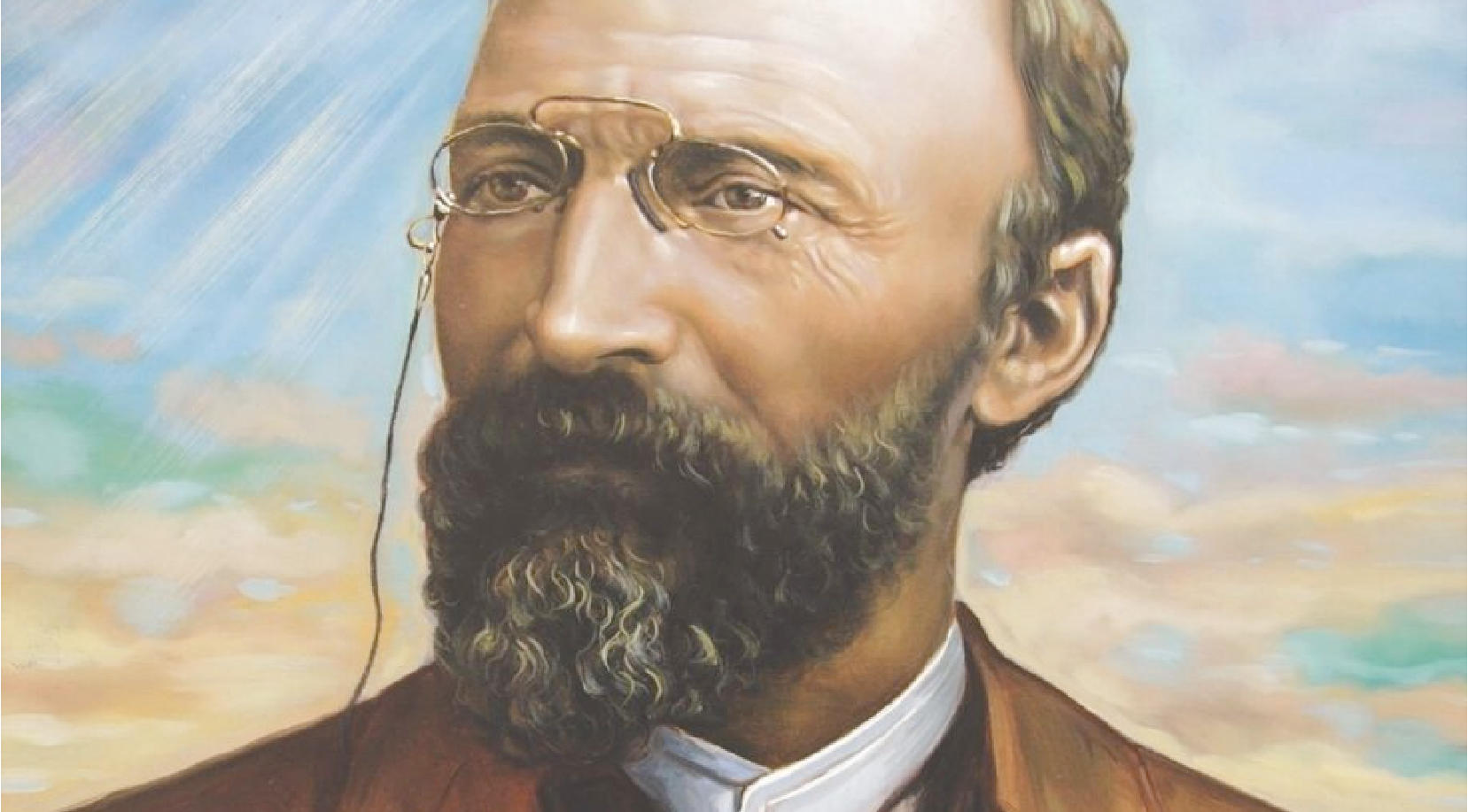
(ZENIT News / Rome, 10/23/2025) – Born on February 10, 1841, in Latiano, southern Italy, Bartolo Longo came from a deeply Catholic family. His father, a doctor, and his mother, Antonina Luparelli, raised him in the faith. However, the early death of his mother, when he was just ten years old, significantly shaped his life.
During his university years in Naples, where he studied Law, Bartolo was swept up in the anti-clerical environment and the rise of spiritualism. Fascinated by these practices, he attended seances and rituals that promised contact with supernatural powers. His curiosity turned into obsession: he was «ordained» as a Satanic priest and even led blasphemous rituals. His physical and mental health deteriorated profoundly, and he later wrote that during this time he was «skin and bones,» tormented by visions and remorse.
In the midst of this inner darkness, his family never stopped praying for him. A former professor, Vincenzo Pepe, confronted him harshly, warning him that he was headed for perdition. Those words shook him deeply. Shortly after, he met Friar Alberto Radente, who patiently guided him along a path of reconciliation with the Church. Through confession, spiritual direction, and the prayer of the Rosary, Bartolo found the peace he had lost.
On October 7, 1871, Longo joined the Dominican Third Order and took the name «Brother Rosario.» From then on, he publicly renounced Spiritism and proclaimed: «I renounce Spiritism because it is nothing more than a labyrinth of errors and falsehoods.» His conversion was complete: he dedicated his life to repairing the spiritual damage he had caused and promoting Marian devotion as a path to redemption.
Moved by his renewed faith, Bartolo Longo devoted his resources and energies to the construction of a Shrine in honor of Our Lady of the Rosary in the Valley of Pompeii. Together with Countess Marianna Farnararo De Fusco, he transformed a small ruined church into a majestic temple that soon became a center of pilgrimage. In 1875, he obtained an old image of Our Lady of the Rosary, restored it, and placed it on the altar of the new Shrine. Soon, healings and conversions began to be attributed to the Virgin’s intercession.
Bartolo and Countess De Fusco shared a deep spiritual friendship. In 1885, on the advice of Pope Leo XIII, they entered into a civil marriage to regularize their legal status, although both decided to live in chastity, dedicated to serving the poor and children. They founded schools, orphanages, and welfare projects for the children of prisoners, spiritually resurrecting a region marked by poverty and abandonment.
Devotion to the Rosary became the center of his apostolate. He wrote treatises and prayers, including the famous «Prayer to Our Lady of the Rosary of Pompeii,» which is still recited annually before the Shrine. He said that «whoever spreads the Rosary is saved,» convinced that this prayer was his life’s mission.
Bartolo Longo died in Pompeii on October 5, 1926, almost one hundred years ago, leaving behind an immense spiritual and social work. He was Beatified by Saint John Paul II in 1980, and on Sunday, October 19, he was Canonized by Pope Leo XIV, who presented him to the world as a shining example of divine mercy.
Longo’s story is one of the most surprising conversions in the history of the Church, as he went from being a Satanic priest to an apostle of the Rosary, from darkness to the light of faith. The Church proclaims this new Saint, reminding all humanity that a person, no matter how far removed from the faith, can be rescued by the redemptive power of Christ; even the most lost soul can become an instrument of evangelization.

Publicaciones relacionadas:
 Argentina: Carmelite Nun of the Beautiful Smile Who Died of Cancer, Begins Her Path to the Altars
 Sister Clare: the young Irish actress who became a nun goes to the altars
 First Woman with Dwarfism on the Path to Canonization Thanks to Leo XIV
 Pope Leo XIV grants his first “doctorate”: this is the saint named the 38th Doctor of the Church
