

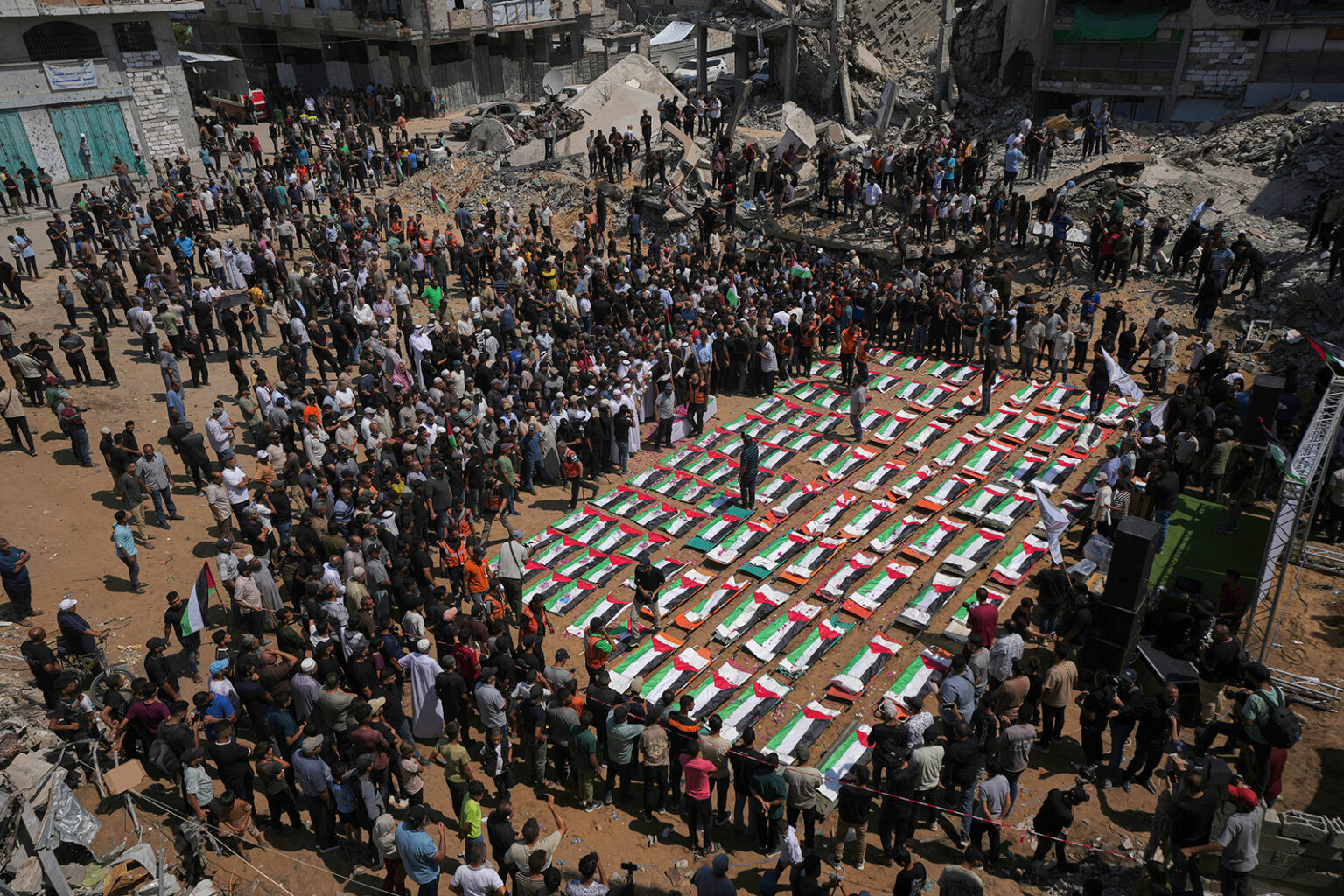
(ZENIT News / Jerusalem, 09.01.2026).- The crisis in the Holy Land is no longer measured only by the explosions of war. It is increasingly visible in closed schools, empty churches, blocked roads, disappearing jobs and families wondering whether they can still build a future where generations of Christians have lived for centuries.
That quieter crisis is now particularly acute in the West Bank and Jerusalem, where Palestinian Christians say that restrictions on movement, settler violence and economic hardship are steadily making ordinary life more difficult. Church leaders warn that the consequence could be not only greater suffering for Palestinians, but the further erosion of Christianity’s already fragile presence in the land where the faith was born.
The opening of the 2026-27 school year provided a striking illustration. Christian schools in Jerusalem suspended classes on September 1 after Israel failed to renew entry permits for more than 70 teachers and administrative and support staff. The decision affected more than 8,500 students, according to the Christian educational authorities in the city.
The schools said the missing personnel were essential not merely for teaching but also for administration, health services, security and other basic operations. They called for the permits to be renewed so that the academic year could resume safely.
The dispute over education is occurring against a much broader struggle over movement and identity. In East Jerusalem, Palestinian schools have also faced pressure to adopt the Israeli curriculum in new first- and seventh-grade classes, while educational facilities formerly operated by the United Nations agency for Palestinian refugees have been taken over by Israeli authorities.
For Christians, the stakes are particularly high because education is one of the institutions sustaining communities whose numbers have been declining for years.
Father Ibrahim Faltas, a Franciscan who directs schools belonging to the Custody of the Holy Land, described conditions in the West Bank as worse than anything he has witnessed during his 37 years in the region. He cited checkpoints, unemployment, settler attacks and restrictions on movement as forces increasingly trapping Palestinian families in economic insecurity.
He also pointed to a painful demographic consequence. More than 70,000 Palestinians lost employment permits after October 7, 2023, according to his account, while Bethlehem alone has seen more than 300 Christian families leave since the beginning of the war. The disappearance of pilgrims and tourists has compounded the economic crisis: churches that once received long lines of visitors have become largely empty.
The pressure is not confined to the larger towns. In Zababdeh, a Christian community near Jenin, Father Firas Khoury described roads increasingly obstructed by soldiers and settlers and new settlements being developed on agricultural land belonging to Palestinian families. At the same time, displaced people from Jenin have arrived in Zababdeh, placing additional pressure on a small community already suffering from unemployment and shortages of basic necessities.
The priest’s concern is ultimately demographic as much as economic. When families lose employment, land, mobility and a sense of security, emigration begins to look less like a choice than an escape. Yet Zababdeh is one of the remaining Christian communities in northern Cisjordania, making its survival part of a much larger question about whether Christianity will remain a living presence in the region.
Taybeh, another predominantly Christian Palestinian community, offers an equally revealing picture. Joseph Hazboun of the Catholic Near East Welfare Association reported witnessing what he described as intimidation by an Israeli settler near a Palestinian property. The organization subsequently described a pattern of systematic pressure on families.
Local priest Father Bashar Fawadleh has reported damaged fences, incursions onto private property, interference with workers and attacks affecting farms and emergency services. Yet he makes an important distinction: being Christian does not necessarily make residents the specific target of settler attacks. “We are Christians, but we are also Palestinians,” he explained, noting that land and territorial control affect Muslims and Christians alike.
That distinction matters. Defending the Christian presence in the Holy Land cannot mean overlooking the rights of other communities. Nor can criticism of policies or violence against Palestinians be turned into hostility toward Jews or Israelis. The Catholic position articulated by Cardinal Pierbattista Pizzaballa is broader: the security, dignity and political future of both peoples must be taken seriously.
The Latin Patriarch of Jerusalem has described the West Bank as increasingly lawless and called for stronger Western diplomacy. He continues to support a two-state solution as the means of recognizing the right of Israelis and Palestinians alike to have a homeland.
Pizzaballa has also warned against allowing war to destroy the capacity to recognize the humanity of the other side. War, he said, can steal the best years of young people’s lives and gradually make it psychologically easier to regard another human being as an enemy rather than as a person.
His assessment of Gaza is equally severe. The humanitarian devastation remains enormous, he said, even as political discussions have increased. What is needed, in his view, is not simply another pause in fighting but concrete steps capable of rebuilding trust among civilians.
Pope Leo XIV has repeatedly urged an end to violence against Palestinian civilians and supported the two-state framework. Pizzaballa believes a papal visit to the Holy Land will eventually take place, but has cautioned against rushing it. A journey by the Pope, he argues, should form part of a meaningful process rather than become a dramatic symbolic event without lasting consequences.
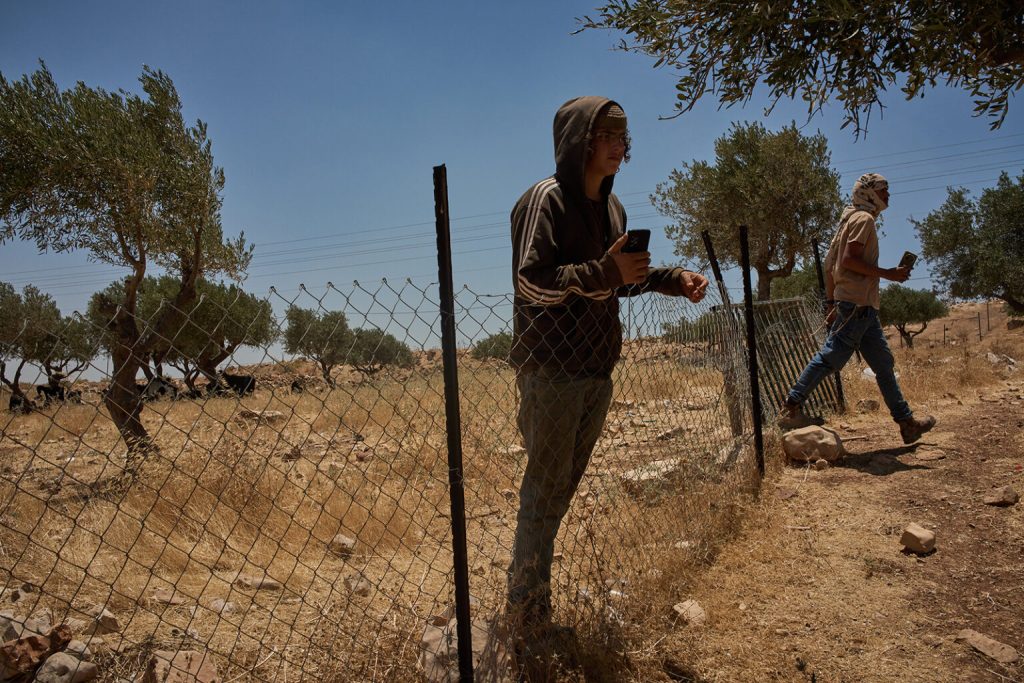
An Israeli settler steps into the courtyard of a home as another stands next to the fence, trespassing on Palestinian property on the outskirts of the West Bank town of Taybeh, Thursday, June 25, 2026. (AP Photo/Leo Correa)
The increasingly desperate situation has also prompted unusually strong criticism from African Catholic clergy. Ten African Catholic leaders, including Cardinal Stephen Brislin of South Africa, recently described Israel’s actions in Gaza as genocide, drawing on Africa’s historical experience of war and racial segregation. Their statement also condemned the October 7, 2023 attacks by Hamas, including the killing of approximately 1,200 people and the taking of about 250 hostages, while arguing that those crimes cannot justify collective punishment. Israel rejects allegations of genocide and says its military campaign is directed against Hamas rather than Palestinians.
The distinction between these positions is important. The African clergy’s accusation is not the same as the position of Pope Leo XIV, who has called for peace and a political settlement without himself characterizing Israel’s conduct in Gaza as genocide. Responsible Catholic engagement requires room for strong moral criticism while preserving accuracy, rejecting antisemitism and refusing to treat an entire people as responsible for the actions of governments or armed groups.
Meanwhile, the Christian communities on the ground are attempting something more difficult than issuing statements: staying.
In Zababdeh, Father Khoury recently organized activities for more than 100 children. They played together, went swimming and prepared to return to school despite the fear surrounding them. For a community worried about displacement, such ordinary scenes have acquired extraordinary significance.
Taybeh’s population, once estimated at around 1,700, is now reported locally at roughly 1,200. Christians represent only about 1 percent of the population of the West Bank and Gaza, while Gaza’s Christian population has fallen dramatically over recent decades and the war has accelerated that decline.
This is why the future of the Holy Land cannot be reduced to a debate over borders alone. A durable peace must make room for families, schools, churches, Muslims, Christians and Jews to live without fear, preserve their communities and educate their children.
The warning coming from the Catholic Church is therefore both political and profoundly human: if daily life becomes impossible, communities eventually disappear without anyone having formally ordered them to leave.
And when that happens, a piece of the Holy Land’s living history disappears with them.
Thank you for reading our content. If you would like to receive ZENIT’s daily e-mail news, you can subscribe for free through this link.

Publicaciones relacionadas:
 Situation in Israel and Gaza raises fears of migration wave also in Iraq
 Holy Land: Christian crisis goes from bad to worse, discriminated against for wearing a cross in Jerusalem
 The Jewish State of Israel Bombs Catholic Church in Gaza: Parish Priest Wounded, Pope Leo XIV Speaks Out
 The Christian Presence in the Holy Land Is Being Squeezed from Every Direction
