

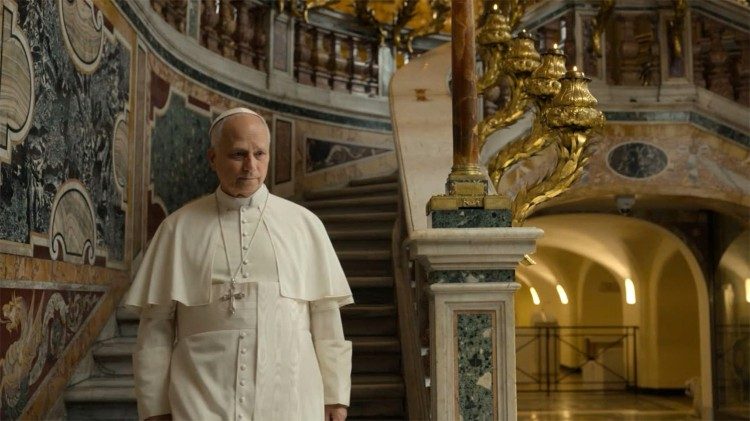
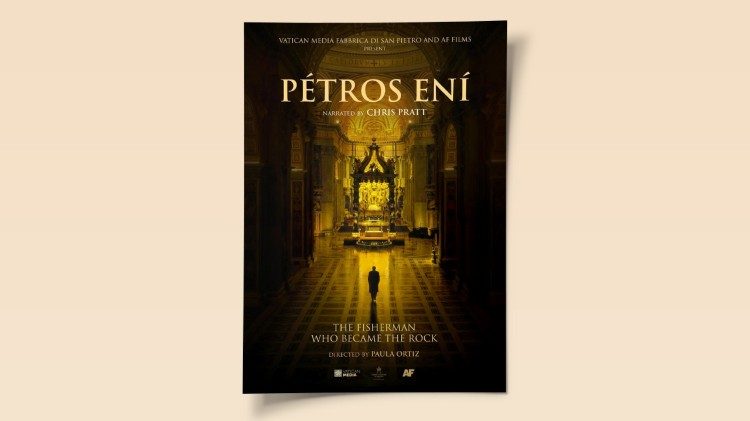
(ZENIT News / Vatican City, 10.13.2026).- A hidden burial chamber beneath St. Peter’s Basilica, archaeological discoveries spanning decades, and an extraordinary on-camera appearance by Pope Leo XIV are at the heart of a new documentary exploring the origins of one of Christianity’s most important holy sites. Titled Pétros ení: Discovering the Origins, the film will receive a special advance screening on October 16 at the Rome Film Festival, ahead of the 400th anniversary of the dedication of the present-day Vatican Basilica.
Directed by Spanish filmmaker Paula Ortiz and written by Andrea Tornielli, editorial director of Vatican Media, the documentary brings together historical research, archaeology and Christian faith. American actor Chris Pratt guides viewers through the story, taking them into the Vatican Necropolis beneath the basilica, where the tomb traditionally identified as that of St. Peter remains concealed from ordinary visitors. The production is a collaboration between AF Films, Vatican Media and the Fabric of St. Peter, the institution responsible for the basilica’s upkeep.
The film’s most unusual contribution is the participation of Leo XIV, who agreed to appear before the cameras to discuss the apostle’s significance and the meaning of his burial place beneath the church built in his honor. His appearance offers a contemporary papal perspective on a story that links the beginnings of Christianity in Rome with the monumental architecture that now dominates the Vatican landscape.
Pratt described the opportunity to work with the Pope and the Vatican as an extraordinary honor, expressing gratitude for the trust and access granted to the production. He said St. Peter’s story remains fundamental to Christian faith and that he was grateful to help bring the apostle’s legacy to the screen.
The documentary’s historical narrative begins with Peter himself: the fisherman from Galilee whom Jesus entrusted with the leadership of the nascent Church and who, according to Christian tradition, was martyred in Rome during the persecution under Emperor Nero. The Vatican Hill gradually became a place of pilgrimage and devotion, and early Christians sought burial places near the apostle’s grave.
That devotion eventually transformed the landscape. In the fourth century, Emperor Constantine, the first Roman emperor to embrace Christianity, ordered the construction of a major basilica over the burial area. To accommodate the building, part of the Vatican Hill’s slope was leveled, while the site associated with Peter’s tomb was incorporated into the structure. The present basilica, whose monumental colonnade was designed by Gian Lorenzo Bernini, stands within this much older history of worship and remembrance.
Archaeological investigations helped bring that history into sharper focus. Pope Pius XII strongly supported excavations that began during the Second World War, and in 1950 he officially announced the discovery of the area identified as Peter’s burial place in the Vatican Necropolis. The investigations continued, eventually leading Pope Paul VI to announce in 1968 that the apostle’s bones had also been identified with what he considered convincing evidence. Paul VI described the remains as the few but sacred bodily relics of the Prince of the Apostles.

The distinction between identifying a burial site and identifying human remains is important to understanding the discovery. The documentary draws on historical testimony and archaeological findings to explain how researchers reached their conclusions, with archaeological consultant Pietro Zander, a leading expert on the Vatican Necropolis, contributing his specialist knowledge.
The film also promises previously unseen footage, offering viewers access to parts of the ancient burial complex normally hidden beneath the basilica. Its release is timed to the anniversary of the dedication of the current St. Peter’s Basilica on November 18, 1626, exactly four centuries before the anniversary in 2026.
Thank you for reading our content. If you would like to receive ZENIT’s daily e-mail news, you can subscribe for free through this link.

Publicaciones relacionadas:
 Unpublished Book by Robert Francis Prevost – Leo XIV at the Frankfurt Book Fair
 This is the 197-inch sculpture dedicated to Pope Leo XIV in his former Peruvian diocese
 Here’s how Pope Leo XIV’s surprise video call to Lebanese priests in a war zone went
 Pope Leo XIV establishes a Vatican commission on AI, placing the Holy See at the global forefront in this field
