

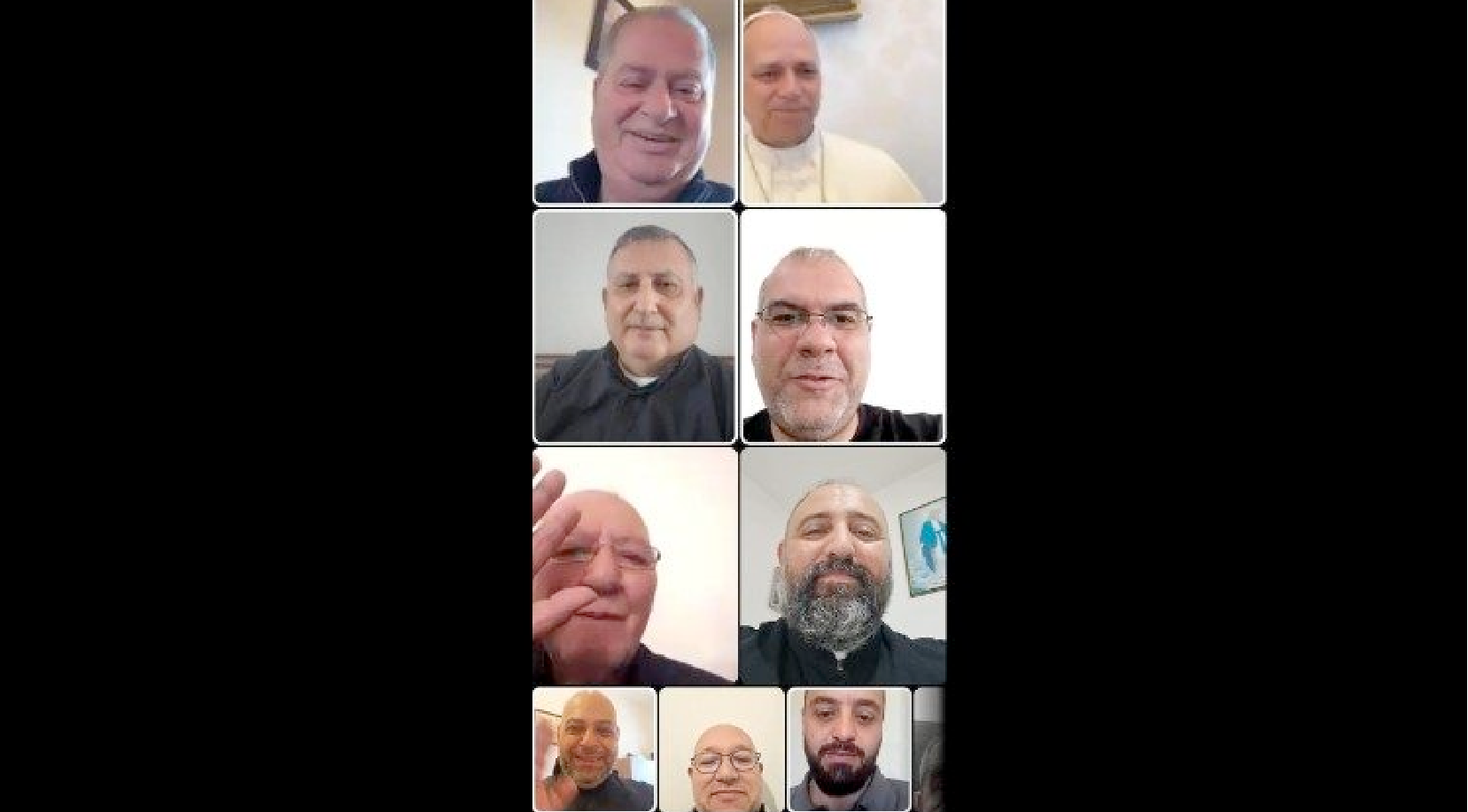
(ZENIT News / Rome, 05.06.2026).- In a region where explosions, displacement, and uncertainty have become part of daily life, a simple video call from Rome became, for a few minutes, a sign that the Church had not forgotten its priests living on the edge of war.
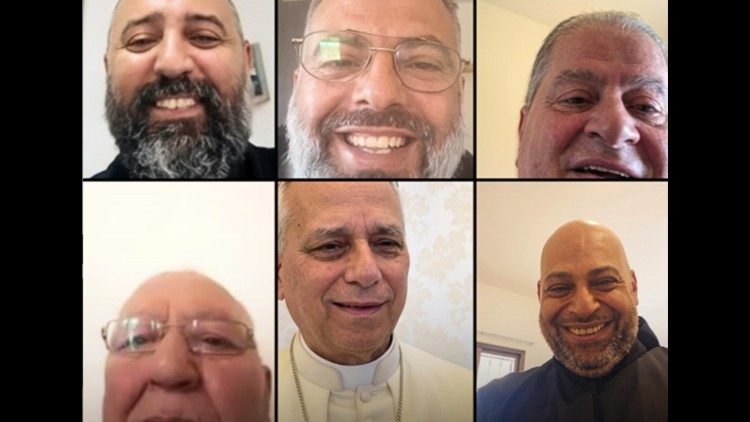
On the morning of May 6, Pope Leo XIV surprised a group of parish priests serving in southern Lebanon with an unexpected virtual meeting from the Vatican’s Apostolic Palace. The priests, scattered across villages near the Blue Line separating Lebanon and Israel, had gathered online at the request of the Apostolic Nuncio in Beirut, Archbishop Paolo Borgia, believing they would merely receive a greeting from the Vatican diplomat. Instead, the Pope himself appeared on their screens.
The encounter lasted only a few minutes, yet those present described it as deeply moving. For clergy ministering among bombed streets, damaged homes, and communities exhausted by months of violence, the brief conversation carried a significance far greater than its duration.
According to participants, Leo XIV thanked the priests for their perseverance, encouraged them in their ministry, assured them of his prayers, and imparted his apostolic blessing. Above all, he renewed his hope that peace might finally return to the troubled frontier region.
Father Toni Elias, pastor of the village of Rmeish, spoke afterward of the emotional impact of the moment. His town lies so close to Israel that only a forest separates the two sides. “It was beautiful,” he told Vatican media. The Pope, he said, encouraged them, expressed his support, and spoke of peace with sincerity and closeness. The priest described the call as “a much-needed breath of hope and confidence.”
That phrase captures the atmosphere surrounding many Christian communities in southern Lebanon today. Although international attention often shifts rapidly from one global crisis to another, local populations along the Lebanese-Israeli border continue to endure instability, economic hardship, and the constant threat of renewed escalation. Priests in these villages are not only spiritual leaders; they frequently become coordinators of humanitarian assistance, counselors for traumatized families, and visible signs of continuity in places where ordinary life has been deeply fractured.
The initiative was organized with the assistance of Archbishop Paolo Borgia, the Pope’s representative in Lebanon, who was received in audience by Leo XIV earlier that same morning. Over recent months, Borgia has traveled repeatedly through dangerous border zones alongside charitable organizations, distributing food, essential supplies, and humanitarian aid. Local clergy have repeatedly praised his willingness to move through damaged areas despite the risks.
Father Elias spoke of the nuncio with unusual warmth, describing him as a man who “walks through danger” and brings charity to devastated communities. He even compared the diplomat’s mission to that of his patron saint, Saint Paul, evoking the image of an apostolic Church that refuses to abandon suffering Christians at the margins.
The online gathering included around a dozen parish priests from villages along the Blue Line, as well as the Greek Melkite bishop of Tyre and the region’s vicar general. Several participants later admitted they had suspected that some kind of surprise was being prepared after Borgia instructed them to remain available between 9:30 and 9:45 that morning. Few, however, expected a direct call from the Pope.
The gesture also reveals the particular importance Lebanon occupies in the pontificate of Leo XIV. In December 2025, the country became the destination of his first international journey as Pope, a decision widely interpreted as a deliberate signal of solidarity with Middle Eastern Christians and with a nation long marked by political paralysis, economic collapse, and regional tensions.
For the Holy See, Lebanon occupies a unique place in the Middle East. Popes from Saint John Paul II onward have repeatedly described the country not merely as a state, but as a model of coexistence whose preservation matters for the entire region. The continued presence of Christian communities there is therefore viewed not only as a demographic question, but also as a matter tied to religious freedom, pluralism, and the survival of a historic Christian witness in the Middle East.
Leo XIV’s video call did not change military realities on the ground. It did not reopen destroyed homes or silence the weapons near the border. Yet in ecclesial terms, the gesture reflected something central to the Catholic understanding of pastoral leadership: proximity.
Thank you for reading our content. If you would like to receive ZENIT’s daily e-mail news, you can subscribe for free through this link.

Publicaciones relacionadas:
 Pope Leo XIV grants his first “doctorate”: this is the saint named the 38th Doctor of the Church
 Unpublished Book by Robert Francis Prevost – Leo XIV at the Frankfurt Book Fair
 This is the 197-inch sculpture dedicated to Pope Leo XIV in his former Peruvian diocese
 Photo Gallery: Leo XIV Now Has An Official Mosaic to Enrich St. Paul’s Basilica, and This Is How He Reacted When It Was Shown to Him
