

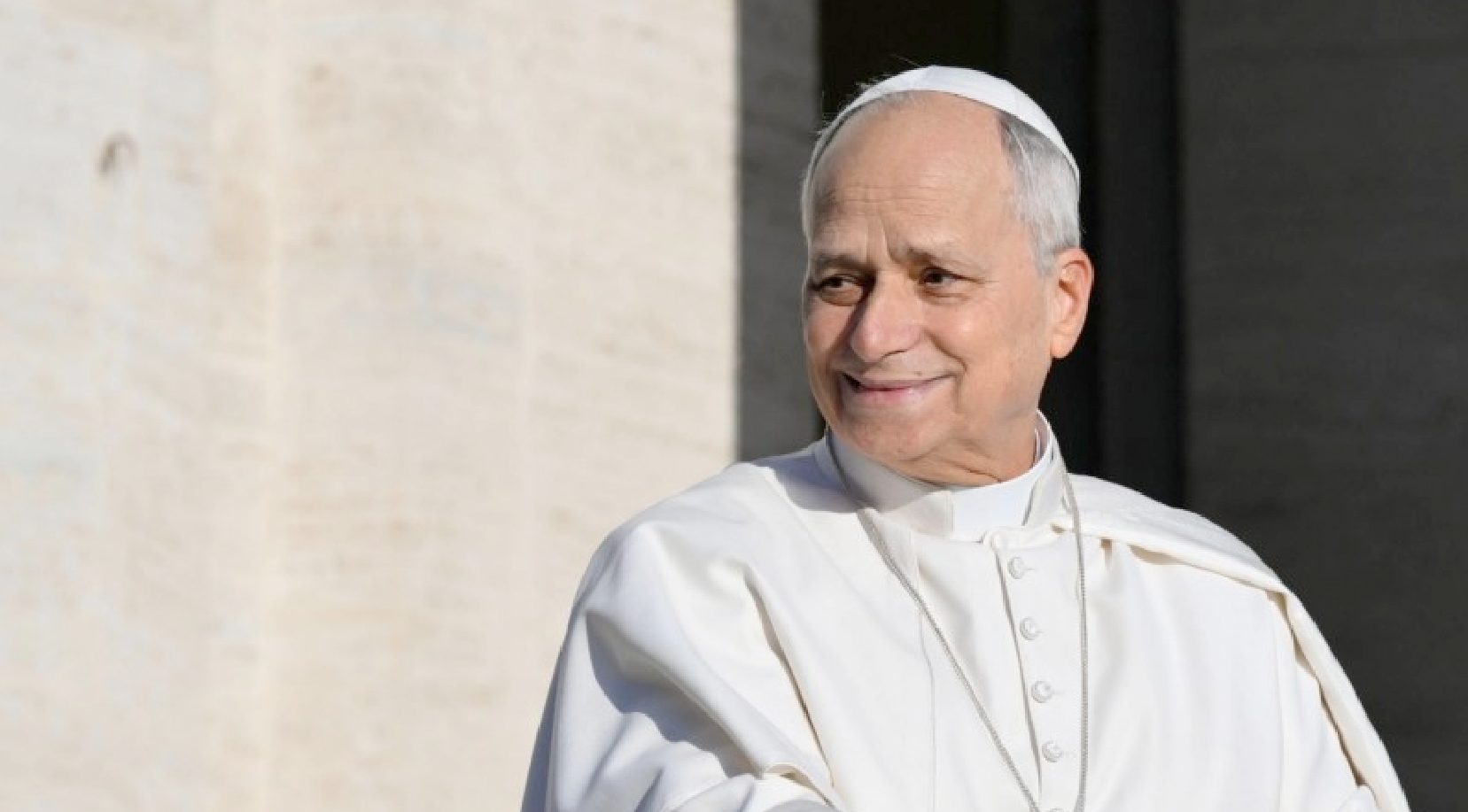
(ZENIT News / Rome, 01.04.2026).- Provisional plans taking shape in Rome suggest that Spain may once again feature prominently on the papal travel map, fifteen years after the last visit of a Roman Pontiff. According to information confirmed by ecclesial sources to ZENIT, Pope Leo XIV is seriously considering an apostolic journey to Spain in June 2026, a prospect that has moved beyond speculation and into concrete preparatory discussions.
A key meeting is scheduled for 9 January at the Vatican between representatives of the Spanish Bishops’ Conference and the Secretariat of State. Although no official announcement has been made, the very fact that logistical and pastoral details are already being discussed indicates that the project is advancing steadily. If confirmed, the visit would mark Leo XIV’s first trip to Spain as Pope and would close a long chapter that began with Benedict XVI’s participation in World Youth Day in Madrid in 2011.
Spanish bishops have been cautiously optimistic for months. After a private audience with Leo XIV last November, the president of the Bishops’ Conference, Archbishop Luis Argüello, spoke publicly of a visit that could take place “relatively soon.” Days later, during the Pope’s journey to Turkey and Lebanon, Leo XIV himself responded to Spanish journalists with a phrase that resonated strongly in ecclesial circles: there was, he said, “more than hope” regarding Spain, adding only that the dates still needed to be defined.
Beyond timing, the possible itinerary reveals the symbolic weight the visit could carry. Several locations have been proposed, not merely as ceremonial stops but as pastoral statements. The Canary Islands, for example, remain under consideration in connection with migration, a theme strongly emphasized by Pope Francis and one that continues to challenge both Church and society in southern Europe. A papal presence there would underscore continuity with that concern while placing it within Leo XIV’s own pastoral vision.
Other proposed destinations are linked to major religious and cultural milestones. Barcelona stands out because of the completion of the Sagrada Familia and the renewed attention surrounding Antoni Gaudí, whose cause for beatification is progressing. Madrid, traditionally central to papal visits, is expected to host a large liturgical celebration and encounters with bishops, clergy, and religious communities. Valladolid has also emerged as a meaningful option, connected to the jubilee celebrations of Saint Toribio de Mogrovejo, a figure bridging Spain and Latin America, and to Leo XIV’s own pastoral history in Peru.
That personal dimension should not be overlooked. Before his election, Robert Francis Prevost traveled frequently to Spain in his capacity as Augustinian superior and later as a Vatican prefect. Cities such as Ávila, Málaga, Bilbao, Valladolid, Palencia, León, and others are already familiar terrain to him. These earlier visits, largely unnoticed by the general public at the time, now add a layer of continuity and familiarity that could shape the tone of a future papal journey.
The broader historical context further amplifies expectations. Spain has been visited repeatedly by recent Popes, particularly Saint John Paul II, whose five journeys left an enduring mark on both Church life and public memory, and Benedict XVI, whose three visits combined theological depth with major ecclesial events. By contrast, Pope Francis never set foot in Spain, despite expressing a desire to visit the Canaries shortly before illness and death prevented it. A visit by Leo XIV would therefore be read not only as a new chapter, but also as a gesture that, in some way, completes an unfinished narrative.
For now, prudence prevails. The convergence of preparation, public remarks by the Pope, and a dense calendar of religious anniversaries in 2026 suggests that Spain’s long wait may indeed be nearing its end.
Thank you for reading our content. If you would like to receive ZENIT’s daily e-mail news, you can subscribe for free through this link.

Publicaciones relacionadas:
 Statement by then Father Prevost, now Leo XIV, against the death penalty in the U.S. comes to light
 Pope Leo XIV to Equatorial Guinea: video captures the Holy Father’s travel coordinator visiting the country ahead of a papal trip
 For the first time, a Pope will address the Spanish Parliament: it will be Leo XIV during his visit to Madrid in June 2026
 The Middle East, the spread of war, and the position of the Pope and the Catholic Church
