

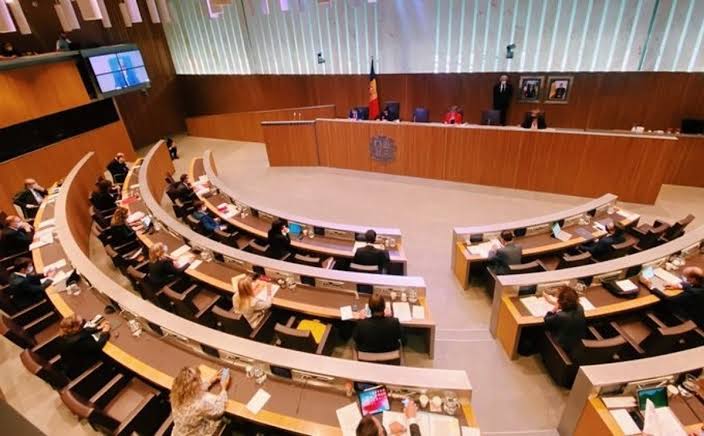
(ZENIT News / Andorra, 11.14.2026).- On August 21, ZENIT reported on the process of reforming the Penal Code of the Principality of Andorra to decriminalize abortion, as well as on the discreet discussions held by the Holy See in defense of life within this small country, located between Spain and France. The Andorran Government approved the draft law on October 28.
The new regulation «exempts women from all criminal liability» in the event of a voluntary termination of pregnancy. The text must still be approved by the Andorran Parliament, via an expedited procedure, to amend Article 117 of the Penal Code and eliminate the penalty of up to six months in prison for women who undergo an abortion. However, the prohibition against performing abortions within Andorran territory remains intact «due to constitutional requirements,» as do the sanctions for healthcare professionals who perform them; such individuals face up to three years in prison and a five-year disqualification from practicing their profession.
This legal amendment takes place in one of the few European countries that still maintain a general ban on abortion. The elimination of penalties for women who consent to, request, or participate in their own abortion, while maintaining penalties for those who perform the procedure, appears to be the result of discussions held by the Holy See’s Secretary of State, Cardinal Pietro Parolin. The goal was to find a formula that would allow for a change in legislation without compromising the institutional continuity of the Co-Principality; the Bishop of Urgell, in fact, shares the role of Andorran Head of State with the President of France.
The Minister of Institutional Relations, Education, and Universities presented the reform, following its approval by the Council of Ministers. In his remarks, he justified the legislative change by stating that the protection of life, as enshrined in Article 8 of the Andorran Constitution, «cannot entail the criminalization of women.»
The reform does not include coverage for abortion by the Andorran Social Security Fund; therefore, the procedure will remain excluded from public healthcare services.
In July 2026, Cardinal Pietro Parolin met with the Head of Government, Xavier Espot, and Minister Ladislau Baró to address the issue of decriminalization. The formula subsequently approved by the Council of Ministers aligns with the solution that, according to La Veu Lliure, had been agreed upon with the Holy See: eliminating criminal liability for women, maintaining sanctions against healthcare professionals, and excluding any form of public funding for abortion.
For his part, Baró described the contacts with Rome as an «institutional dialogue» rather than a formal negotiation. The Holy See, however, has not publicly confirmed its support for the legislative text.
The reform places the Bishop of Urgell, Josep-Lluís Serrano Pentinat who, in his capacity as Co-Prince of Andorra, could refuse to ratify the law, in a delicate position, even though the French Co-Prince would authorize its promulgation.
During the presentation of the project, Baró explicitly acknowledged this possibility. However, he explained that a potential refusal by the Bishop would not necessarily prevent the regulation from coming into effect, as the Andorran legal system provides mechanisms for a law to be enacted by only one of the two Co-Princes. Thus, Serrano Pentinat could maintain his formal opposition to the text without blocking its implementation.
The Government maintains the prohibition on performing abortions within Andorran territory, although the reform narrows the scope of the criminal protection previously established by the Principality’s legislation regarding induced abortion. Organizations in favor of legalization consider the proposal insufficient, as it continues to prohibit the performance of abortions in the country’s healthcare facilities and excludes public funding for such procedures.
The Executive branch presents this initiative as a solution compatible both with the Constitution and with the continued existence of the Co-Principality system, pending its parliamentary debate and approval.

Publicaciones relacionadas:
 Diplomatic crisis: Belgian government summons Nuncio over Pope’s statements on abortion
 Andorra will approve abortion despite the fact that its head of state is a Catholic bishop
 European Catholic Principality Headed by a Bishop Moves Toward Decriminalizing Abortion Amid Vatican Obstacles
 Mob Surrounds and Attacks Pro-Life Students of Manchester University: Threatened to Violate the Pro-Life Women
