

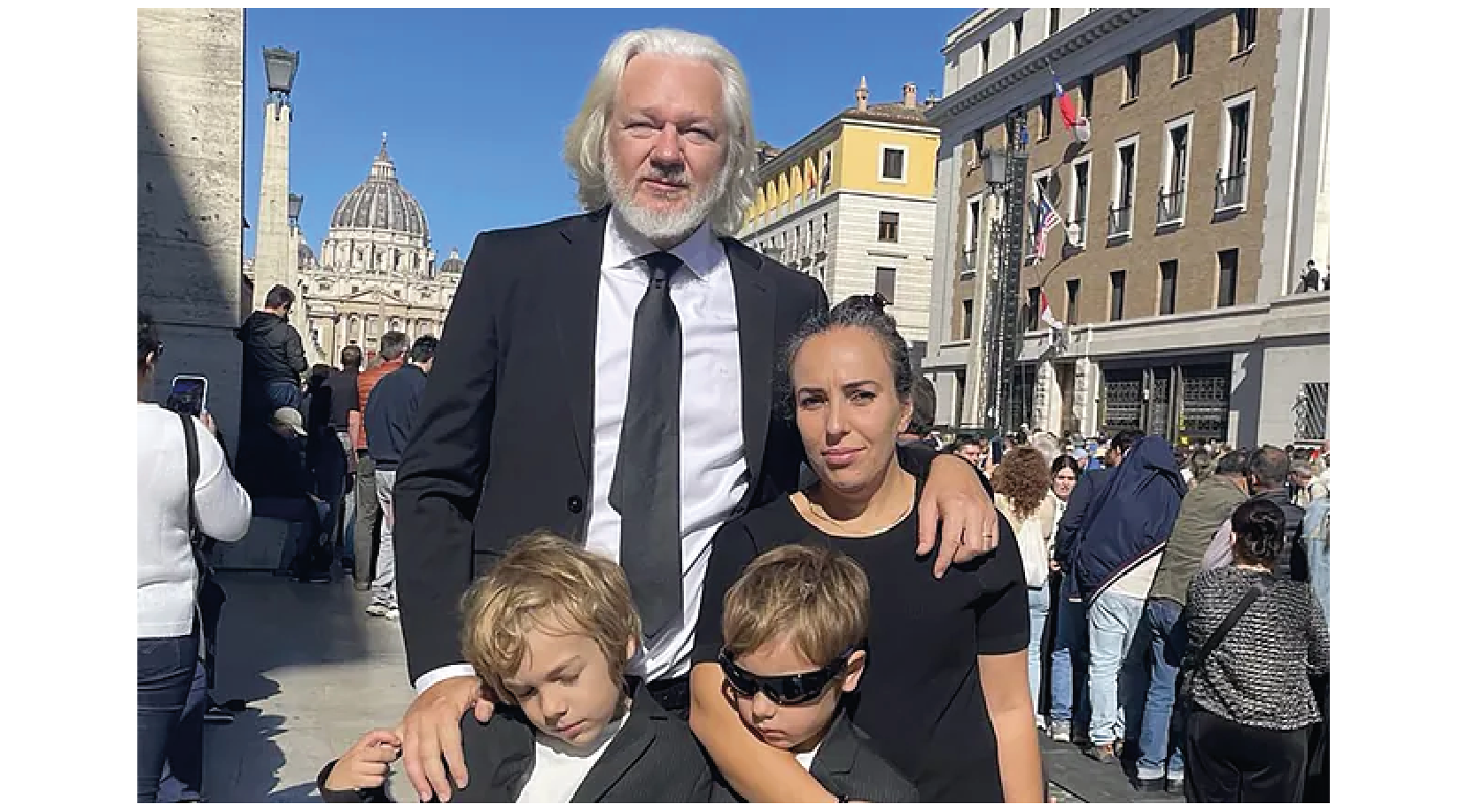
(ZENIT News / Rome, 04.27.2025).- On Saturday, April 26, a scene once thought improbable unfolded in Rome: Julian Assange, now a free man after years of confinement, walked alongside his wife Stella and their two young sons towards St. Peter’s Basilica. They were there not merely as mourners at the funeral of Pope Francis, but as a family carrying a message of profound gratitude.
In a post shared on social media platform X, Stella Assange captured the moment with a simple photograph—the family standing on the Via della Conciliazione, the majestic basilica rising behind them. «Now that Julian is free, we have all come to Rome to express our family’s gratitude for the Pope’s support during Julian’s persecution,» she wrote.
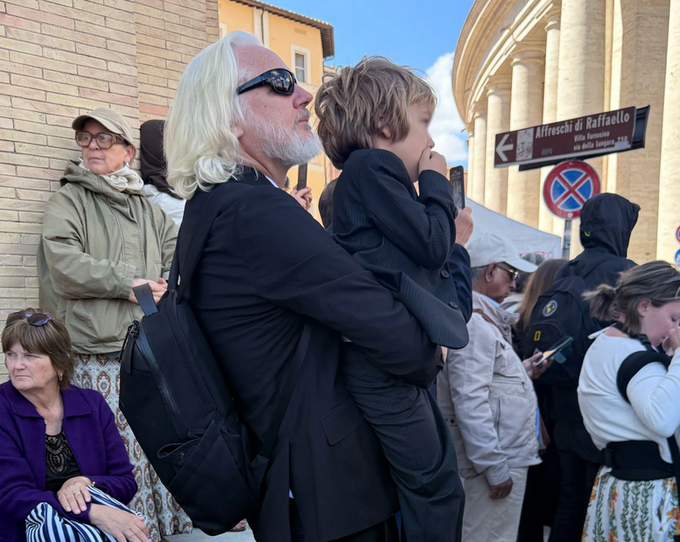
Their presence at the Vatican carried deep personal significance. In June 2023, long before freedom was even a near possibility for Assange, Stella and her children had been received privately by Pope Francis. The Pontiff not only offered words of consolation but went so far as to write directly to Assange during his imprisonment in Belmarsh, and even proposed -according to the wife’s statements- the idea of granting him asylum within the Vatican—a striking move by any standard of diplomacy.
Though the world’s attention this weekend has been riveted on the passing of a Pope, the Assange family’s quiet attendance added another layer to Francis’ complex legacy. To them, he was not just a world leader or religious figure. He was an advocate for human dignity, who reached out across walls and wire fences when few others dared.
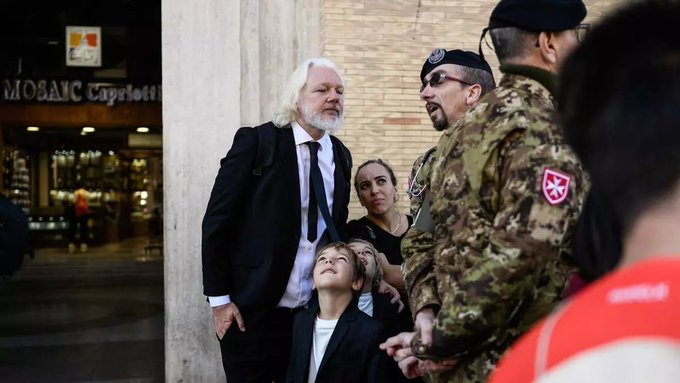
The image of Julian Assange—once isolated, now standing freely in the open air of St. Peter’s Square—was, in itself, a quiet testament to the kind of hope Pope Francis championed throughout his pontificate: hope that mercy might prevail over vengeance, that bridges might be built across even the deepest divides.
Thank you for reading our content. If you would like to receive ZENIT’s daily e-mail news, you can subscribe for free through this link.

Publicaciones relacionadas:
 Pope Francis to visit Verona, Italy, in 2024
 Pope Francis to all Catholics: pray for people with disabilities in December
 She entered the convent at the age of 8. At the age of 94, she was surprised to meet Pope Francis in the Vatican Basilica. This is how things happened
 Pope Francis composed meditations for Good Friday (and will not be present at the main rites)
