

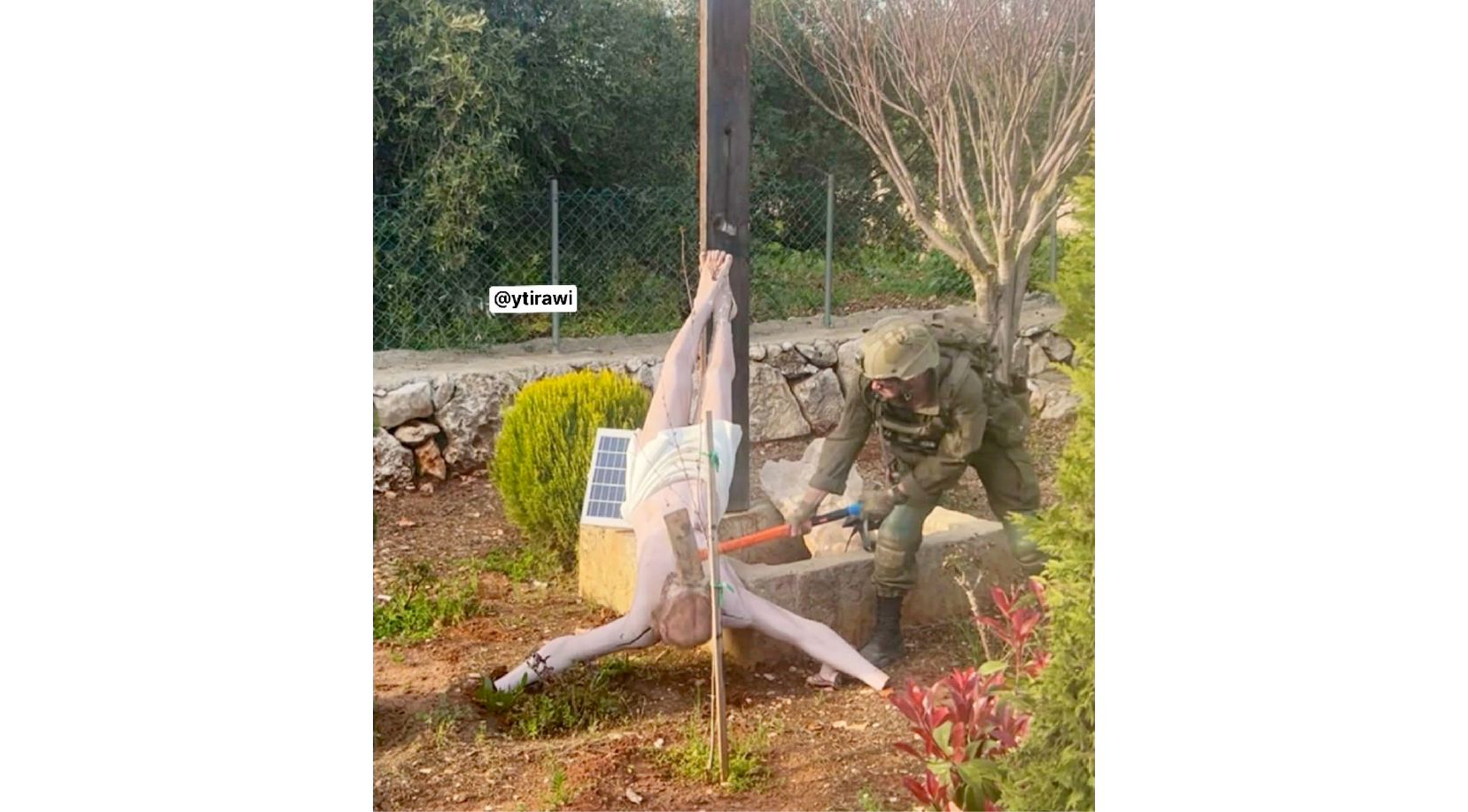
(ZENIT News / Rome, 04.20.2026).- The image is stark: a soldier raising a hammer against a crucifix in a quiet village in southern Lebanon. Within hours, that single frame traveled far beyond its place of origin, igniting outrage among local Christians and forcing an official response from the Israeli military. Yet the incident, now under internal investigation, is only one fragment of a broader and more troubling landscape in which religious symbols, civilian life and human dignity are increasingly entangled in a conflict that shows little sign of restraint.
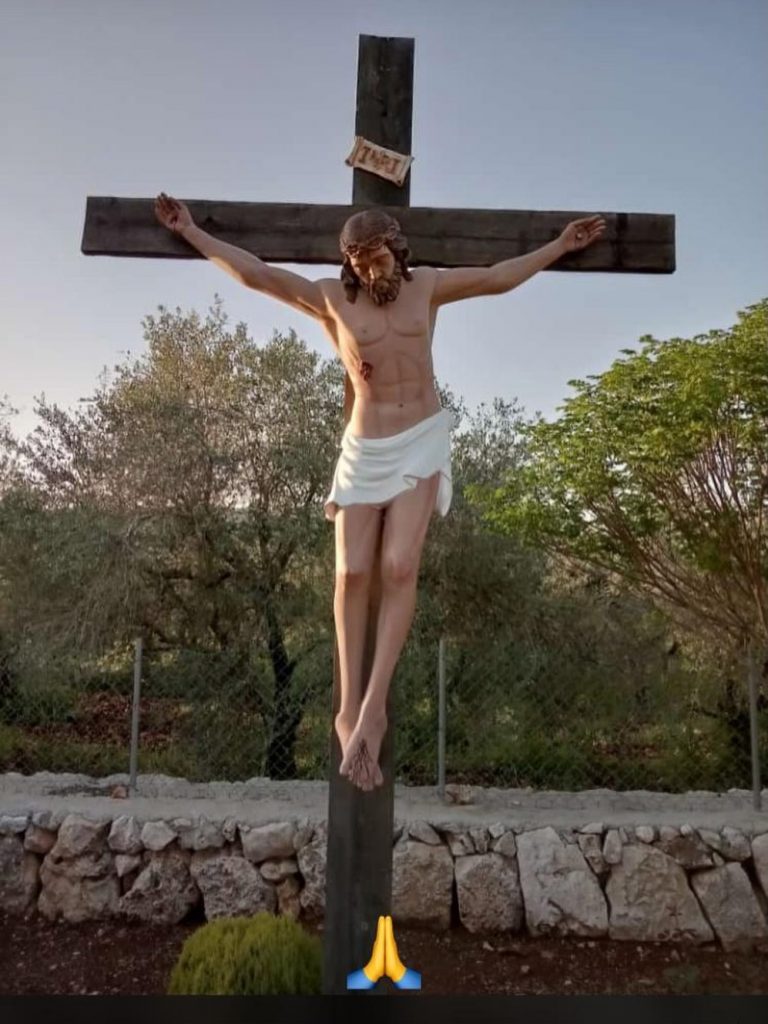
The episode occurred in the village of Debel, in the Nabatieh district, an area where Christian communities have long lived amid shifting frontlines. Visual evidence first circulated by a Palestinian journalist was later reinforced by local sources who documented the same statue intact before the attack, confirming both location and continuity. The Israeli Defense Forces acknowledged that the soldier involved was operating in southern Lebanon and described the act as incompatible with military values. An investigation has been opened, with assurances that appropriate disciplinary measures will follow. Israeli authorities, including the foreign minister, publicly condemned the act as “serious and shameful,” issuing an apology to Christians whose religious sensitivities were wounded.
Such statements, while significant, unfold against a backdrop of escalating tensions that complicate any attempt to isolate the incident. A ceasefire announced on April 16 for an initial period of ten days has been repeatedly violated. Clashes between Israeli forces and Hezbollah fighters have continued, leaving at least one Israeli soldier dead and nine others seriously injured. In the days preceding the truce, Israeli operations reportedly killed more than 150 Hezbollah combatants in targeted strikes across Lebanon. Meanwhile, infrastructure damage in southern villages—homes, schools and public buildings—has deepened the humanitarian strain.
International concern has intensified following the death of a French peacekeeper serving with the United Nations Interim Force in Lebanon. It marked the third fatal incident involving UN personnel in recent weeks, prompting strong condemnation from the United Nations Secretary-General, who called for strict adherence to the ceasefire. European leaders echoed this appeal, warning that attacks on peacekeeping missions undermine already fragile regional stability.
Yet beyond the visible destruction and diplomatic exchanges lies a more disturbing dimension of the conflict, one that is harder to document but increasingly impossible to ignore. A report published on April 13 by Euro-Med Human Rights Monitor presents extensive testimonies from Palestinian detainees alleging systematic sexual torture in Israeli detention facilities. According to the report, these abuses—ranging from forced nudity and electrocution to rape and the use of dogs—are not isolated incidents but part of a broader pattern enabled by institutional structures.
Following the completion of an initial examination regarding a photograph published earlier today of an IDF soldier harming a Christian symbol, it was determined that the photograph depicts an IDF soldier operating in southern Lebanon.
The IDF views the incident with great… https://t.co/U6P3x8KWBb
— Israel Defense Forces (@IDF) April 19, 2026
The report argues that such practices amount to war crimes and crimes against humanity, pointing to recurring methods and consistent accounts from multiple detainees. Among the most severe allegations are cases of repeated sexual violence, filmed interrogations used for coercion, and medical complicity in certifying detainees as “fit” for further questioning. The data also highlights a persistent lack of accountability: historically, prosecutions for alleged abuses against Palestinians have not exceeded 0.81 percent.
These findings align with previous reports by both Israeli and international organizations, as well as a United Nations study published in 2024, all of which describe similar patterns of treatment. In parallel, recent legal developments—including the withdrawal of charges against soldiers accused of sexual violence in 2025—have raised further questions about the effectiveness of judicial oversight. Public reactions within Israel have been deeply polarized, with some political voices openly defending harsh measures against detainees.
The convergence of these realities—the desecration of a religious symbol, the persistence of armed confrontation despite ceasefire agreements, and the mounting allegations of systemic abuse—reveals a conflict that extends beyond territory and security. It touches on identity, belief and the limits of moral conduct in wartime.
The damaging of a Christian religious symbol by an IDF soldier in southern Lebanon is grave and disgraceful.
I commend the IDF for its statement,
for condemning the incident, and for conducting an investigation into the matter. I’m confident that the necessary strict measures…— Gideon Sa’ar | גדעון סער (@gidonsaar) April 20, 2026
In Debel, the damaged statue is expected to be restored with assistance from the same military that condemned its destruction. But the symbolic weight of the act lingers. In a region where faith has long been both a refuge and a fault line, the attack on a crucifix resonates far beyond the physical object. It becomes part of a larger narrative in which sacred images, human bodies and collective memory are all exposed to the pressures of a conflict that continues to erode boundaries once thought inviolable.
Thank you for reading our content. If you would like to receive ZENIT’s daily e-mail news, you can subscribe for free through this link.

Publicaciones relacionadas:
 Alarming increase in hostilities by Jews against Christians (including Catholics) in Israel in 2023
 3 seminarians kidnapped and guard killed in assault on minor seminary in Nigeria
 Israeli government of Jerusalem municipality freezes bank accounts of Greek Orthodox Church
 Lebanon requests diplomatic mediation from the Vatican to prevent Israel from attacking or displacing Catholic communities in the south of the country
