

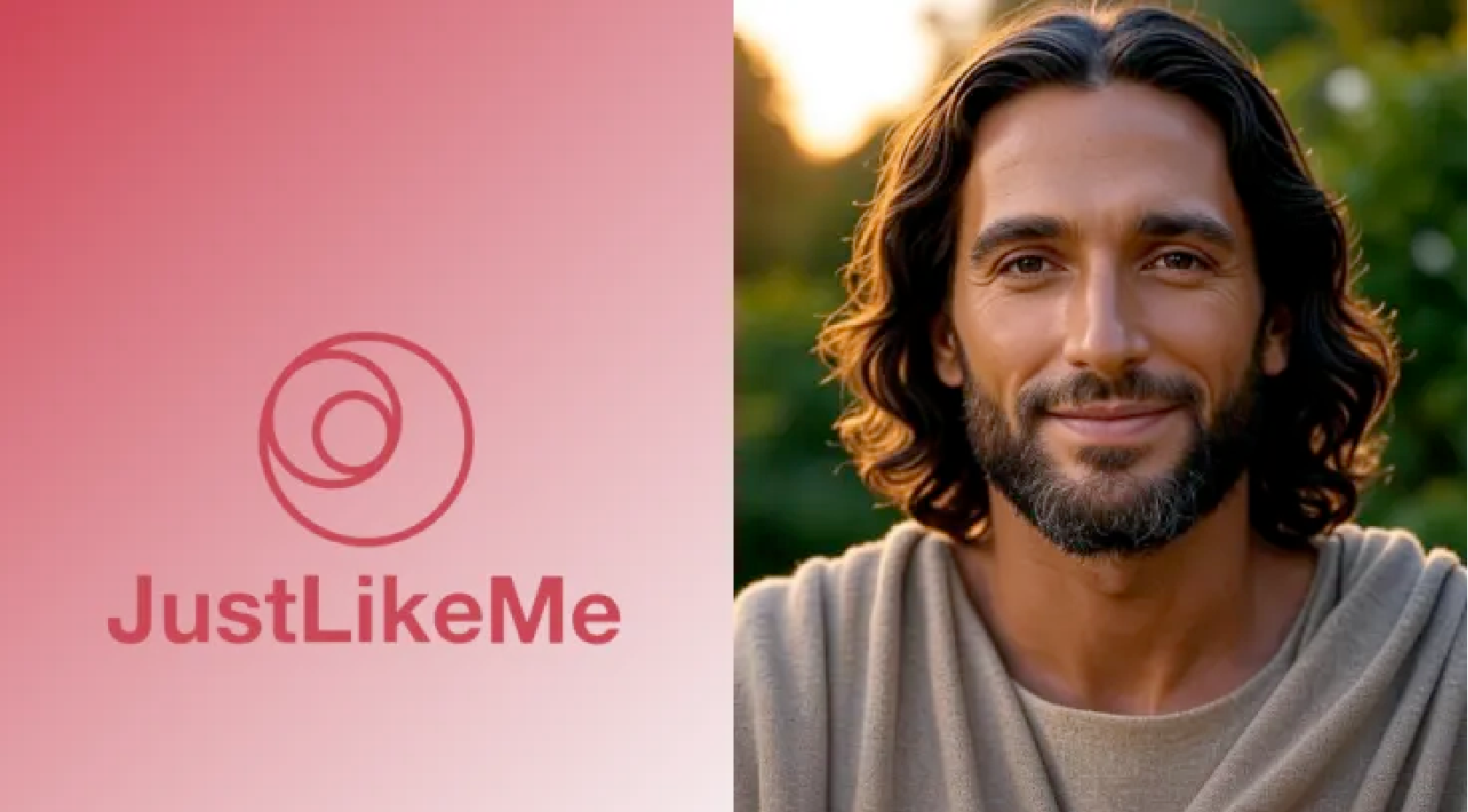
(ZENIT News / Rome, 04.20.2026).- A new frontier between technology and religion has emerged with the launch of a digital platform that allows users to converse, for a fee, with an artificial intelligence modeled on Jesus Christ. The initiative, developed by the technology company Just Like Me, is rapidly becoming a focal point for debate not only about innovation, but about the nature of faith itself.
At the center of the controversy is a feature introduced in December 2025, just days before Christmas, which offers users the possibility of engaging in voice or video conversations with an AI-generated figure inspired visually by a popular television portrayal of Jesus (The Chosen) and trained on the King James Bible. The service is priced at 1.99 dollars per minute, with subscription packages such as 45 minutes per month for 49.99 dollars. According to the company, the objective is not to promote any specific doctrine but to provide “guidance, compassion and healing” to individuals experiencing loneliness, stress or uncertainty.
This positioning is deliberate. The platform explicitly states that its AI is designed to be inclusive and accessible to users of all beliefs, offering encouragement rather than theological instruction. That distinction, however, lies at the heart of the unease expressed by many observers, particularly within Christian traditions that understand the relationship with Christ not as a generalized emotional support, but as a concrete encounter mediated through prayer, Scripture and sacramental life.
In Catholic theology, for example, communication with Christ is not conceived as an exchange of messages but as a personal relationship rooted in grace, especially through the sacraments such as confession and the Eucharist. An artificial system, regardless of its sophistication, does not possess consciousness, intentionality or spiritual agency. As several thinkers have pointed out, including philosophers drawing on the framework of Thomas Aquinas, artificial intelligence does not think or discern in a human sense; it processes data and reproduces patterns based on prior inputs.
This limitation has practical consequences. Because the system does not adhere to any doctrinal authority, it may offer responses that diverge from established Christian teaching. A previous experiment in Switzerland, where an AI interface simulated Christ in a confessional setting, illustrated the risks: when asked about assisted suicide, the system responded with general empathetic questions but omitted core moral teachings that are central to Catholic doctrine.
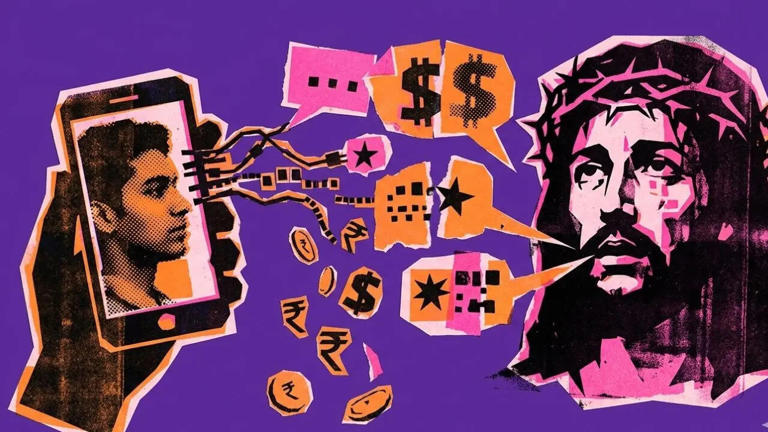
The emergence of such tools reflects a broader trend. Across religious traditions, developers are exploring ways to integrate artificial intelligence into spiritual practice. Some applications function as scriptural assistants or sermon translators; others attempt to replicate religious figures or offer moral guidance. In Buddhism, experimental robots trained on ancient texts have been introduced in limited contexts, while in other traditions debates have arisen over whether such representations are even permissible.
The motivations behind these developments vary. Some initiatives are driven by pastoral concerns, seeking to reach younger generations or those disconnected from traditional religious structures. Others are more explicitly commercial, tapping into what is increasingly seen as a significant market. The founders of Just Like Me have acknowledged both dimensions, presenting their product as a response to widespread emotional needs while also inviting religious communities to promote the platform in exchange for a share of the revenue, reportedly up to 25 percent.
This blend of spiritual language and business model has prompted comparisons with earlier forms of religious commercialization, now amplified by the persuasive capabilities of artificial intelligence. Unlike traditional media, however, AI systems can simulate dialogue, remember previous interactions and foster a sense of personal connection. That capacity raises new ethical questions, particularly when users begin to form emotional bonds with entities that, by definition, cannot reciprocate.
Some developers within the Christian world have attempted to establish criteria for responsible use of such technologies. These include clear identification of AI systems as artificial, strict fidelity to scriptural sources and an explicit acknowledgment that such tools cannot replace prayer or spiritual direction. Yet even among those open to technological innovation, there is a growing awareness of the risks of confusion between simulation and reality.
The Vatican itself has signaled caution. Pope Leo XIV has spoken of artificial intelligence as a product of human ingenuity but also as one of the most critical challenges facing humanity, warning that it may affect intellectual, neurological and spiritual development. His concern reflects a broader apprehension that, in simplifying access to information and even to forms of pseudo-spiritual interaction, technology might inadvertently erode the effort, discipline and interior transformation that religious traditions consider essential.
Beyond institutional responses, the phenomenon touches on a deeper cultural shift. The figure of Jesus presented by these systems is necessarily shaped by user expectations: accessible, non-confrontational, universally affirming. It is a version of religious authority adapted to a consumer logic, where guidance is personalized, immediate and, crucially, paid for. In that sense, the question is not only whether artificial intelligence can speak about God, but whether it is redefining what people expect from God.
For now, the adoption of such tools remains difficult to quantify. Researchers note that reliable data on their usage is scarce. Yet the trajectory is clear. As artificial intelligence becomes more embedded in daily life, its presence in the religious sphere is likely to expand, bringing with it both opportunities and tensions.
What is at stake is not simply the accuracy of an algorithm, but the meaning of mediation in religious experience. If faith traditions have historically insisted on the necessity of encounter—through community, religious practice and interior life—the rise of AI-driven substitutes introduces a radically different paradigm: one in which the sacred risks being reduced to a service, available on demand, measured in minutes, and shaped by the logic of the market.
Thank you for reading our content. If you would like to receive ZENIT’s daily e-mail news, you can subscribe for free through this link.

Publicaciones relacionadas:
 What Would Happen or What Protocol Would Be Activated on the Death of Benedict XVI?
 The Ten Countries That Made the Most Financial Contributions to the Pope in 2023
 UNICEF spends hundreds of millions of dollars promoting sexually explicit content, according to research
 On the Exhortation Dilexi te: when Peter reminds us that the poor are at the heart of the Gospel
