

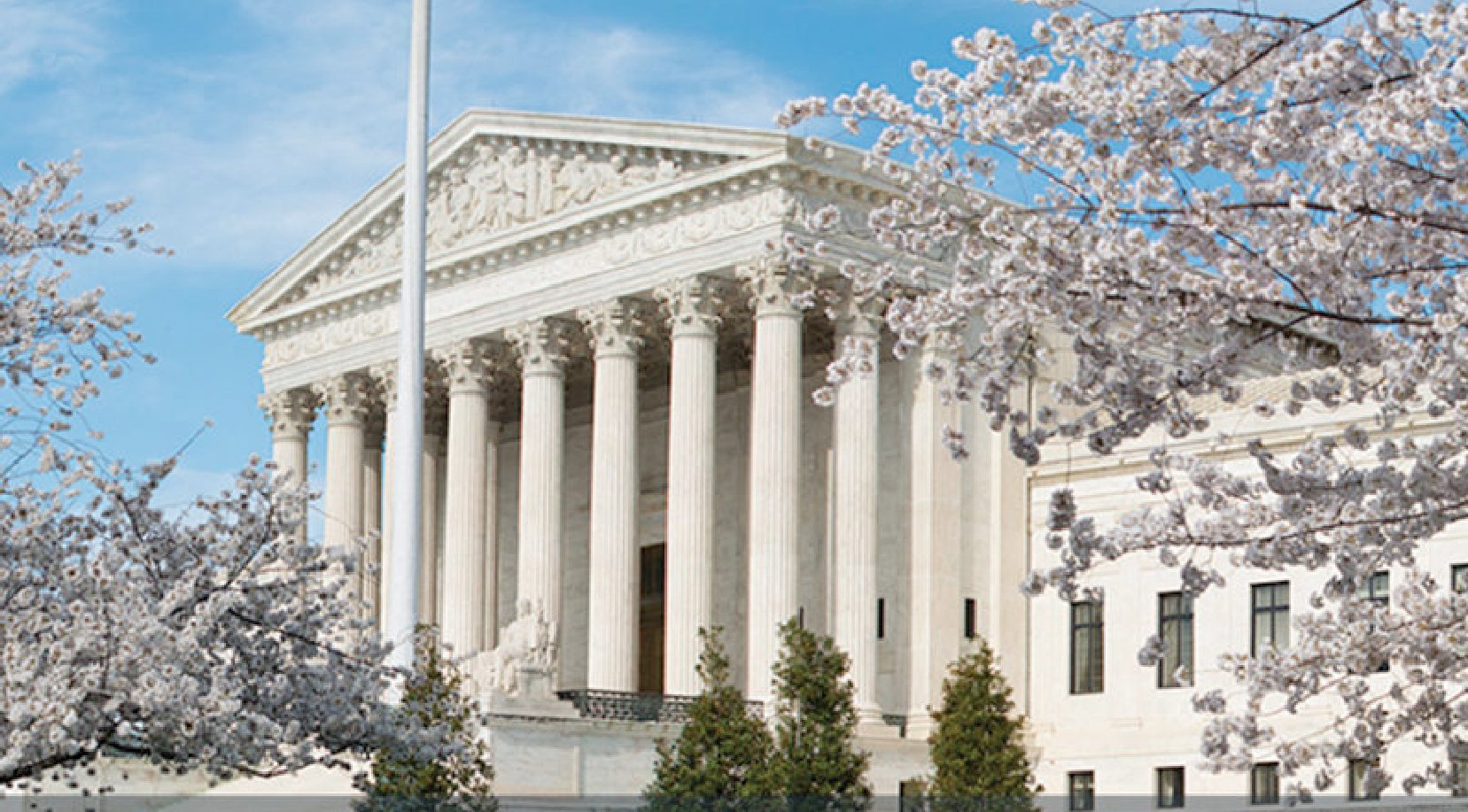
(ZENIT News / Washington, 05.29.2026).- A legal battle once considered unlikely to survive the early procedural stages has now reached a decisive turning point in the United States. By declining on May 26 to hear an appeal from the United States Conference of Catholic Bishops, the U.S. Supreme Court has allowed a controversial lawsuit over Peter’s Pence — the annual papal collection traditionally associated with charitable works — to continue in lower courts.
The case does not yet determine whether fraud occurred. But the Supreme Court’s refusal to intervene means that, for now, American bishops will have to continue defending themselves against accusations that donors were misled about how Peter’s Pence money was used.
At the center of the dispute is a question that has become increasingly sensitive for the Catholic Church in the aftermath of several Vatican financial scandals: when Catholics place money in the collection basket for the Pope’s charitable works, what exactly are they funding?
For generations, Peter’s Pence has been presented in many parishes as a concrete expression of communion with the Successor of Peter and as a way to assist victims of war, poverty, famine, and natural disasters around the world. Yet it has also long been true — though often less emphasized publicly — that part of the collection helps finance the ordinary operations of the Roman Curia, the Vatican’s central administration.
That distinction became explosive after media reports in 2019 suggested that only around 10% of Peter’s Pence funds were directly allocated to charitable initiatives. Public outrage intensified amid revelations surrounding the Vatican’s disastrous London real estate investment, which became one of the most damaging financial scandals of Pope Francis’ pontificate.
Although later reporting clarified that Peter’s Pence funds were not directly tied to the London property transaction — and Vatican prosecutors themselves dropped allegations of a direct connection in 2023 — the controversy left a lasting impression among many donors.
The current lawsuit was filed in 2020 by Rhode Island Catholic David O’Connell. He argues that he donated to Peter’s Pence in 2018 after reading promotional material from the U.S. bishops that emphasized aid to the poor and humanitarian relief. According to the complaint, the bishops failed to disclose adequately that portions of the money could also be used for Vatican administrative expenses or financial investments.
The lawsuit accuses the bishops’ conference of fraud, unjust enrichment, and breach of fiduciary duty. O’Connell’s legal team is seeking internal communications, donor records, and exchanges between the bishops and Vatican officials concerning the promotion and administration of the collection.
The bishops, however, insist the lawsuit fundamentally misunderstands both Church structure and constitutional law.
Represented by the religious liberty law firm Becket, the U.S. bishops argue that the conference itself neither collects nor controls Peter’s Pence donations. Under canon law, dioceses transfer the funds to the apostolic nuncio, who forwards them to the Holy See. The conference says it merely provides optional promotional resources to dioceses.
More importantly, the bishops maintain that civil courts should not intrude into internal ecclesiastical matters protected by the First Amendment. Their lawyers warned that allowing the case to proceed could open the door to sweeping judicial interference in religious governance and Church communications.
So far, however, federal courts have rejected that argument.
A district court ruled in 2023 that the case concerns potentially misleading fundraising practices rather than doctrine or ecclesiastical authority. In April 2025, the D.C. Circuit Court of Appeals upheld that reasoning, declaring that “church autonomy” may serve as a defense in litigation but does not grant religious institutions blanket immunity from lawsuits.
By refusing to hear the bishops’ appeal, the Supreme Court has now effectively allowed that interpretation to stand.
The decision is significant not only for the Catholic Church but also for religious organizations across the United States. The case may become an important test of where the constitutional boundary lies between legitimate civil oversight and protected religious autonomy.
For the Church itself, the affair also highlights a broader pastoral challenge that extends beyond legal strategy. Many Catholics willingly support Peter’s Pence precisely because they associate it with mercy, charity, and the Pope’s universal mission. When financial opacity clouds that trust, even partially, the damage is not merely administrative. It becomes spiritual and ecclesial.
In recent years the Vatican has attempted to strengthen financial transparency through reforms, audits, and tighter oversight mechanisms.
Thank you for reading our content. If you would like to receive ZENIT’s daily e-mail news, you can subscribe for free through this link.

Publicaciones relacionadas:
 Vatican-Vietnam Agreement Comes into Force: Pope Francis Sends Letter to Vietnamese Catholics
 Former police officer murders beloved Polish priest: mourning after brutal killing
 They give the Eucharist to their dogs, are reported to the bishop, and the diocese issues a ruling: what was it?
 What is God’s vision for Jerusalem amid the conflict? Cardinal Pizzaballa responds
