(ZENIT News / Mexico City, 04.23.2026).- Mexico remains one of the most Catholic countries in the world. According to the National Institute of Statistics, Geography and Informatics, 78% of the Mexican population identifies as Catholic.
However, this majority raises a question: Is it truly represented in the institutions that make public decisions? In particular, is there a correlation between this majority identity and the composition of the Congress of the Union?
The question is not trivial. In a representative democracy, one would expect that the fundamental characteristics of the society (including its religious identity) would be reflected to some degree in its legislative bodies. However, unlike other variables such as gender, the religious affiliation of legislators is not part of public records or institutional analysis.
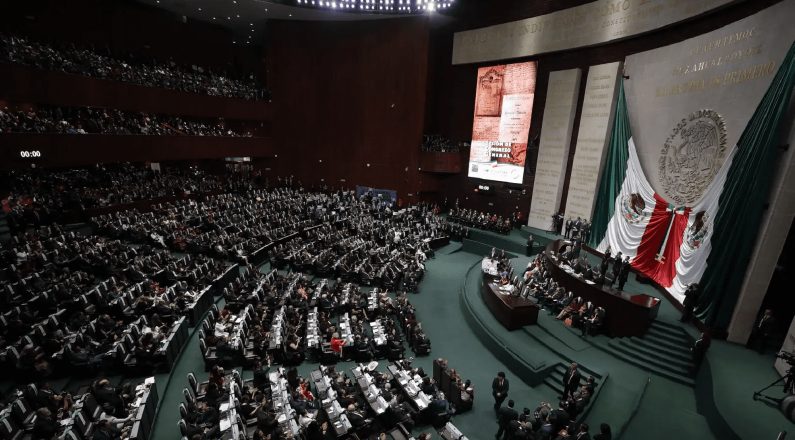
The Congress of the Union (comprised of the Chamber of Deputies and the Senate of the Republic) is, in this sense, religiously opaque.
This situation becomes even more relevant when observing the recent evolution of religious identity in the country.
Although the absolute number of Catholics continues to grow, it is doing so at a slower rate than the total population. Between 2010 and 2020, while the national population grew by 12.18%, the Catholic population grew by only 5.32%, implying a reduction in its relative weight.
The analysis by federal entity confirms this trend: in most states, the proportion of the Catholic population is decreasing, reflecting a gradual transformation in the country’s religious composition.
However, even if the proportion of Catholics were perfectly stable, a fundamental question would remain: the relationship between religious identity and political representation.
The lack of data on the religious affiliation of legislators does not imply its non-existence, but rather its invisibility in the public sphere.
In a secular State, enshrined in the Political Constitution of the United Mexican States, this separation seeks to guarantee institutional neutrality, but this neutrality does not eliminate the fact that legislators are individuals with convictions, values, and frames of reference (including religious ones) that can influence their understanding of public affairs.
The question, then, is not whether there should be a «Catholic bloc» in Congress, but whether a predominantly religious society can be represented by institutions that do not reflect (at least visibly) this dimension of its identity.
This gap does not necessarily translate into an absence of values, but rather into a disconnect between social identity and explicit representation.
In practice, this means that millions of citizens who share a common religious affiliation participate in democratic life without that affiliation having an identifiable expression in the legislative sphere.
More than an exclusion, it is a dissolution: religious identity is diluted in the political process until it becomes unrecognizable.
This scenario poses a challenge that is not only political, but also cultural. In an increasingly pluralistic society, the question is not how to impose an identity, but how to integrate deep-seated convictions (including religious ones) into public life in a legitimate and constructive way.
Representation is not limited to numbers, but neither can it ignore the identities that shape society.
Mexico remains a country where faith is an integral part of the lives of millions. The challenge ahead is understanding how that faith can continue to engage in dialogue with institutions, not through imposition, but through a conscious presence in the public sphere.
Faith in Mexico is not absent from Congress; rather, it is absent from the language with which Congress describes itself.