

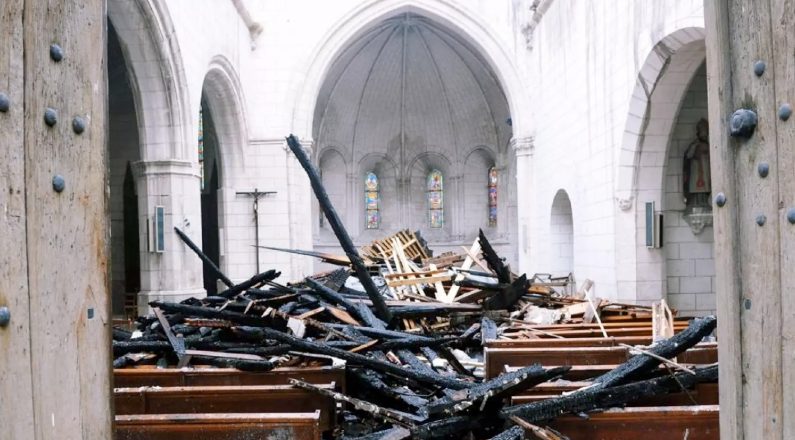
(ZENIT News / London, 04.23.2026).- Across the United Kingdom, churches have long stood as more than places of worship. They are repositories of memory, anchors of local identity and, particularly in rural areas, one of the last remaining spaces of community cohesion. Yet new data suggest that these institutions are increasingly vulnerable—not only to neglect, but to a steady and troubling pattern of crime.
Figures compiled through freedom of information requests reveal that in 2025 alone, at least 3,809 criminal offenses were recorded in churches and other places of worship across the country. This amounts to more than ten incidents every day. The data, gathered from 37 police forces out of 45 contacted, likely understate the scale of the problem, given that several jurisdictions either declined to provide figures or apply inconsistent classification methods.
The numbers, when placed in a longer perspective, are even more striking. Since 2017, a total of 43,853 crimes have been recorded in religious properties. Among these, 17,338 were thefts, 12,430 involved criminal damage or arson, and 5,696 were categorized as violent offenses. These are not isolated acts of vandalism, but part of a sustained pattern affecting thousands of communities.
The most recent breakdown offers a clearer view of the nature of these crimes. In 2025, authorities registered 1,561 cases of theft and burglary, 1,018 incidents of vandalism, damage or arson, and approximately 1,000 acts involving violence. An additional 58 cases involved the theft of lead and other metals, a practice that has long plagued historic buildings due to the resale value of materials. Vandalism and violent acts together account for the majority of offenses, suggesting that the issue extends beyond opportunistic theft into more aggressive forms of intrusion.
Geographically, the distribution of crime reflects broader population patterns but also highlights specific pressure points. London recorded the highest number of incidents, with 531 cases reported by the Metropolitan Police and a further 30 by the City of London Police. West Yorkshire followed with 445 recorded crimes, while Greater Manchester reported 172. These figures indicate that both urban density and local conditions contribute to the vulnerability of religious sites.
Behind the statistics lies a more complex reality. Churches, particularly in rural areas, often depend on small groups of volunteers for their maintenance and security. Limited financial resources, combined with the architectural openness that characterizes many historic buildings, make them accessible targets. This vulnerability is now compounded by policy decisions that, according to some observers, risk exacerbating the problem.
The recent imposition of value-added tax on approximately 21,000 historic places of worship has raised concern among those responsible for their preservation. Critics argue that additional financial burdens may slow down restoration projects and discourage volunteer engagement, indirectly increasing exposure to crime. When maintenance is delayed and buildings are left unattended, they become easier targets for vandalism and theft.
At stake is more than property. Churches in the United Kingdom—whether Anglican, Catholic or belonging to other traditions—continue to play a social role that is not easily replaced. In many villages, they function as meeting points, support networks and symbols of continuity in an increasingly fragmented social landscape. Their degradation, whether through neglect or criminal activity, has implications that extend beyond religious practice.
This dimension is often overlooked in public debate. Crime against churches is not always perceived with the same urgency as offenses against other types of infrastructure. Yet the cumulative effect of thousands of incidents each year points to a broader erosion of respect for shared spaces and cultural heritage.
Thank you for reading our content. If you would like to receive ZENIT’s daily e-mail news, you can subscribe for free through this link.

Publicaciones relacionadas:
 Nicaraguan Dictatorship Expels More Nuns: This Time the Religious of the Cross
 Seven Legionaries of Christ and one consecrated woman charged: Chilean justice responds by closing investigation due to lack of evidence
 Muslim groups commit massacre of Christians in Congo: nearly 30 dead
 Syria: in 14 years, the Christian presence has fallen by 84%: these are the numbers
