

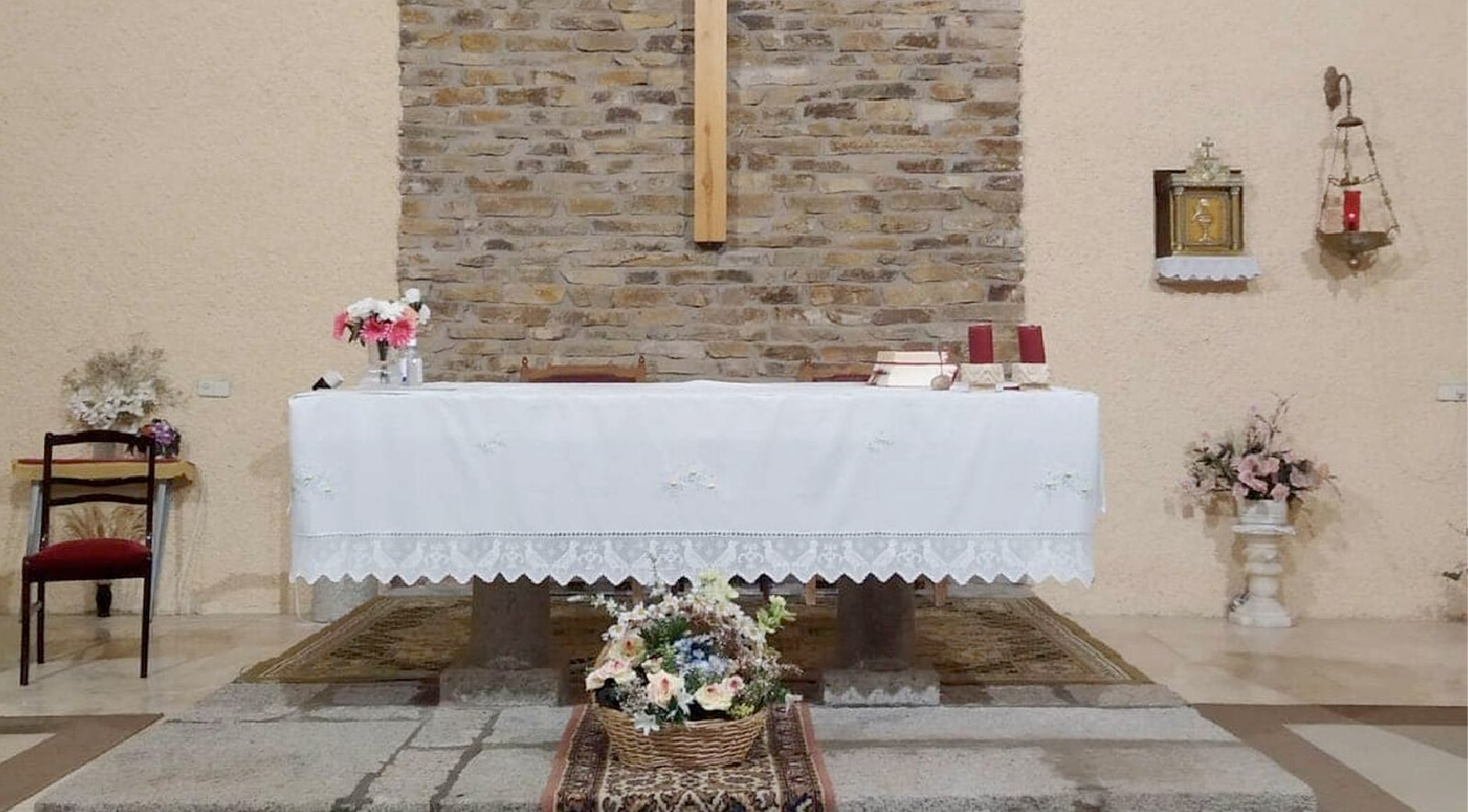
(ZENIT News / Paris, 05.16.2026).- A French court has sentenced two gays men responsible for a months-long wave of burglaries targeting Catholic churches across northern France, in a case that has shocked many believers not only because of the thefts themselves, but because of the apparent contempt shown toward sacred objects and the Eucharist.
According to investigators and court findings, Raphaël Hourdeaux, 35, and his partner Tony Paupière, 30, broke into 29 Catholic churches during the summer of 2025, mainly in isolated villages in rural northern France.
The case drew national attention after authorities revealed that the men not only stole valuable liturgical objects, but also allegedly took consecrated hosts and used sacred vessels from churches as decorative items inside their home.
For many Catholics, that detail transformed the crimes from ordinary theft into something far more painful: a profanation of objects considered holy and intimately linked to the sacramental life of the Church.
A Pattern of Attacks Across Forgotten Villages
The burglaries unfolded over approximately three months and affected small communities where churches often remain open during the day despite having only occasional liturgical activity.
In the village of Burelles, the men forced entry into the parish church, destroyed the donation box, broke through the wooden sacristy door, and stole communion plates, baptismal vessels, and a monstrance used for Eucharistic adoration.
That same day, another chalice disappeared from the parish church in nearby Vervins. The following day, the church in Marle was targeted, with thieves forcing open the tabernacle and taking an additional chalice.
French media later reported that consecrated hosts had also been removed during some of the break-ins, intensifying outrage among local Catholics and clergy.
In the Catholic Church, the consecrated Eucharist is not regarded as symbolic bread alone but as the real presence of Christ. Because of that, the theft or desecration of consecrated hosts carries a particularly grave significance for practicing Catholics.
Investigators therefore considered the possibility that at least some of the acts may have involved motives extending beyond financial profit.
Police eventually identified the suspects through mobile phone geolocation data. In October 2025, approximately 30 officers raided the couple’s residence.
What they discovered deepened public unease.
Some liturgical objects had reportedly been arranged as household decoration, while others were hidden in bags and cupboards. Additional items had been sold to a local antique dealer, who was later convicted of receiving stolen property. Other sacred vessels were melted down and sold as metal.
The Fragility of Rural Christianity
Beyond the criminal dimension, the case has also exposed a broader reality affecting much of rural France: the growing vulnerability of isolated churches in regions suffering from demographic decline, priest shortages, and weakening religious practice.
Many of the targeted churches belonged to villages where Mass is celebrated only a few times each year. In some dioceses, individual priests are responsible for dozens of parishes spread across large rural territories.
According to reports presented during the trial, some clergy in the affected region were caring for as many as 50 churches.
That pastoral situation made the burglaries easier to carry out. In several cases, days passed before anyone even realized a church had been broken into.
The attacks therefore highlighted not only security failures, but also the increasingly fragile condition of France’s immense religious heritage.
France remains home to tens of thousands of historic churches, chapels, monasteries, and shrines — many centuries old — even as regular religious practice has sharply declined over recent decades.
Sentencing and Questions About Justice
The two men received three-year prison sentences, though two years were suspended. They will serve one year under electronic surveillance at home rather than in traditional incarceration.
The relatively limited punishment has generated frustration among some believers who argue that the scale and symbolic gravity of the crimes deserved harsher penalties.
French courts are still expected to determine compensation owed to the affected parishes.
Authorities managed to recover some stolen objects and return them to their churches after ownership could be verified. However, the process proved difficult because many parishes lacked detailed inventories of their liturgical possessions.
As a result, some recovered objects could not definitively be linked to specific churches and were instead entrusted to diocesan authorities for redistribution among local communities.
The case has prompted renewed discussion within several dioceses about the urgent need for better cataloguing and protection of sacred art and liturgical treasures, especially in remote regions where churches remain particularly exposed.
More Than a Property Crime
The desecration of churches has become an increasingly sensitive issue in France over the past decade, amid broader concerns about vandalism, anti-Christian hostility, and attacks on religious sites. Although motives vary widely — from theft to ideological hostility or simple delinquency — Catholic communities frequently express concern that acts targeting churches receive less public attention than attacks directed against other religious communities.
At the same time, Church leaders generally avoid framing such incidents in overtly political terms, preferring instead to emphasize prayer, forgiveness, and the protection of religious heritage.
Yet beneath the immediate criminal proceedings lies a more profound question confronting contemporary Europe: what happens to sacred places when the societies that built them gradually lose contact with the faith that once gave them meaning?
The villages affected by these burglaries were not merely locations containing valuable objects. They were communities whose churches once stood at the center of baptism, marriage, mourning, feast days, and collective memory.
Today, some of those same churches open only occasionally, vulnerable not only to thieves, but also to cultural forgetting.
Thank you for reading our content. If you would like to receive ZENIT’s daily e-mail news, you can subscribe for free through this link.

Publicaciones relacionadas:
 Muslim leaders join Christians in denouncing extremism
 About the Scandal in New York’s Cathedral of Gay Irreverence During a Funeral and What This Has To Do with Fiducia Supplicans
 Ortega Regime Seizes Matagalpa Diocese Headquarters in Latest Attack on Nicaragua’s Catholic Church
 Half of Polish Clergy Claims to Have Been Victimized Just for Being Priests
