

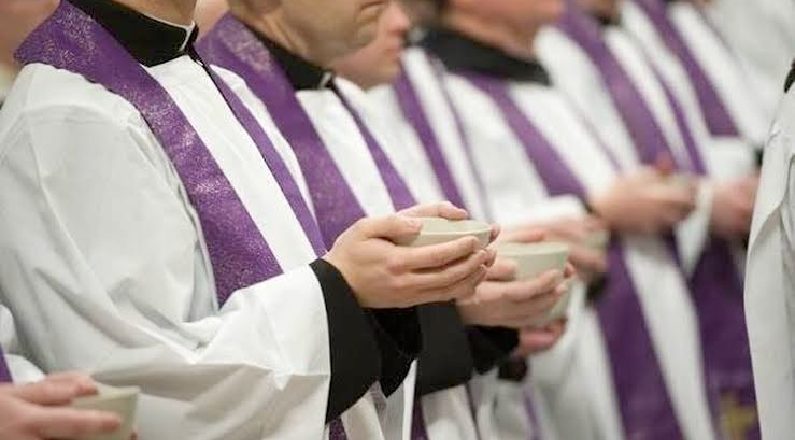
(ZENIT News / Kenya, 07.15.2026).- A sweeping disciplinary intervention in the Diocese of Maralal has brought questions of priestly conduct, financial accountability and episcopal authority into sharp focus, exposing the growing pains of one of Kenya’s youngest dioceses.
The Diocese of Maralal is not a large ecclesiastical jurisdiction. In 2023, it had 37 priests serving approximately 144,870 Catholics across 14 parishes. That is why the decision announced on July 12 by Bishop Hieronymus Emusugut Joya has attracted particular attention: six priests, or possibly seven according to differing local reports, were suspended amid allegations involving abuse of ecclesiastical authority, administrative negligence and mismanagement.
If the 2023 figures remain broadly representative, the measure affects roughly one-sixth of the diocesan presbyterate.
The scale of the decision matters, but so does its context. Joya, 61, inherited a diocese still formed by the long episcopate of Italian missionary Bishop Virgilio Pante, who led Maralal for more than two decades before retiring in 2022. Pante had worked in a region marked by cattle raiding, land disputes, drought and poverty, traveling extensively through a vast and difficult territory while attempting to consolidate fragile pastoral and financial structures.
Joya, a Kenyan member of the Missionaries of the Consolata, was already familiar with the diocese before becoming his bishop. His supporters have presented him as a reform-minded successor determined to make the local Church more financially sustainable, administratively capable and evangelically effective. Yet reports of a bitter dispute in 2025, involving the appointment of a new administrator at an educational institution previously led by a popular priest, suggested that tensions within the diocese had already begun to surface.
The latest confrontation appears to have brought those tensions into the open.
According to reports on the bishop’s pastoral and administrative directives, Joya said that he had encountered serious financial difficulties upon taking office and had sought donations and grants to stabilize the diocese. He also recalled discussions with diocesan priests in December 2022 about how parishes and Church institutions could contribute to overcoming the crisis.
The bishop now maintains that some commitments made at that time were not honored. He also said that he had been accused of constantly asking for money and of taking educational materials and parish equipment belonging to local institutions. Joya rejected those accusations, arguing that his fundraising efforts had helped pay diocesan debts, finance development projects and strengthen administrative structures.
His defense was strikingly blunt. He claimed to have mobilized hundreds of millions of Kenyan shillings during his time in the diocese and questioned who, in that context, should bear responsibility for the Church’s financial difficulties.
The disciplinary action that followed was based, according to Joya, on credible evidence of misconduct and on the provisions of canon law. The precise legal scope of the suspensions, however, remains unclear in public reporting. It has not been definitively established whether the priests have been barred from all priestly ministry or from specific functions and faculties.
The bishop’s directives went beyond the suspended priests themselves. They introduced a strict framework for the daily life and administration of the diocesan clergy. Priests are reportedly expected to return to their parish residences by 7 p.m. for evening prayer and to obtain permission to spend the night elsewhere. They are also required to seek authorization before allowing a layperson to stay overnight in their residence.
The rules prohibit drinking alcohol in bars or parish residences and forbid priests from participating in liturgical celebrations while intoxicated. They also address private commercial activity, the acquisition of property in the names of relatives without a reasonable explanation, sexual conduct and the use of diocesan vehicles. Financial bodies are expected to operate transparently, while parish councils are to participate in annual budgeting and auditing.
Some of these provisions simply restate obligations already familiar within Catholic discipline. Others reflect principles found in the universal law of the Church, including the expectation of financial accountability and restrictions on certain forms of private commercial activity by clergy.
The more controversial question concerns the extent of the bishop’s authority to impose general restrictions on the personal movements of all diocesan priests. A universal 7 p.m. return requirement and the need for prior permission to spend a night away from a parish residence could become the subject of canonical challenges, particularly if priests argue that such measures exceed the bishop’s legitimate authority or are insufficiently connected to individual cases.
That possibility could make Maralal a test case not only in Kenya but also in the wider discussion of the practical limits of episcopal governance. A bishop possesses substantial authority to govern the clergy of his diocese, but canon law also operates through procedures, rights and defined competencies. The distinction between legitimate discipline and excessive control is therefore not merely theoretical.
For now, Joya has said that the suspended priests will remain under suspension while their cases are resolved. He has asked them to reflect on their vocation and responsibilities and has appointed other priests to fill the vacant positions.
The immediate pastoral consequences could be considerable. In a diocese with only a few dozen priests, removing six or seven from active ministry places a substantial additional burden on those who remain. Any canonical appeals could prolong the uncertainty, while broader challenges to the diocesan directives could eventually bring the matter before authorities in Rome.
The underlying dispute also touches on a perennial problem in Church governance: reform can be necessary and still generate resistance. A bishop seeking to impose greater transparency may encounter suspicion from those who fear excessive centralization. Conversely, calls for greater autonomy at the parish level can become difficult to defend if financial systems are opaque or ecclesiastical responsibilities are neglected.
Maralal’s current crisis therefore appears to be about more than a disciplinary purge. It is a struggle over what kind of institution this young diocese will become.
Thank you for reading our content. If you would like to receive ZENIT’s daily e-mail news, you can subscribe for free through this link.

Publicaciones relacionadas:
 Success Story: This Is the Residence Where 8 Out of 10 Priests with Psychological Issues Find Success
 U.S.: Sexual abuse of individuals under the pastoral care of a clergy member is classified as a specific crime in the Civil Penal Code
 The Vatican Rejects German Bishops’ Request to Allow Laypeople to Deliver Homilies: Here’s Why
 Decline, Resurgence, and Breaking Stereotypes: The State of Vocations and Priestly Ordinations in France, Germany, and Italy
