

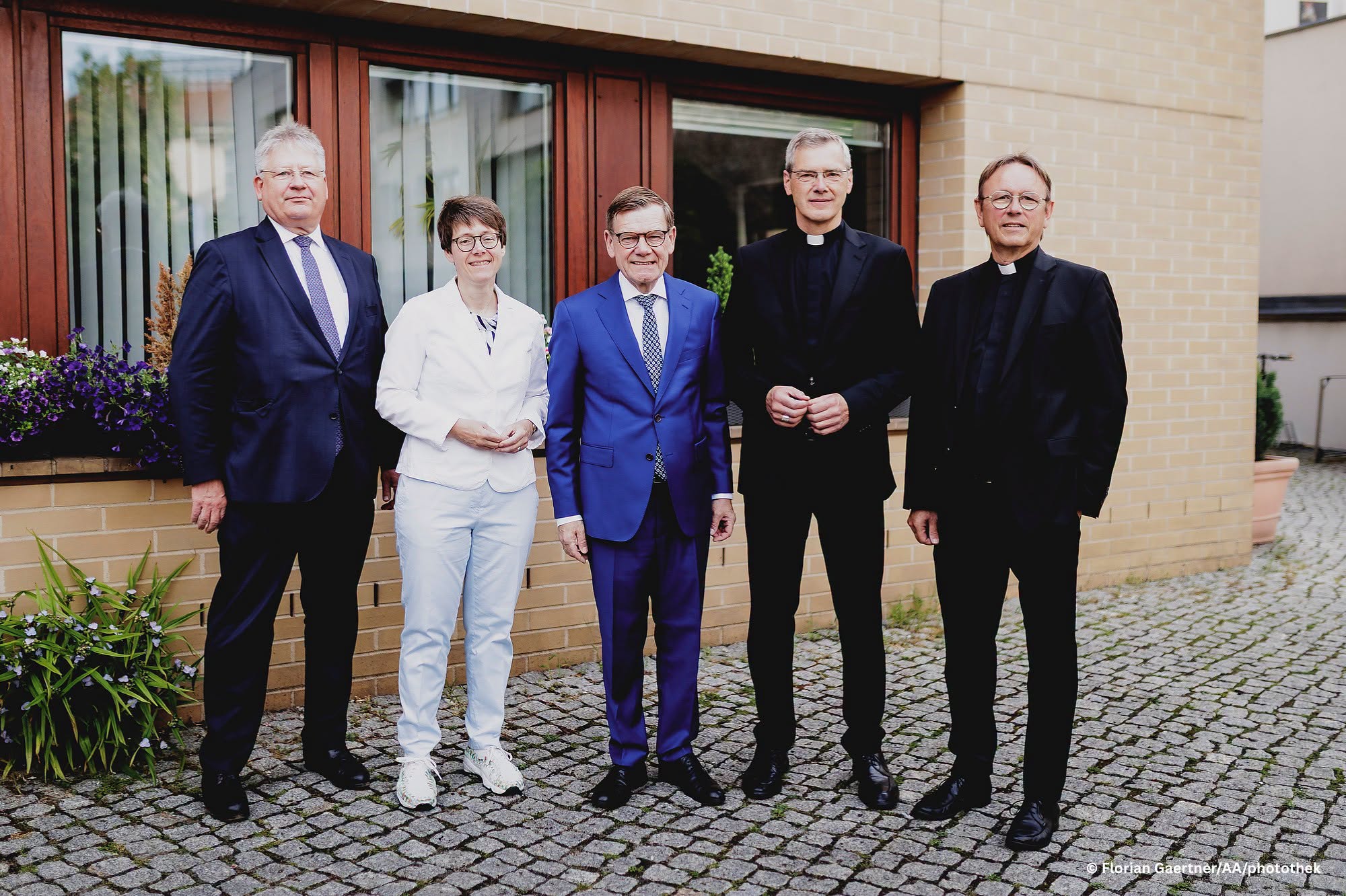
(ZENIT News / Berlin, 09.01.2026).- The most revealing development in Germany’s long-running synodal experiment may be the meeting that will not take place.
The first assembly of Germany’s proposed Synodal Conference, scheduled for Nov. 6 and 7 in Stuttgart, has been cancelled while its statutes remain under consideration in Rome. No replacement date has been announced, and the Vatican has yet to authorize the body that its architects hope will become the permanent institutional successor to the German Synodal Way.
For the German Church, the delay is more than an administrative inconvenience. It exposes the unresolved question that has shadowed the entire reform process: how far can a national Church redesign the way decisions are made without altering the authority that Catholic doctrine and canon law assign to bishops? That question is now squarely on Pope Leo XIV’s desk.
The proposed conference would be unusually powerful in appearance. Its planned membership consists of Germany’s 27 diocesan bishops, 27 representatives of the Central Committee of German Catholics and another 27 elected Catholics. All 81 members would have equal voting rights.
Its supporters see the arrangement as a practical expression of synodality: bishops and lay Catholics discerning and deciding together on matters affecting the Church beyond individual dioceses.
Critics see a potential constitutional problem. If a national body composed partly of laypeople acquires decision-making authority over matters traditionally belonging to bishops, the issue is no longer simply whether lay Catholics should have a greater voice. It becomes a question of who possesses governing authority in the Church.
That distinction explains why Rome has been cautious.
The Vatican had already warned in 2022 that an earlier proposal for a permanent joint body could create a new governing structure above the German Bishops’ Conference and effectively displace it. The concern was not opposition to consultation with lay Catholics as such, but whether a new institution could acquire powers that the existing structure of the Church does not permit it to exercise.
The architects of the new conference subsequently modified its statutes. The final version explicitly says that the body respects the Church’s constitutional order and preserves the rights of diocesan bishops and the national bishops’ conference. Its proponents therefore argue that the earlier Vatican objections have been addressed.
But the fact that the statutes have been sitting in Rome for months suggests that the matter is not considered settled.
The German bishops approved the statutes in February 2026, following their endorsement by the Central Committee of German Catholics. On March 31, Bishop Heiner Wilmer, president of the German Bishops’ Conference, personally delivered the text to Rome seeking Vatican approval. Five months later, there has been no public decision.
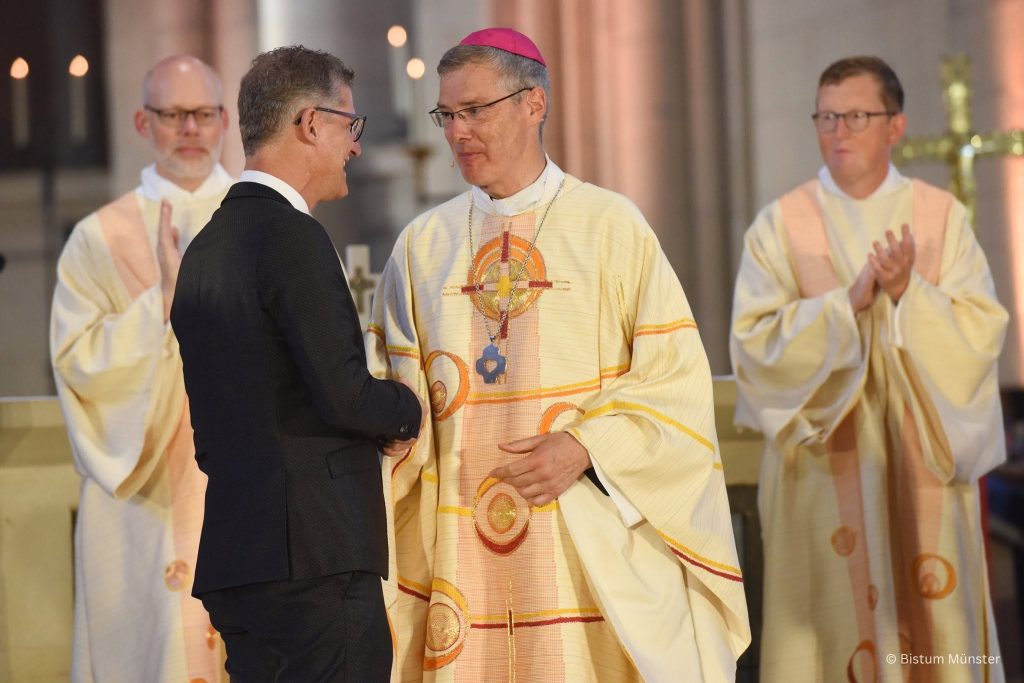
Wilmer has tried to strike a conciliatory tone. In recent comments, he acknowledged that Rome still needed time while expressing confidence that the process would move forward.
That cautious optimism contrasts with the increasingly uncertain timetable. The Stuttgart meeting has now disappeared from the calendar, and even delegates reportedly had not received a formal invitation or an official notification of the cancellation.
For Rome, this may be precisely the point. By refusing to allow the conference to begin before its legal and ecclesial status is clarified, the Holy See is preserving a principle that has been at the center of the dispute from the beginning: synodality cannot simply mean creating new institutions and assigning them powers by national agreement.
The controversy has its origins in the German Synodal Way, which concluded in 2023 after six major assemblies and produced around 150 pages of resolutions. Its discussions ranged across highly sensitive questions, including the possibility of women serving as deacons, lay preaching at Mass and priestly celibacy. One of its most consequential proposals was the creation of a permanent national body bringing bishops and lay Catholics together.
The proposed Synodal Conference is intended to turn that proposal into a lasting institution.
Its supporters insist that it would not abolish episcopal authority. Its statutes state that diocesan bishops retain their rights and that existing diocesan and national structures remain intact. Yet the architecture itself is significant: 27 bishops would sit alongside 54 lay members, all with equal voting rights.
That arrangement makes the German debate particularly important beyond Germany.
The Catholic Church has spent recent years encouraging broader participation, listening and shared discernment. But greater participation does not automatically mean identical authority. A bishop and a lay Catholic can participate fully in a process without possessing the same ecclesial office or responsibility.
The German experiment is testing where that distinction should be drawn.
There is another potentially explosive dimension: money.
The proposed conference has also raised questions about its relationship with the Association of Dioceses of Germany, the legal and administrative body coordinating the finances of the country’s 27 dioceses. An attempt was made to give the Synodal Conference’s finance committee responsibilities connected with that structure. Several bishops opposed the proposal while supporting greater lay participation in financial decisions.
The disagreement illustrates why the debate cannot be dismissed as an argument over titles and procedures. In the Church, institutional authority and financial authority are closely connected. Whoever participates in making decisions about resources inevitably acquires influence over priorities, institutions and pastoral strategy.
This is also why the German Church’s next step matters to Rome.
The original joint conference between bishops and lay representatives has existed since 1976 and meets twice a year. The proposed Synodal Conference would therefore not be starting from nothing. It would represent a substantial expansion of an existing culture of cooperation into a permanent national decision-making structure.
Some German bishops have already expressed reservations. Four previously declined to participate in the provisional committee, citing disagreement with the direction of the German process and its relationship with the worldwide synodal process initiated under Pope Francis.
That internal division makes Leo XIV’s task still more delicate.
The Pope must balance two legitimate concerns. On one side is the desire of many German Catholics for greater participation, transparency and shared responsibility. On the other is the need to preserve the Church’s unity and the nature of episcopal ministry, so that national experimentation does not gradually become a parallel model of Church government.
The Vatican’s silence should therefore not automatically be interpreted as a rejection of synodality or of greater lay participation. But neither should it be interpreted as a routine bureaucratic delay.
The postponed Stuttgart meeting has demonstrated that the decisive stage of Germany’s synodal project is no longer taking place primarily in German meeting rooms. It is taking place in Rome, where the Holy See must determine whether the proposed institution can operate within the Church’s existing order.
The question is ultimately larger than one conference.
Thank you for reading our content. If you would like to receive ZENIT’s daily e-mail news, you can subscribe for free through this link.

Publicaciones relacionadas:
 [Interview] Pope’s Nuncio in the USA Talks about the Synod: People Will Come with Their Own Agenda; The Role of the Pope Will Be to State
 USA: IVF Destroys Human Life, Bishops Urge Ethical Alternatives
 Catholic Parish Priest in Greenland Explains Reaction of Faithful to USA’s Possible Appropriation
 Belarus releases Discalced Carmelite friar accused of espionage
