

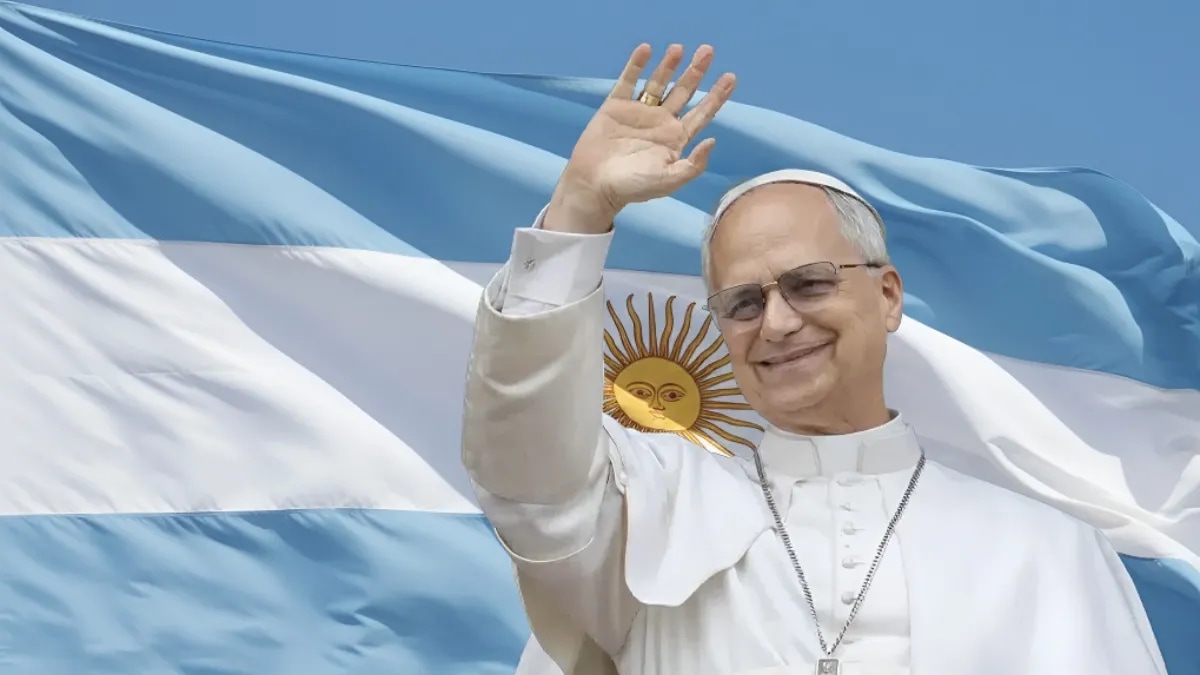
(ZENIT News / Buenos Aires, 09.11.2026).- Pope Leo XIV’s four-day visit to Argentina is still two months away, but the country’s Catholic Church is already beginning to experience the journey as an event in its own right. From the Vatican offices responsible for papal liturgies to diocesan churches, volunteers, musicians and parish communities, preparations are turning the November 8–11 apostolic visit into a nationwide exercise in anticipation.
The first signs of that preparation are not necessarily the most visible ones. On September 8, Rodrigo Martínez, coordinator of the national liturgy team for the papal visit, traveled to the Vatican for a working meeting with Archbishop Diego Giovanni Ravelli, Master of Pontifical Liturgical Celebrations, and Vatican officials Archbishop Ján Dubina and Archbishop Lubomír Welnitz. Their discussions focused on the Masses Leo XIV will celebrate in Buenos Aires, Córdoba and Luján, as well as Vespers at Buenos Aires Metropolitan Cathedral.
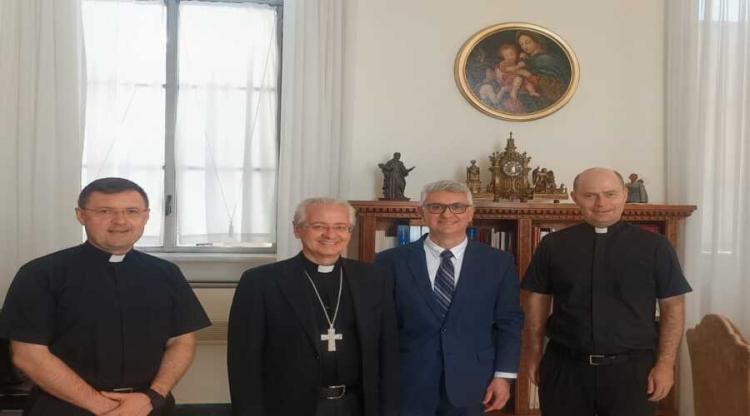
The meeting illustrates how closely the local organizers and the Vatican are coordinating the religious dimension of the journey. The Vatican Office for Pontifical Liturgical Celebrations will accompany the Pope throughout the trip, working with local teams to ensure that each celebration follows the necessary liturgical and organizational requirements.
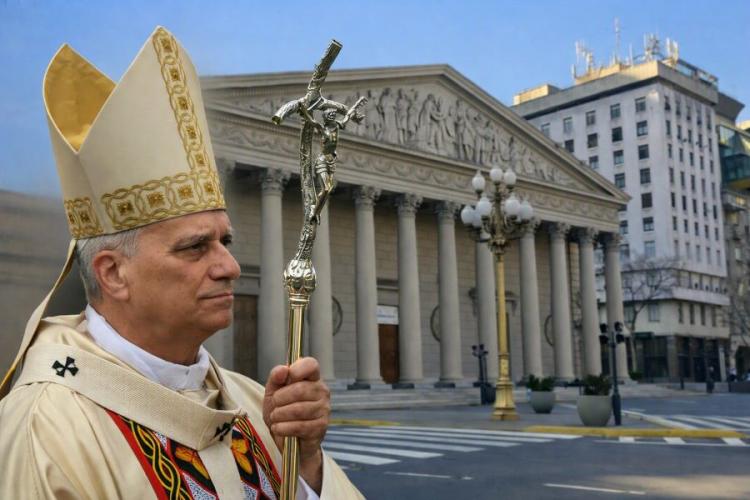
Meanwhile, Buenos Aires has chosen to make the period leading up to the visit itself a time of spiritual preparation. The metropolitan cathedral scheduled a series of Friday morning Masses at 8:30 throughout September and on October 2, each entrusted to a different auxiliary bishop of the archdiocese. Alejandro Giorgi opened the series on September 4 with a call to renew faith and love; Pedro Cannavó followed on September 11 with an invitation to renewal in unity. Iván Dornelles will focus on service on September 18, while Alejandro Pardo will turn attention to caring for what is human on September 25. The final Mass, celebrated by Archbishop Jorge García Cuerva on October 2, will place the Virgin of Luján at the center of the prayer for the Pope’s arrival.
The sequence is significant because it gives the visit a rhythm that goes beyond logistics. Faith, unity, service and human dignity are presented as dispositions with which Catholics are being asked to receive the Pope, rather than simply as themes for a large public event. The celebrations will also be broadcast by Orbe 21, allowing Catholics throughout Argentina to participate from a distance.
The most concrete expression of that desire to participate, however, is likely to come from thousands of people who will not be on the altar or in the official delegations, but behind the scenes. The national organization has opened pre-registration for volunteers between 18 and 65 years old, provided they are Argentine citizens or legal residents of the country. Applications will remain open until October 8, followed by mandatory virtual and in-person training during October and the first days of November.
The campaign’s motto, “Service with humility,” captures the intended character of the initiative. Volunteers will assist with pilgrims, logistics and pastoral tasks across the three locations on the papal itinerary. Their selection will not be automatic: assignments will depend on applicants’ profiles and the operational needs of each area.
The scale of the mobilization extends well beyond diocesan structures. Bishops, priests, deacons, Catholic movements, youth ministry, Caritas and diocesan communications teams are being encouraged to promote participation through parishes, pastoral gatherings, liturgical celebrations and social media. In this sense, the volunteer operation is becoming another way for the Church to prepare its own members for the visit: not simply by asking them to attend, but by asking them to serve.
Music is being given a similarly formative role. The Episcopal Conference recalled that September 10 marked the closing of the competition to choose the official song for the Pope’s visit. Argentine musicians and composers over 18 were invited to submit original, unpublished works inspired by Leo XIV’s visit and the message of his encyclical Magnifica humanitas.
The competition now moves into the evaluation stage, with a jury composed of Manuel Wirzt, Graciela González, Daniel Climente, Hugo Vera, Rosana Bujones and Cristóbal Fones. The winning composition will accompany activities connected with the papal journey and contribute to the spiritual preparation of Argentine Catholics.
Taken together, these initiatives reveal an approach to the visit that is broader than the mechanics of receiving a head of the Catholic Church. Argentina is being encouraged to prepare through worship, service and culture — through the altar, the work of volunteers and the language of music.
That may ultimately prove to be one of the most important aspects of Leo XIV’s first visit to Argentina. A papal journey lasts only a few days, but the preparation can begin much earlier and involve people who would otherwise have little direct role in its organization. By November, the Pope’s arrival will therefore have been preceded not only by schedules and security arrangements, but by months of prayer, formation and practical service.
Thank you for reading our content. If you would like to receive ZENIT’s daily e-mail news, you can subscribe for free through this link.

Publicaciones relacionadas:
 Pope Leo XIV will visit Uruguay, according to statements from the Uruguayan government: here’s what we know
 Before the Pope’s arrival: a survey reveals the popularity of Pope Leo XIV, as well as the expectations and topics of interest among those who will welcome him in Spain
 Keiko Fujimori Visits the Peruvian Episcopate and Gets Involved in the Upcoming Visit of Pope Leo XIV to Peru
 Leo XIV encourages religious to view community life as a source of inspiration and sanctification
