

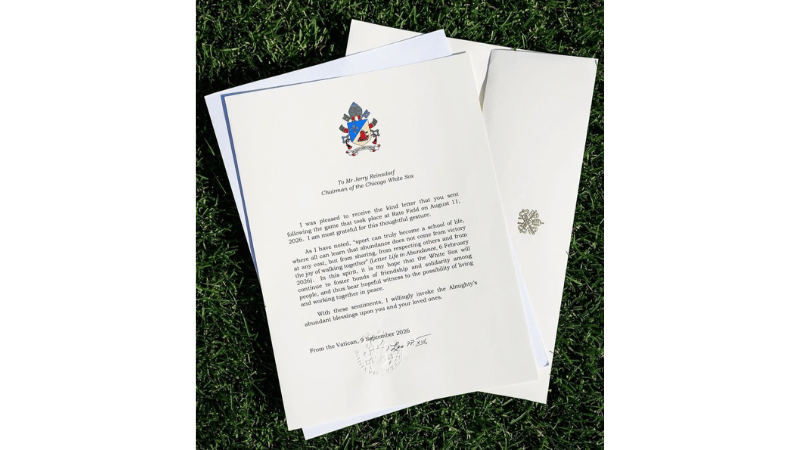
(ZENIT News / Chicago – Roma, 10.03.2026).- Pope Leo XIV had already made history as the first American pope. This September 2026, he added a distinctly Chicago chapter to his pontificate: a personal letter to the owner of the Chicago White Sox arrived at Rate Field just as the team prepared to begin an unexpected playoff run.
The letter, dated September 9 and addressed to White Sox chairman Jerry Reinsdorf, reached the Chicago ballpark on September 8, ahead of the club’s American League Wild Card Series opener against the Houston Astros. Chicago won that first game 6-3, taking an early lead in the best-of-three series.
For a pope who grew up on the South Side of Chicago, the timing gave the message an unusually personal resonance. Before he was Leo XIV, Robert Prevost — known to many in Chicago as “Father Bob” — was a lifelong White Sox supporter. He attended Game 1 of the 2005 World Series, when the White Sox defeated the Astros 5-3, 21 years before this latest postseason meeting.
The connection between the pope and his hometown team had already been brought into the open a few weeks earlier. On August 11, the White Sox honored Leo during their game against Cincinnati. Reinsdorf subsequently wrote to the pope, prompting the letter in which Leo expressed his gratitude and turned a sporting exchange into a reflection on something much larger than baseball.
“Sport can truly become a school of life,” the pope wrote, recalling his February 6, 2026, letter, “where all can learn that abundance does not come from victory at any cost, but from generosity, respect for others and the joy of walking together.”
That choice of language is revealing. Leo did not write to celebrate winning, predict a championship or even dwell on the team’s remarkable season: he used baseball as an example of how competition can coexist with fraternity. His hope was that the White Sox would continue to build “friendship and solidarity among people” and offer an encouraging witness to the possibility of living and working together in peace.
For a team whose fortunes had changed dramatically, the message arrived at an especially striking moment.
Chicago finished the regular season 84-78 to secure an American League wild-card berth after losing at least 101 games in each of the previous three seasons. The turnaround was sufficiently dramatic that Leo was asked whether he might have had something to do with it.
The pope, smiling, offered the most appropriate answer from a lifelong baseball fan suddenly confronted with an extraordinary winning streak: “No comment.”
The exchange illustrates an unusual feature of Leo XIV’s public identity. His affection for baseball is not merely an amusing biographical detail. It gives the pope a natural cultural connection with the city where he grew up and with an American sporting tradition in which loyalty, community and shared identity often extend beyond the result of a single game.
His letter also suggests how Leo can use such apparently ordinary occasions to articulate themes that recur throughout his pontificate. In his understanding, sport has moral significance when it teaches people to compete without reducing opponents to enemies, to accept defeat without humiliation and to recognize that achievement does not exhaust the meaning of human activity.
The White Sox, meanwhile, were happy to hear the message from one of their most famous supporters.
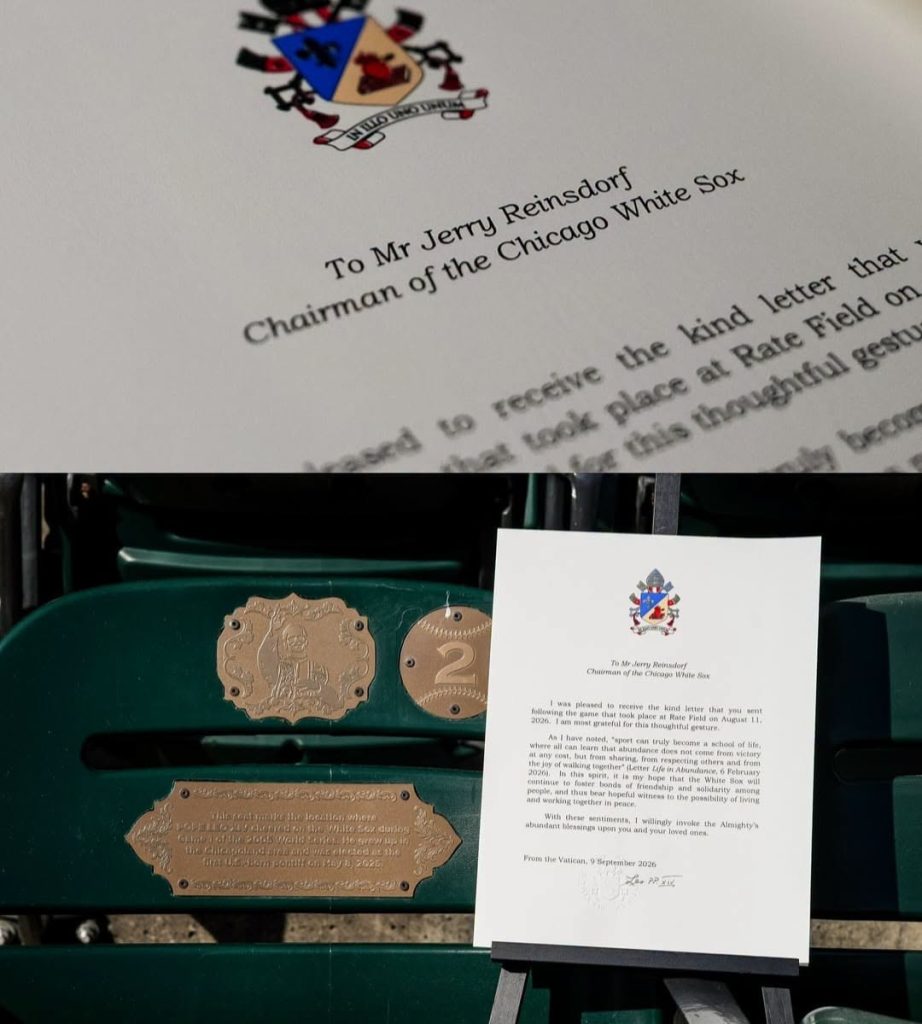
“To have the Pope backing us and supporting us means a lot to us,” manager Will Venable said.
The letter ended not with a baseball reference but with a papal blessing: Leo invoked “the abundant blessings of the Almighty” upon Reinsdorf and his loved ones.
For the White Sox, September brought a playoff opportunity that would have seemed improbable only a year earlier. For Leo XIV, it offered something different: a chance to speak to his old city through one of its most enduring institutions.
And perhaps that is why the episode feels less like a publicity stunt than a glimpse of the pope behind the office. Before he was Bishop of Rome, Robert Prevost was a Chicago kid who followed the White Sox. Now, from the Vatican, he can still send a message to his team — while reminding them that, in sport as in life, winning is not the only measure of what matters.
***
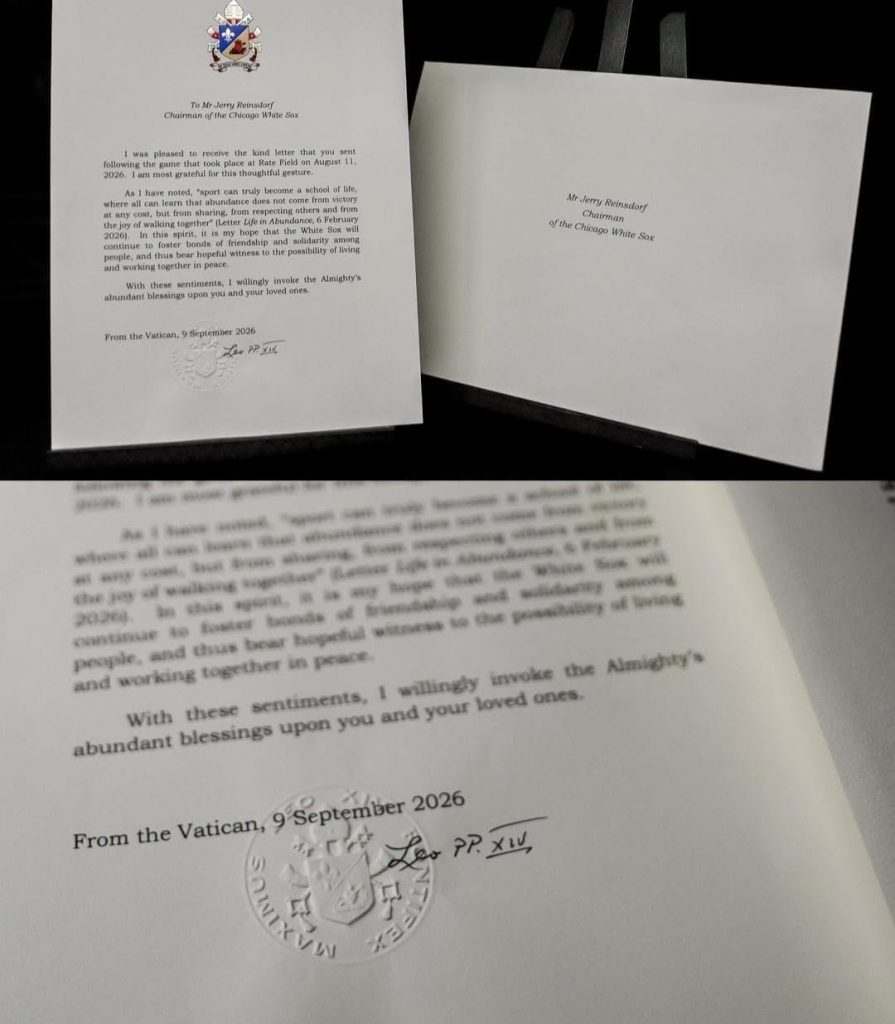
This is the complete transcript of the letter:
To Mr Jerry Reinsdorf Chairman of the Chicago White Sox
I was pleased to receive the kind letter that you sent following the game that took place at Rate Field on August 11, 2026. I am most grateful for this thoughtful gesture.
As I have noted, «sport can truly become a school of life, where all can learn that abundance does not come from victory at any cost, but from sharing, from respecting others and from the joy of walking together» (Letter Life in Abundance, 6 February 2026). In this spirit, it is my hope that the White Sox will continue to foster bonds of friendship and solidarity among people, and thus bear hopeful witness to the possibility of living and working together in peace.
With these sentiments, I willingly invoke the Almighty’s abundant blessings upon you and your loved ones.
From the Vatican, 9 September 2026
Thank you for reading our content. If you would like to receive ZENIT’s daily e-mail news, you can subscribe for free through this link.

Publicaciones relacionadas:
 Pope Leo XIV accepts resignation of bishop whom Pope Francis appointed cardinal, but who “did not want” to receive the appointment
 Pope Leo XIV is the most highly regarded global leader according to the world’s oldest public opinion poll
 What is the relationship between the Word of God and the Church? Pope Leo XIV responds
 The deputy director of the Vatican Press Office resigns. Pope Leo XIV appoints a Croatian nun as her replacement
