

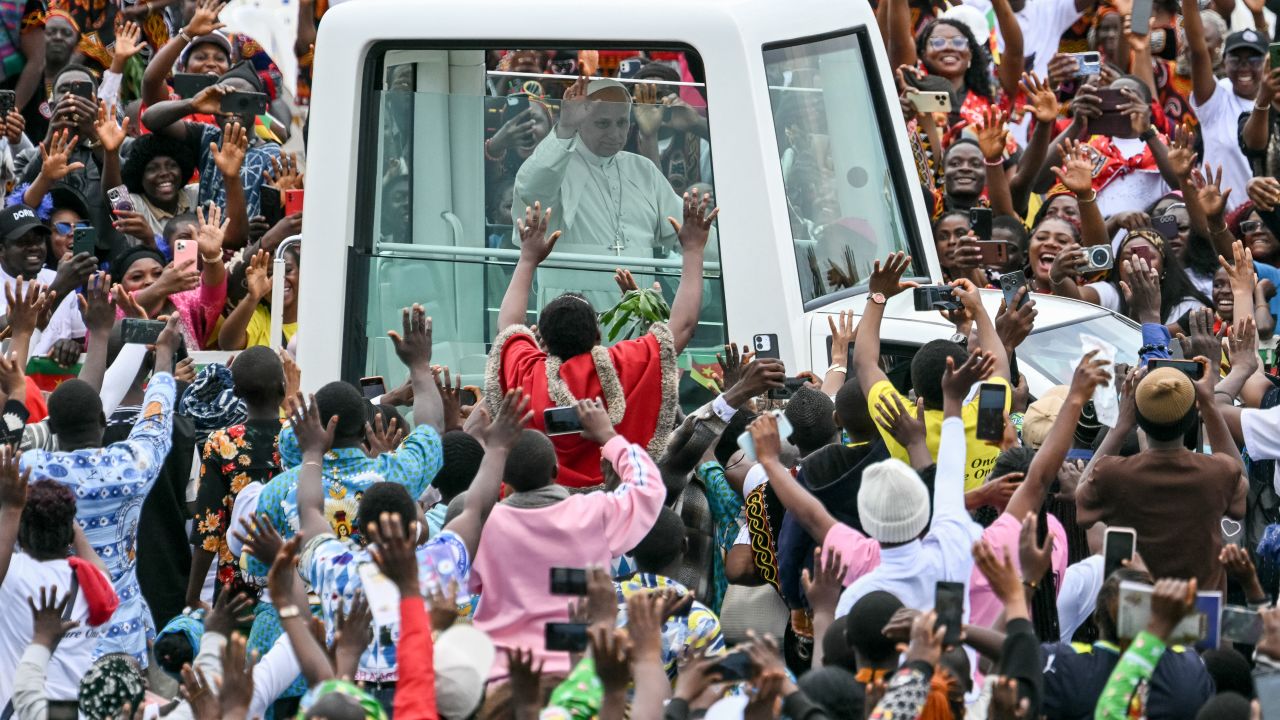
(ZENIT News / Rome, 10.17.2026).- The Catholic Church counted 1.422 billion members in 2024, representing 17.8% of the world’s population, according to statistics published by the news agency Fides on October 16, 2026. The figures, released ahead of the 100th World Mission Sunday on October 18, reveal a historic shift in the Church’s geographical balance: Africa has overtaken Europe in the number of Catholics, while the worldwide number of priests has begun to rise again after five consecutive years of decline.
The report, compiled by Luca Mainoldi from the latest Statistical Yearbook of the Church, presents a picture of simultaneous expansion and strain. Catholic membership continues to grow across every continent, but the number of seminarians and women religious is falling globally. Meanwhile, lay missionaries and catechists are playing an increasingly important role in sustaining the Church’s pastoral presence.
Africa’s growing influence
The Church recorded 16.69 million additional Catholics compared with 2023, bringing its worldwide membership to 1,422,144,000. The increase was accompanied by a slight rise in the proportion of Catholics within the global population, although their overall share remained 17.8%.
Africa registered the largest increase, gaining 7.58 million Catholics and reaching 288.312 million. That puts the continent ahead of Europe, which recorded 287.24 million, for the first time in the historical comparison highlighted by the report.
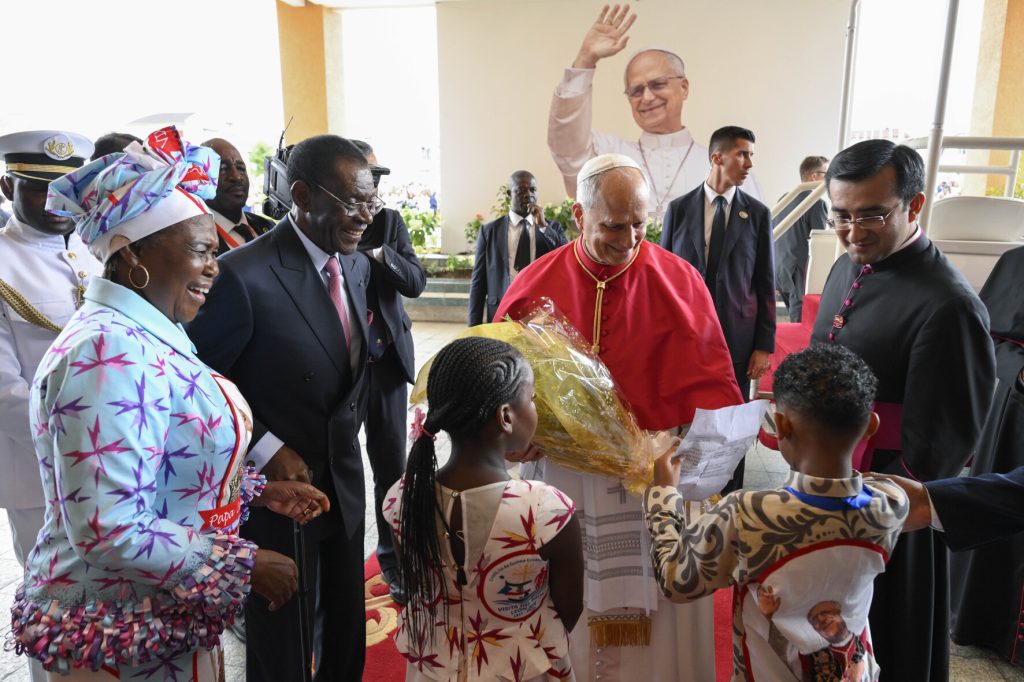
Africa’s Catholic population represents 19.9% of its approximately 1.4 billion inhabitants. Its growing importance is also evident in religious vocations: the continent is the only region where both the number of major seminarians and that of women religious increased during the reporting period.
The figures suggest that Africa will play an increasingly decisive role in the Church’s future, not only through the number of its faithful but also through the people preparing for priestly and religious life.
Europe, meanwhile, recorded a second consecutive year of growth in its Catholic population, adding 911,000 members. Catholics now account for 39.7% of the continent’s population. Yet this increase in the number of faithful contrasts with the continuing decline in its clergy and seminarians, revealing a significant challenge for pastoral life.
The Americas remain the largest concentration of Catholics, with 678.869 million, equivalent to 64% of the region’s population. The continent added almost seven million Catholics in one year. Asia gained 968,000, bringing its Catholic population to 156.166 million, although Catholics still account for just 3.3% of the region’s population. Oceania added 239,000, reaching 11.557 million Catholics.
Priestly numbers recover, but vocations remain under pressure
The worldwide number of priests rose by 425 to 407,421 in 2024, reversing a downward trend that had persisted since 2019. The increase was driven principally by Africa, which gained 1,676 priests, and Asia, which added 1,065. The Americas also registered an increase of 199.
These gains offset a loss of 2,483 priests in Europe and 32 in Oceania. The overall recovery, therefore, remains modest and unevenly distributed.
The total includes 279,238 diocesan priests, an increase of 496, and 128,183 religious priests, a decline of 71. The number of bishops also rose, reaching 5,525, an increase of 95.
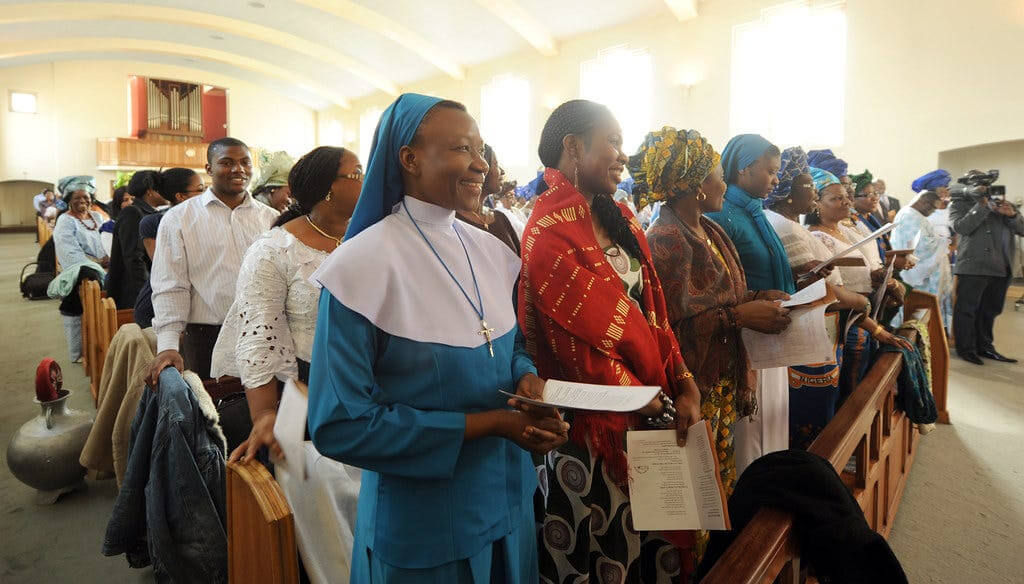
Nevertheless, the number of Catholics per priest increased from the previous year to an average of 3,491. The burden is particularly pronounced in the Americas, where each priest serves an average of 5,727 Catholics. Europe remains comparatively better supplied, with one priest for every 1,882 Catholics.
These differences underline the difficulty of translating global membership into an effective pastoral presence. Growth in the number of Catholics does not automatically mean that communities have sufficient access to priests, the sacraments or regular pastoral care.
The outlook for future priestly numbers is less encouraging. Major seminarians, both diocesan and religious, fell by 2,891 to 103,604. Africa was again the exception, adding 786 and reaching 35,710 seminarians, almost one-third of the global total.
Asia experienced the sharpest decline, losing 2,733 seminarians, while Europe recorded a reduction of 701, leaving 12,099 men preparing for the priesthood. The number of minor seminarians also fell, by 980, to 94,041.
The divergence between Africa’s growth and the decline elsewhere points to a changing geography of priestly formation, with implications for the Church’s future distribution of clergy.
Women religious decline as lay participation expands
The number of women religious worldwide fell by 9,292 to 580,131. Africa was the only continent to register growth, adding 2,190. Europe experienced the largest decline, losing 6,473, followed by the Americas, with 4,432 fewer women religious.
Non-ordained male religious also declined, reaching 48,511, a reduction of 237.
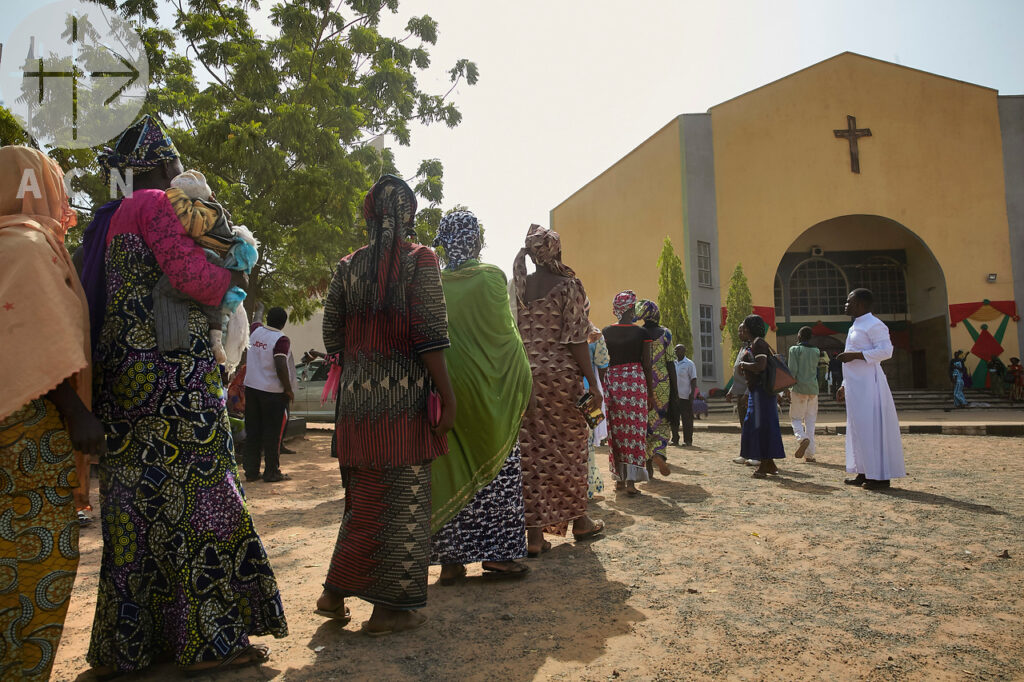
At the same time, the Church’s missionary activity increasingly depends on laypeople. The number of lay missionaries rose by 18,473 to 463,079, while catechists increased by 22,370 to 2,889,336.
The growth of these groups demonstrates the scale of the contribution made by Catholics who are not ordained or members of religious institutes. Catechists, in particular, help transmit the faith and sustain local communities, especially where priests are scarce or communities are geographically dispersed.
Permanent deacons also continued to increase, reaching 52,102 worldwide, up 669. More than two-thirds serve in the Americas, which recorded an increase of 424, while Europe added 236.
Permanent deacons are ordained for specific ministries of service and may be married, unlike priests in the Latin Church.
The statistics thus point toward a Church increasingly reliant on a broader range of vocations and forms of service, even as traditional religious and priestly vocations face difficulties in several regions.
Education, healthcare and social assistance remain central
Beyond its membership and clergy, the Catholic Church maintains an extensive network of educational, medical and charitable institutions.
Its educational activities include 75,448 preschools serving approximately 7.48 million children, 103,666 primary schools with 36.31 million pupils, and 51,810 secondary schools educating 20.34 million students. Catholic-affiliated higher education institutions also serve approximately 2.69 million students in other higher-level institutes and 4.09 million at university level.
Africa accounts for the largest number of pupils in Catholic primary schools, with 21.29 million enrolled. This educational presence gives the Church a substantial role in forming younger generations, particularly in regions experiencing rapid demographic growth.
The report also records 101,110 healthcare, charitable and social assistance institutions worldwide. These include 5,397 hospitals, 13,646 dispensaries, 468 leprosy centers, 16,263 facilities for older people, chronically ill patients and people with disabilities, and 8,138 orphanages. The network also encompasses maternity and childcare facilities, marriage counseling centers and institutions devoted to social rehabilitation.
Africa has the largest number of hospitals and dispensaries within the reported network, while Europe concentrates most of the facilities serving older people, chronically ill patients and people with disabilities.
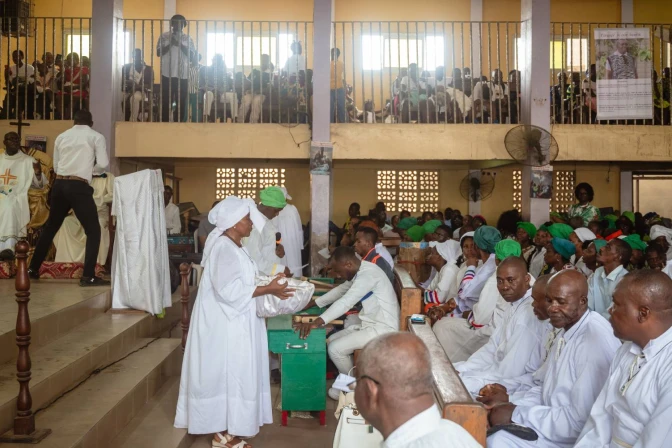
The Church’s institutional presence therefore extends well beyond sacramental life, encompassing education, healthcare and assistance for vulnerable populations. The statistics do not measure the quality or effectiveness of these services, but they demonstrate the considerable scale of the infrastructure through which Catholic institutions contribute to communities around the world.
A growing Church facing an uneven future
The Fides report presents a Church that continues to expand in absolute numbers but faces sharply contrasting regional realities. Africa is gaining ground in membership and vocations, while Europe combines modest growth in its Catholic population with a shrinking supply of priests, seminarians and women religious. Asia’s declining number of seminarians also raises questions about future pastoral capacity in a region where Catholics remain a small minority.
The increase in lay missionaries and catechists offers one response to these pressures, but it does not eliminate the need to sustain priestly formation and religious life. Nor does the worldwide growth in Catholic membership guarantee that every community will have adequate access to pastoral care.
Published for the centenary of World Mission Sunday, the figures highlight the practical meaning of the Church’s universal mission: a global community whose demographic weight is shifting, whose members serve in increasingly diverse circumstances, and whose future depends not only on the number of people who identify as Catholic but also on its capacity to form new generations, sustain local communities and continue its educational, charitable and pastoral work.
Thank you for reading our content. If you would like to receive ZENIT’s daily e-mail news, you can subscribe for free through this link.

Publicaciones relacionadas:
 Telepathy: Elon Musk’s Chip: Between Benefits and Risks
 Search for meaning»: important reason for coming to Christianity, survey shows
 Against the Unity Pope Leo XIV Seeks: Gestures and Words from Bishops That Fuel Polarization and Cause Confusion
 A Man’s Brain Changes (For the Better) When He Becomes a Father: Findings Revealed by the Nature Review
