

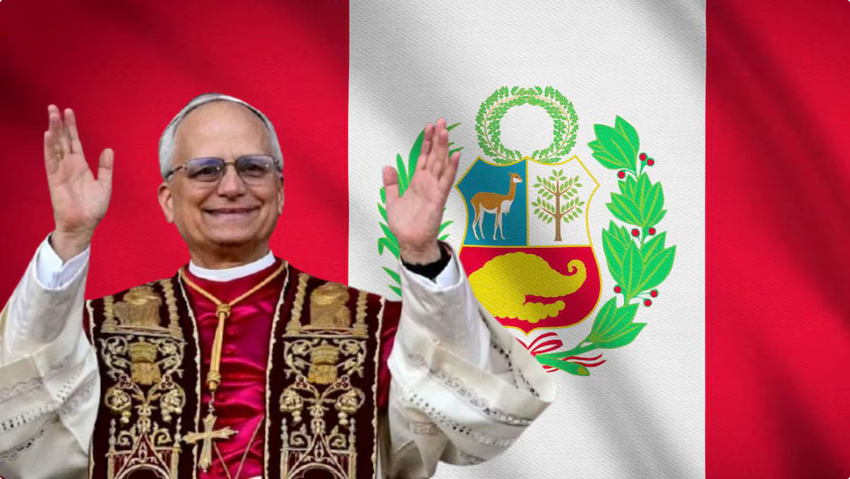
(ZENIT News / Lima, 10.29.2026).- Peru is preparing to welcome Pope Leo XIV with an extraordinary combination of popular enthusiasm, military coordination and medical precautions. His six-day visit, scheduled for November 11–16, will take him back to a country where he spent more than two decades as a missionary priest and bishop, but his recent lung surgery has added a new dimension to the preparations: ensuring that the journey can proceed without placing unnecessary demands on his health.
The scale of the expected crowds is already evident in the arrangements for the closing Mass in Lima. Organisers anticipate up to 1.2 million people at Las Palmas Air Base in the Surco district on November 16. Admission will be free, but access will require a digital ticket obtained in advance. According to the Archdiocese of Lima, registration through Ticketmaster will open from November 5 to 8. Each account will be able to obtain up to eight tickets, with attendees required to present the corresponding QR code, either printed or on a mobile device, together with the identity document or passport used during registration.
The organisers have stressed that tickets are personal and non-transferable. Any attempt to sell them should be reported, while the public has been warned against fraudulent websites offering admission in exchange for money or donations. The air base will open at 10:00 p.m. on November 15, twelve and a half hours before the Mass begins at 10:30 a.m. the following day, in an effort to prevent congestion. Police officers and hundreds of volunteers will help manage access, and 80 hydration stations will be installed — twice the number provided for Pope Francis’ Mass at the same venue in 2018. A dedicated area will also accommodate people with disabilities and reduced mobility.
The gathering with young people at the National Stadium and other large events will also operate through digital registration. In Chiclayo, where a substantial number of tickets will carry QR codes, some areas are expected to remain accessible without this system. The arrangements reflect the logistical challenge of receiving a pope whose personal history has created an unusually strong connection with the country.
Yet the most demanding part of the preparations may not be the crowds, but the geography. The itinerary includes Lima, Chiclayo, Cusco and Pucallpa, as well as Santa Cruz de Succhabamba, in the northern Andes. The latter location, at approximately 2,000 metres above sea level, has been identified by organisers as one of the most delicate points of the journey. The helicopter cabin planned for that leg is not pressurised, making additional medical safeguards particularly important.
Following Leo XIV’s operation to remove the lower lobe of his right lung after the detection of cancer, Peruvian authorities have assembled a substantial air and medical support system. The main aircraft will be an Mi-17 helicopter belonging to the Peruvian Air Force, supported by three other helicopters of the same model, each capable of carrying up to 24 people. Bell 212 and Bell 412 helicopters will be available for medical evacuations, while a Beechcraft King Air 360C ambulance aircraft will be equipped to transport critically ill patients. Aeronautical doctors and paramedics will accompany the aircraft, and a specially equipped ambulance will be positioned to provide respiratory assistance if required.
The arrangements also allow for minor adjustments to reduce physical exertion. During his visit to Lima’s cathedral, for example, the Pope may use an elevator rather than the stairs. Organisers have said that no official changes to the programme have been communicated and that the intention remains to preserve the itinerary while ensuring the pontiff can travel comfortably. A Vatican advance delegation is expected in Peru to complete the preparations, while the Ministry of Defence and the Peruvian Episcopal Conference have been coordinating the armed forces’ contribution to the operation. Defence Minister Rafael Belaúnde Llosa met with the president of the bishops’ conference, Bishop Carlos García Camader, and Bishop Guillermo Inca, who is coordinating the visit on behalf of the episcopate.
The programme begins on November 11, when Leo XIV is due to arrive in Lima and visit the Government Palace, the Plaza de Armas and the National Theatre in San Borja. The following day includes a meeting with clergy and an encounter with young people at the National Stadium. On November 13, he will travel to Chiclayo, where he will remain until the following day and celebrate a large public Mass. On November 15, the Pope is scheduled to visit Cusco, more than 3,000 metres above sea level, and the Amazonian region of Ucayali, before returning to Lima. His final day includes a visit to a nursing home in Callao and the Mass at Las Palmas.
For Leo XIV, this is not simply another stage in an international itinerary. Peru is the country where he served for more than 20 years, moving from missionary work to the leadership of the Diocese of Chiclayo, and where he acquired citizenship. The visit therefore carries the character of a return to a community with which he has longstanding pastoral ties.
That connection also helps explain the expectations surrounding his arrival. Father Juan Bytton, secretary-general of the visit, has described the preparations as a joint effort involving the state, the bishops, parishes and young people. He has also spoken candidly about the difficult atmosphere in the country, marked by insecurity, fires, economic and social pressures, and the effects of El Niño. Peruvians, he said, need encouragement and hope, and the Pope’s presence could offer an opportunity to recover both.
The organisers hope the visit will leave a lasting mark. But beyond the vast crowds and the elaborate security arrangements, its significance may lie in something less measurable: the return of a pastor to a country that helped shape his life, at a moment when its people are looking for reasons to face the future with confidence.
Thank you for reading our content. If you would like to receive ZENIT’s daily e-mail news, you can subscribe for free through this link.

Publicaciones relacionadas:
 For the first time, a Pope will address the Spanish Parliament: it will be Leo XIV during his visit to Madrid in June 2026
 Under the agreement with China, Leo XIV appoints a new bishop
 The Pope’s visit to France has also sparked a surge in donations and sales of books by Leo XIV
 Pope Leo XIV will visit Mexico twice, according to statements by the president of the Mexican Bishops’ Conference. The dates will be as follows
