

(ZENIT News / Buenos Aires, 09.23.2026).- Pope Leo XIV’s first apostolic journey to South America will bring him to Uruguay, Argentina and Peru from November 6 to 17, with a twelve-day itinerary spanning ten cities and a series of encounters with political leaders, Catholic communities and people from different walks of life. In Argentina, where the pontiff will spend three days, preparations are already taking shape for what could become one of the largest gatherings in the country’s recent religious history: a Mass at the Shrine of Our Lady of Luján expected to draw more than 1.5 million people.
The Vatican released the full itinerary on September 21, alongside the mottoes and official logos for each national leg. The journey, announced on August 5 following invitations from the three countries’ civil and ecclesiastical authorities, will begin in Montevideo and conclude in Lima. It will also take Leo to places that have marked his own pastoral life, particularly Peru, where he served as a missionary and later as bishop of Chiclayo.
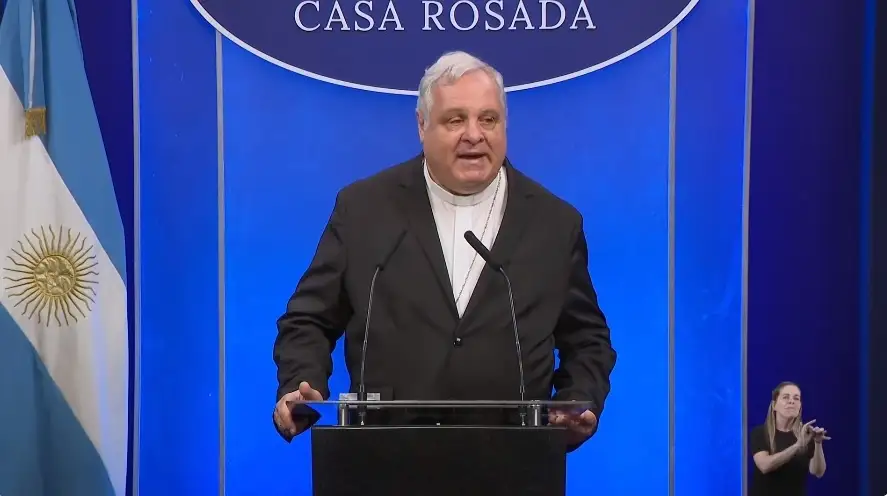
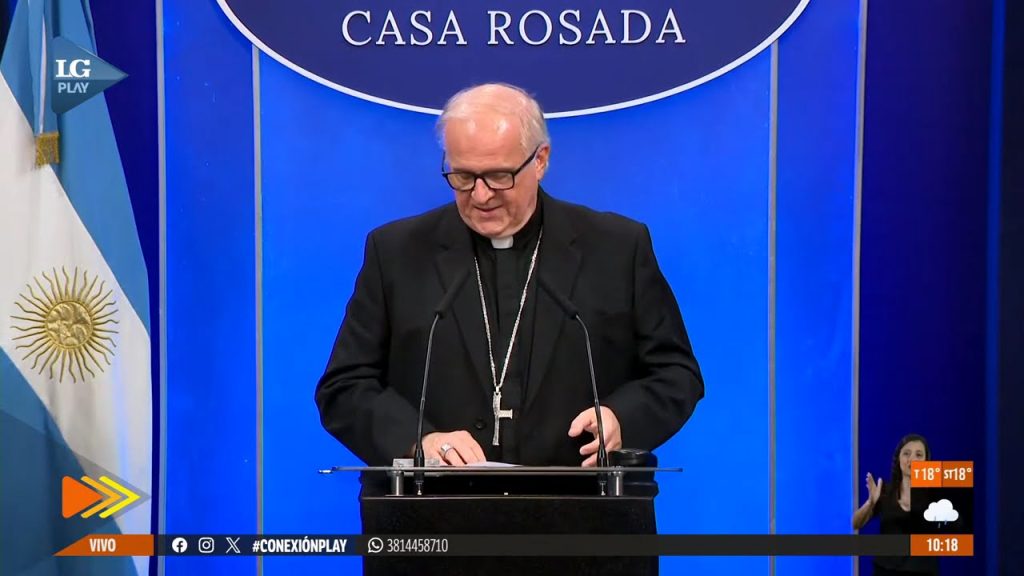
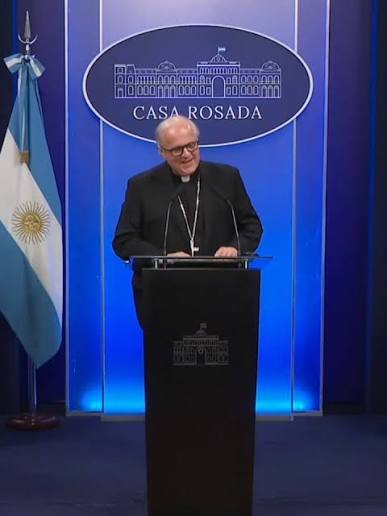
The visit to Argentina, scheduled for November 8–11, carries a particular significance. It is the homeland of Pope Francis, and no pontiff has visited the country since St. John Paul II’s journey in 1987. The Argentine government and the national bishops’ conference formally presented the preparations at the Casa Rosada presidential palace in Buenos Aires on September 21, emphasizing the pastoral character of the visit and its potential to encourage dialogue and national reconciliation.
View this post on Instagram
“The journey is not only the Pope’s visit, nor simply a destination; it is also a starting point,” said Archbishop Marcelo Colombo of Mendoza, president of the Argentine Episcopal Conference. Introducing the national motto, “Welcome, everyone. Go and proclaim,” he described the visit as an opportunity to renew the Church’s missionary commitment, strengthen communion and encourage a more united society.
Colombo said the bishops hoped the papal presence would help foster a culture of encounter across differences in convictions and outlook, in pursuit of a “just and fraternal homeland.” Although the main events will take place in Buenos Aires, Córdoba and Luján, he stressed that the journey is intended for the whole country, with pilgrims expected from across Argentina and neighboring nations.
The most ambitious public gathering in Argentina is expected on November 11, when Leo will celebrate Mass at 11 a.m. in the square in front of the Basilica of Our Lady of Luján. Mayor Leonardo Boto, who recently met the Pope at a general audience in Rome, has forecast a turnout of more than 1.5 million people, describing the event as potentially one of the largest in the city’s history. The last papal visit to Luján was in 1982, when John Paul II celebrated Mass there.
For the city, the occasion is also an expression of a deeply rooted Marian identity. Luján, which will mark the 400th anniversary of its foundation in 2030, receives millions of pilgrims annually, including large numbers of young people who walk to the shrine from other parts of the country. Boto has said the Pope’s visit will recognize a shared religious heritage that holds a special place in South American Catholic life. A major gathering of sanctuary ministers is also planned in a building adjoining the basilica, although the full program of the Argentine leg has yet to be published.
The scale of the preparations extends well beyond the sanctuary. At the September 21 presentation, Foreign Minister Pablo Quirno outlined the travel arrangements, including the role of Argentina’s flag carrier, Aerolíneas Argentinas. The airline will transport the Pope from Montevideo to Buenos Aires, operate the planned domestic flights and then take him onward to Lima. Security Minister Alejandra Monteoliva also took part in the presentation, reflecting the coordination required between national authorities, local administrations and the Church.
Archbishop Michael Banach, the apostolic nuncio in Argentina, placed the journey within the context of 186 years of diplomatic relations between the Holy See and Argentina. He described the visit as the seventh apostolic journey of Leo’s pontificate and emphasized that the Pope is coming primarily as a pastor, to strengthen fellow Catholics in their faith. Banach also suggested that the overall turnout in Argentina could be historic, estimating that perhaps more than six million people might see the pontiff during his visit.
The journey’s opening days in Uruguay will combine public worship with encounters focused on education and social life. From November 6 to 8, Leo will visit Montevideo, Paysandú and Florida. In the capital, he is scheduled to visit the socially disadvantaged neighborhood of Casavalle and its parish of Our Lady of Guadalupe, meet representatives of the educational world at the Catholic University of Uruguay and lead a prayer vigil at the Centenario Stadium. On November 8, he will celebrate Mass in the square outside the Cathedral Basilica of Florida, the National Shrine of Our Lady of the Thirty-Three, on the feast day of Uruguay’s patroness and during the country’s annual national pilgrimage. The visit will be the first by a Pope to Uruguay since John Paul II traveled there in 1988. Its motto, “I bring you good news of great joy,” comes from the angel’s announcement to the shepherds in the Gospel of Luke.
Peru, where Leo will spend November 11–17, will be the longest and most personally resonant leg of the trip. The Pope will visit Lima, Chiclayo, Cuzco and Pucallpa, meeting civil authorities and representatives of various sectors while celebrating Mass and praying with local communities. His years as a missionary Augustinian and his episcopal ministry in Chiclayo from 2015 to 2023 give this part of the journey a distinctive dimension: he will return to a country whose people and Church he knows from personal experience.
The Peruvian motto, “Let us open our hearts,” reflects the spiritual and fraternal themes running through the journey. The official emblem places the Pope within a heart-shaped design alongside the country’s map, the dove of the Holy Spirit and several saints central to Peruvian Catholic tradition, including St. Rose of Lima, St. Martin de Porres and St. Turibius of Mogrovejo.
Across the three countries, the visit’s program brings together prayer, institutional encounters and contact with communities facing different social realities. Its national mottoes—joy in Uruguay, welcome and mission in Argentina, and openness in Peru—give each stage its own identity while emphasizing a common pastoral purpose. For Argentina, the immediate challenge is to turn the anticipated mass gathering into more than a moment of celebration. As Colombo suggested, the Pope’s arrival is also an invitation to renew the Church’s missionary life and to build greater unity in a society marked by differences.
Thank you for reading our content. If you would like to receive ZENIT’s daily e-mail news, you can subscribe for free through this link.

Publicaciones relacionadas:
 7 out of 10 Spanish citizens believe that Leo XIV’s papacy will be good or better than that of Pope Francis
 Pope Leo XIV to Equatorial Guinea: video captures the Holy Father’s travel coordinator visiting the country ahead of a papal trip
 Pope Leo XIV won’t be visiting the U.S. in 2026, but his popemobile will: here’s what we know
 The Pope to Young Iraqi Christians: Your Mission Is to Be Light in the Darkness
