

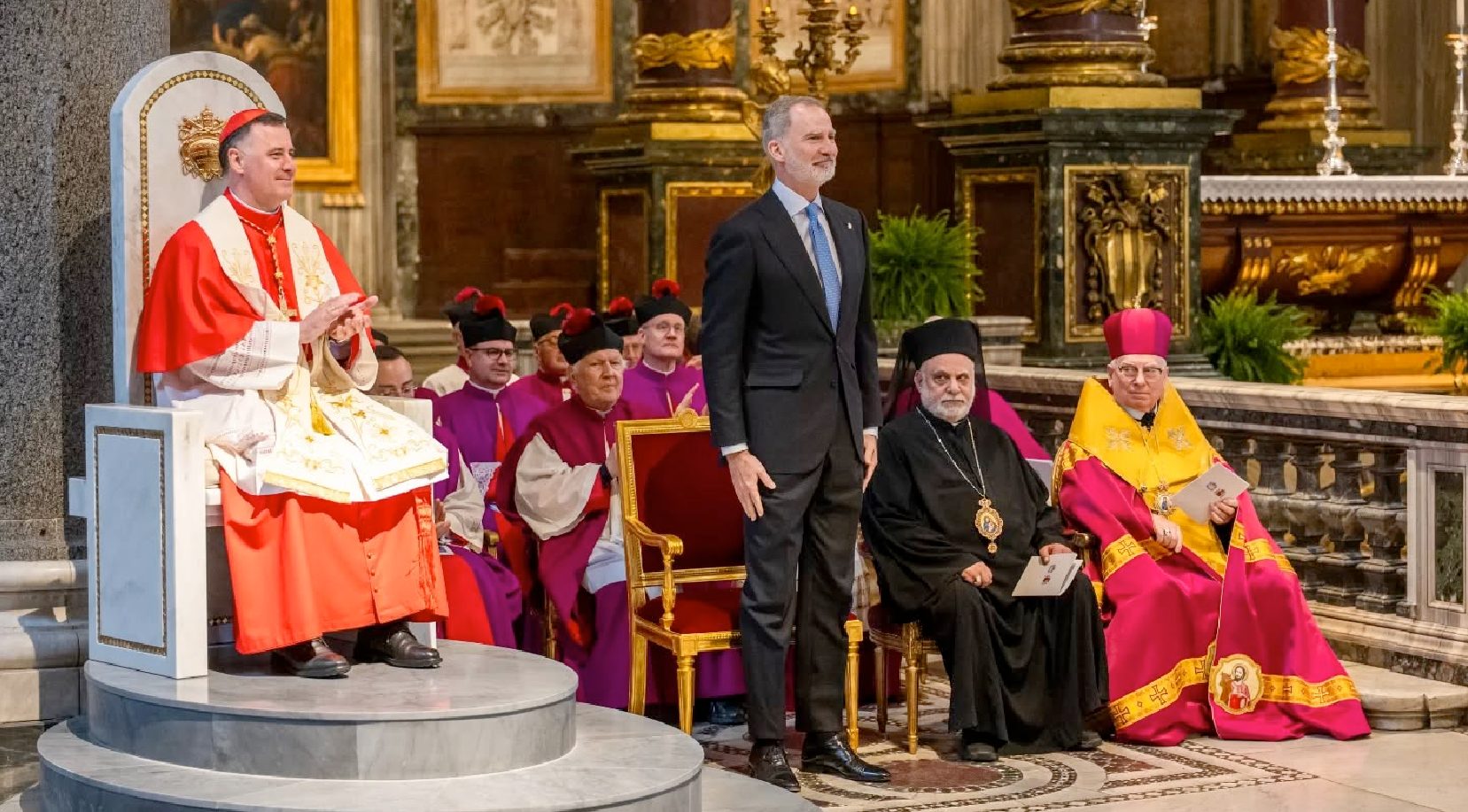
(ZENIT News / Rome, 03.20.2026).- Rome offered, once again, the stage for a gesture where history, faith and diplomacy converge. On the morning of March 20, 2026, King Felipe VI of Spain formally assumed the ancient title of Protocanon of the Chapter of Basilica of Santa Maria Maggiore, sealing a continuity that stretches across more than four centuries of shared history between the Spanish Crown and one of Christianity’s most venerable Marian sanctuaries.
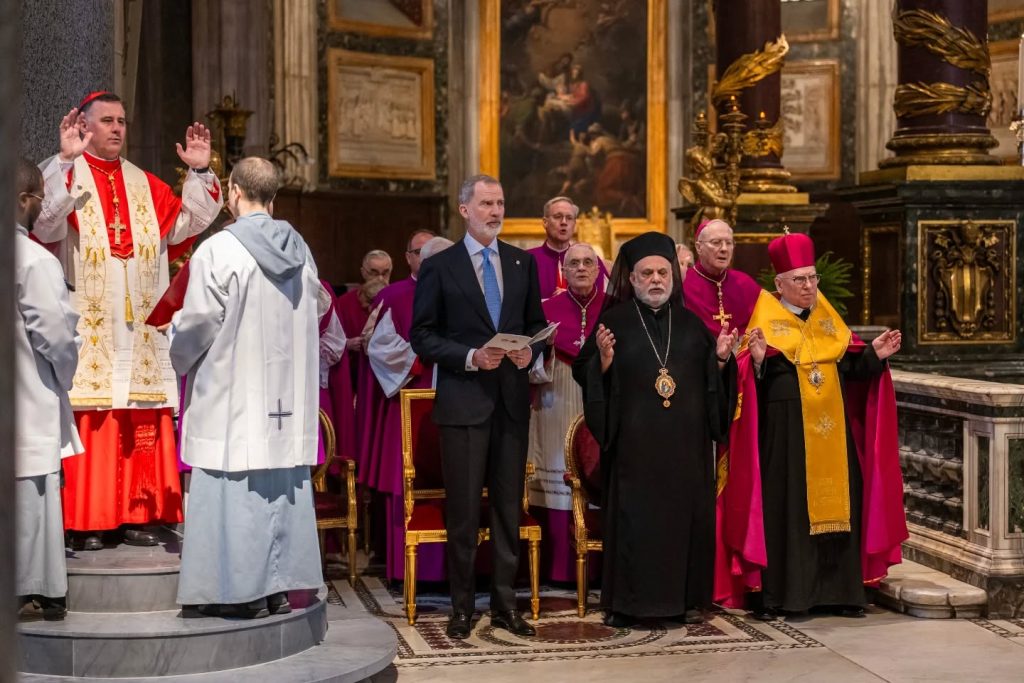
The ceremony, held at 12:30 p.m. within the basilica, unfolded with deliberate solemnity. The monarch and Queen Letizia were received at the entrance by Cardinal Rolandas Makrickas, current archpriest of the basilica, before proceeding inside for a rite that blended liturgical symbolism with institutional memory. The event followed an audience earlier that day with Pope Leo XIV, thus framing the act within the broader context of an official Vatican visit.
The title Felipe VI assumed is not a mere honorary distinction, but a unique ecclesiastical privilege reserved exclusively for the Spanish head of state. The Liberian Chapter—the governing body of the basilica—consists of the cardinal archpriest and twelve canons. By long-standing tradition, the King of Spain holds precedence among them as Protocanon, a role that underscores a singular relationship between a national monarchy and a Roman basilica.
That relationship dates formally to 1603, when King Philip III of Spain was invited by the Chapter to become its protector. Yet its roots run deeper, nourished by centuries of Spanish patronage. The basilica itself, the oldest in the West dedicated to the Virgin Mary, was built in the 5th century following the Council of Ephesus (431), which affirmed Mary as Theotokos, Mother of God—an essential doctrinal milestone often overlooked outside specialist circles.
Over time, Spain’s imprint on the basilica became both visible and enduring. The coffered wooden ceiling, still admired today, was commissioned under Pope Alexander VI—formerly Cardinal Rodrigo Borgia—and financed, according to tradition, with gold linked to the early Spanish presence in the Americas. Later contributions reinforced this bond: Queen Margaret of Austria, Queen of Spain donated the reliquary of the Holy Cradle, while King Philip IV of Spain established in 1647 a permanent endowment, the Opera Pia di Spagna, to support the basilica’s life and maintenance.
In gratitude, the Chapter commissioned a bronze statue of Philip IV by Gian Lorenzo Bernini, which still stands in the portico, greeting pilgrims as a silent witness to this alliance between throne and altar.
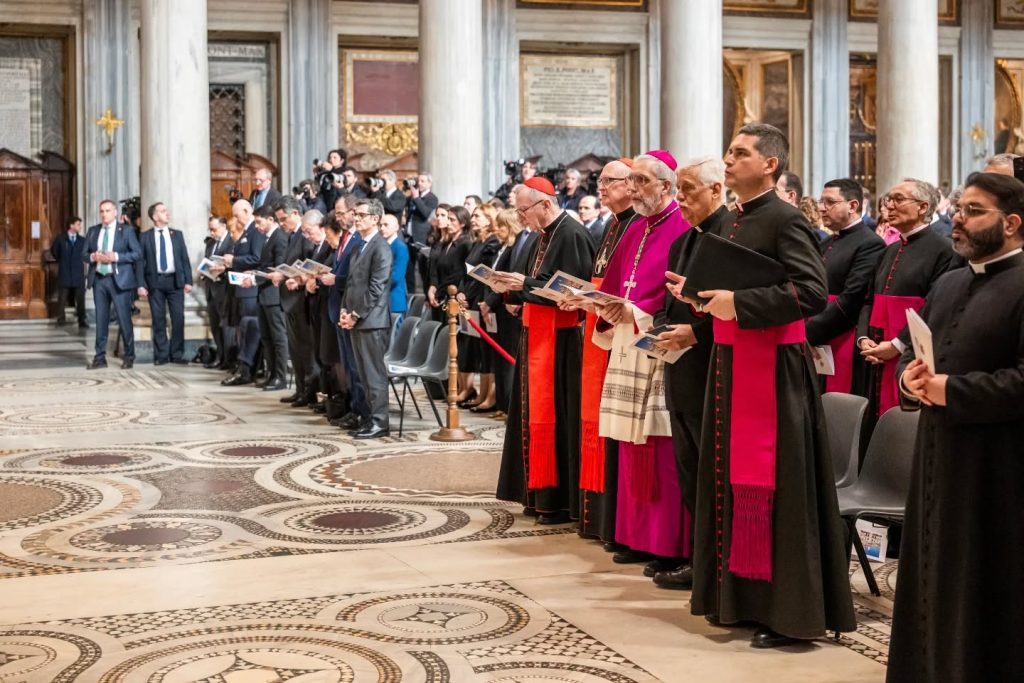
The modern framework of this relationship was reaffirmed in 1953, when Pope Pius XII promulgated the bull Hispaniarum fidelitas. The document explicitly recognized the “bonds of piety and devotion” linking Spain to Santa Maria Maggiore and institutionalized ongoing spiritual ties. To this day, the basilica celebrates three annual Masses for the Spanish people and their head of state: on May 30 (St. Ferdinand), August 15 (the Assumption), and December 8 (the Immaculate Conception).
During the ceremony, these layers of history were not merely recalled but interpreted for the present. Cardinal Makrickas emphasized that tradition, in the Church’s understanding, is not static repetition but a living transmission—one that demands both fidelity and renewal. His remarks framed the Spanish monarchy’s role not as a relic of the past but as a continuing participant in a shared spiritual heritage.
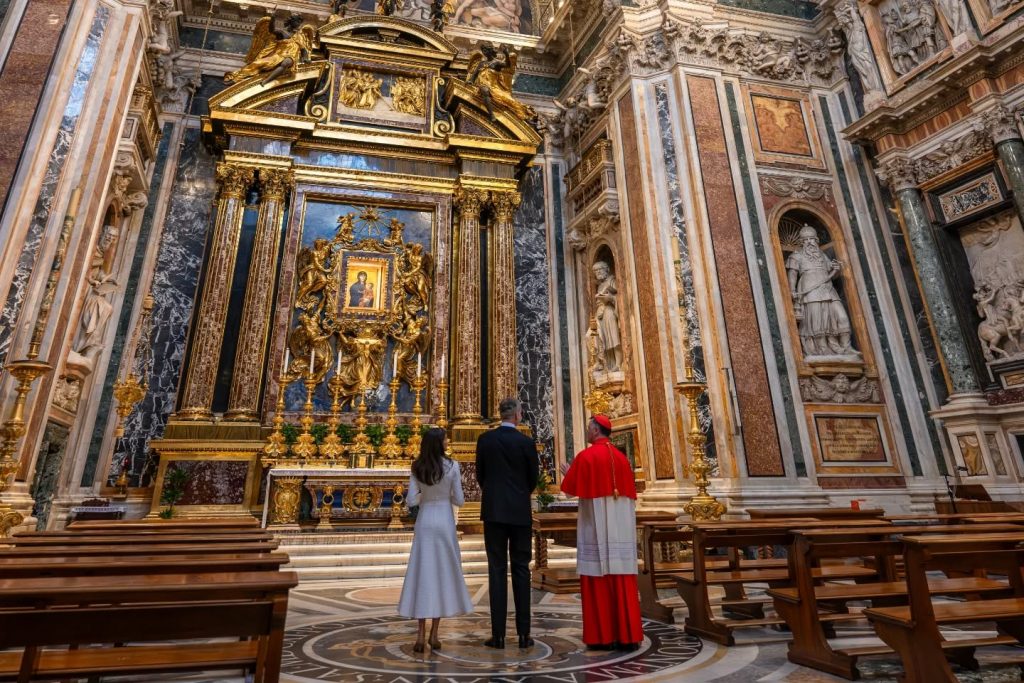
Felipe VI, for his part, responded with a speech that blended historical awareness with contemporary sensibility. He expressed gratitude for the Chapter’s custodianship of what he described as a “treasure of Christianity and universal culture,” and evoked the legendary “miraculous snowfall” of August 358, which, according to tradition, marked the site where the Virgin Mary indicated the location for the basilica’s construction on the Esquiline Hill.
The King also referred to the Pauline Chapel, home to the icon Salus Populi Romani—one of the most venerated Marian images in Rome. He recalled how Pope Francis entrusted his apostolic journeys to its protection and chose the basilica as his final resting place, reinforcing its role as a deeply personal as well as institutional locus within the Catholic world.
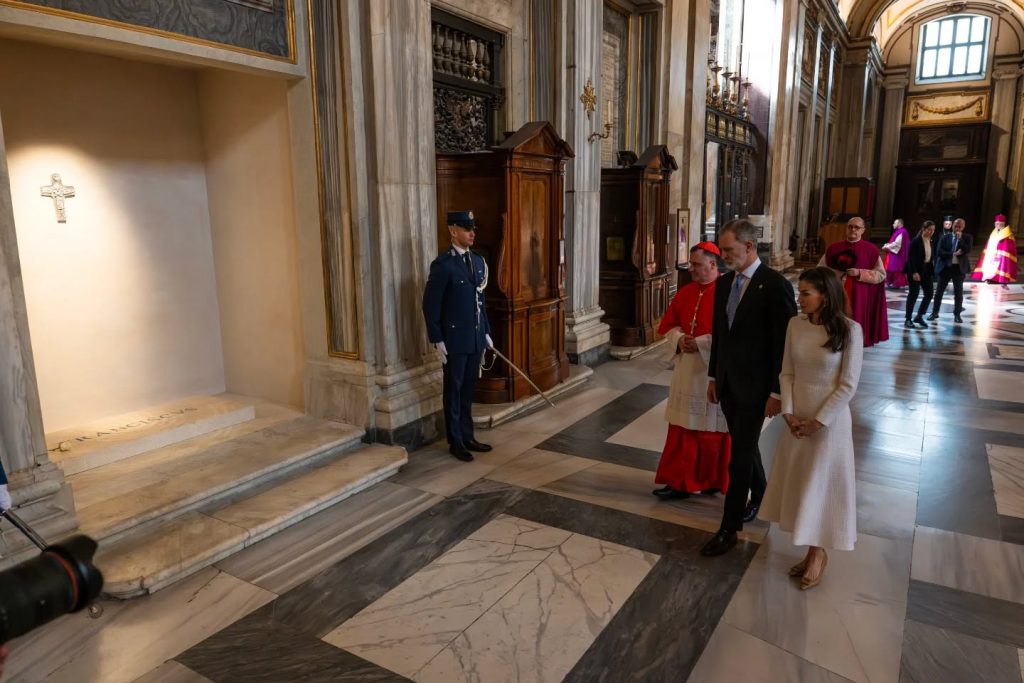
In a broader reflection, Felipe VI drew a line from the moral leadership he attributed to Francis to what he described as a similar sensitivity in his successor, Pope Leo XIV. Without entering into specifics, he alluded to conversations about the present historical moment, marked—he suggested—by a need for clarity of action, conscience and purpose. His appeal was deliberately universal: a call to foster fraternity and the common good in a time often characterized by fragmentation and indifference.
The ceremony concluded with a symbolic act: the reading of excerpts from Hispaniarum fidelitas, followed by the King taking his place among the canons in a position of honor. Afterwards, the royal couple paused in silent prayer at the tomb of Pope Francis, adding a personal dimension to an event otherwise rich in institutional meaning.
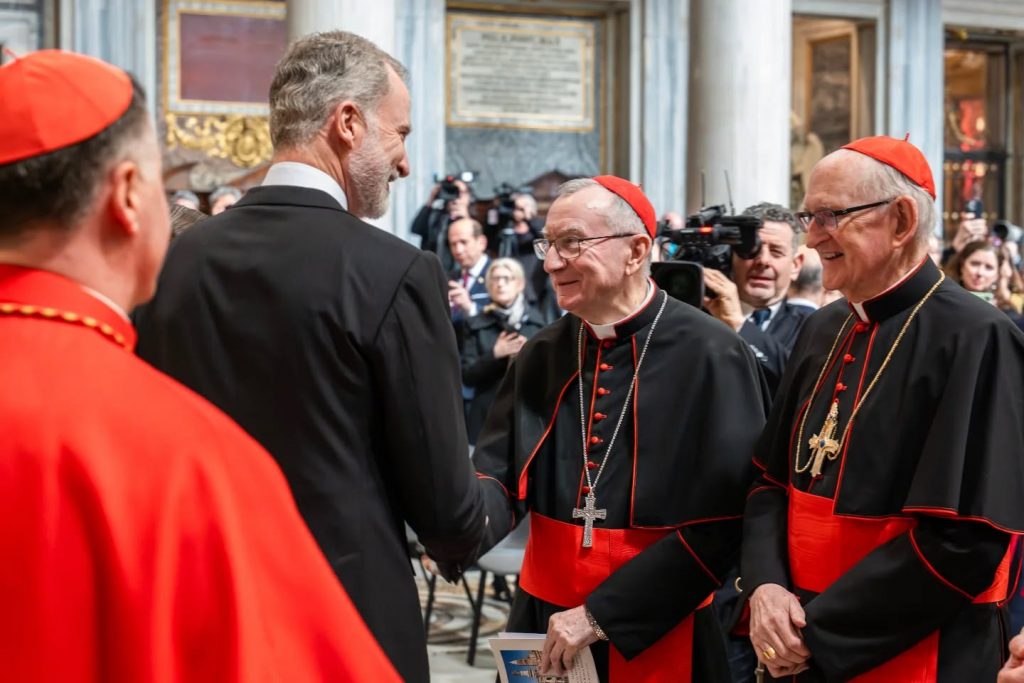
If the title of Protocanon passes automatically to each Spanish monarch upon accession, its formal assumption is far from routine. Rather, it functions as a ritual reaffirmation of a relationship that has survived political transformations, secularization and the gradual redefinition of monarchy itself.
Thank you for reading our content. If you would like to receive ZENIT’s daily e-mail news, you can subscribe for free through this link.

Publicaciones relacionadas:
 After Misunderstandings, Cardinal Koch and Leader of the German Bishops Meet in Rome
 Cardinal Pietro Parolin’s “Lectio Magistralis” to EWTN on Communication, Truth and Communion
 First statements of the Commissioner for Caritas appointed by the Pope
 Pope Francis Goes to the Circus: Photos of a Parish-Pope Among Clowns and Trapeze Artists
