(ZENIT News / Washington, 06.08.2026).- A administrative reform inside the U.S. Department of Defense has unexpectedly opened a national debate about religious liberty, military culture, and the role of faith in one of America’s most important institutions.
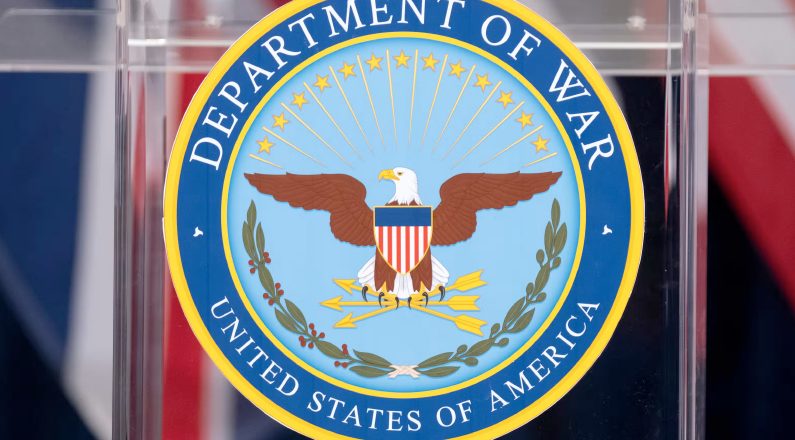
For the first time in nearly a decade, the Pentagon has dramatically reduced the number of officially recognized religious affiliations used within the armed forces, cutting the list from approximately 211 categories to just 31. The decision, implemented through a May 20 memorandum issued under the authority of Defense Secretary Pete Hegseth, is being presented by military leaders as a practical effort to simplify administrative procedures and improve the delivery of religious support. Critics, however, see something far more consequential.
Under the revised system, the military will continue to recognize major religious traditions, including Catholicism, numerous Protestant denominations, Judaism, Islam, Hinduism, Buddhism, Sikhism, the Bahá’í Faith, agnosticism, and broad categories such as “No Religion” and “Other Religions.” Catholics remain one of the largest and most clearly identified faith groups within the armed forces.
What has generated controversy is not who remains on the list, but who has disappeared from it. A wide range of smaller religious and philosophical communities—including atheists, humanists, Unitarians, deists, Wiccans, Druids, followers of Asatru, spiritualists, and various New Age movements—are no longer individually identified.
Pentagon officials argue that the previous system had become unwieldy. Hegseth himself noted earlier this year that the number of religious codes had expanded beyond 200, many of which were rarely used. According to his assessment, a streamlined system would provide chaplains with clearer information and allow them to anticipate the needs of service members more effectively.
The reform forms part of a broader effort by the current Pentagon leadership to strengthen the role of spiritual care within military life. Hegseth has repeatedly emphasized that religious freedom and spiritual well-being should receive attention comparable to physical and mental health. He has also announced reforms affecting military chaplains, including changes to insignia and the structure of religious support services.
Yet the practical and constitutional implications of the new policy have become the focus of intense criticism.
Former military chaplains and advocates for religious liberty warn that reducing official categories may make it more difficult for minority-faith personnel to receive appropriate pastoral support. Within the military system, religious affiliation codes are not merely demographic statistics. They help commanders and chaplain corps leaders understand the spiritual composition of units, organize worship opportunities, and identify the needs of service members deployed far from home.
Retired Major General Steve Schaick, who previously served as Chief of Chaplains of the U.S. Air Force, expressed concern that smaller faith communities could lose visibility within the system. Such changes, critics argue, may eventually affect the ability of certain chaplains to receive recognition or endorsement from the religious bodies that sponsor them.
Some opponents have gone further, portraying the reform as evidence of an emerging preference for Christianity within the military establishment. Organizations advocating strict church-state separation argue that reducing the number of recognized faith traditions risks marginalizing personnel whose beliefs fall outside mainstream religious categories.
The debate has become especially intense because it intersects with broader questions surrounding the public religious commitments of Secretary Hegseth. Supporters view his emphasis on faith as a legitimate affirmation of religious freedom after years in which many believers felt their convictions were treated with suspicion in public institutions. Critics, by contrast, fear that such initiatives could unintentionally blur the distinction between protecting religion and favoring particular religious traditions.
For Catholics and other Christians, the controversy presents a reminder of an important principle frequently emphasized by the Church: authentic religious freedom is universal. It protects not only believers with large institutions behind them but also members of small communities, minority traditions, and even those who profess no religion at all. The Catholic understanding of religious liberty, articulated most clearly during the Second Vatican Council, rests on the conviction that human dignity requires freedom from coercion in matters of conscience.
The Pentagon insists that service members will not be restricted when selecting inscriptions for identification tags and that religious support will continue to be available throughout the armed forces. Whether those assurances satisfy critics remains uncertain.
Thank you for reading our content. If you would like to receive ZENIT’s daily e-mail news, you can subscribe for free through this link.