


(ZENIT News / Rome, 05.13.2026).- For years, much of the Western world has embraced a familiar narrative: religion is fading, churches are emptying, and younger generations are drifting irreversibly toward secularism. Yet a major new international study suggests that reality may be far more complex. Beneath the surface of declining institutional affiliation, a surprising spiritual curiosity is emerging among young people — especially around the Bible itself.
The newly released Patmos Youth Report, based on data gathered through the Patmos World Survey on attitudes toward the Bible, paints a picture that challenges many assumptions about faith in the twenty-first century. Conducted in collaboration with Gallup, the Patmos Initiative, and the United Bible Societies, the study surveyed 91,000 people across 85 countries, including approximately 28,700 young respondents between the ages of 15 and 30.
Its findings reveal not merely residual religious sentiment, but a renewed engagement with Scripture among younger Christians — and even among many who do not identify as religious at all.
A Generation More Comfortable Speaking About Faith
One of the report’s most striking conclusions is that young Christians, especially those between 18 and 24 years old, often engage with the Bible more actively than older generations.
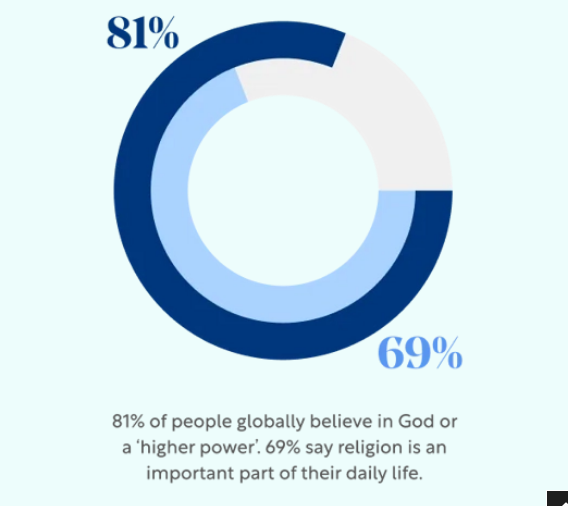
Globally, half of young adult Christians report using the Bible at least weekly. Far from treating faith as a private or outdated matter, many also say they feel increasingly confident discussing religious questions publicly, recounting biblical stories, and applying Scripture to everyday life.
“The younger Christian generation appears more comfortable speaking about faith,” the report observes, contradicting the widespread assumption that religion has become socially embarrassing among youth.
This trend is particularly notable because it emerges at a time when many Western societies are experiencing declining church attendance and weakening Christian identity. The survey suggests that while institutional affiliation may be eroding in some regions, spiritual hunger has not disappeared. In many cases, it is simply expressing itself differently.
Latin America and Africa Lead Global Bible Engagement
The strongest levels of Bible engagement are found in Latin America and Sub-Saharan Africa, regions where Christianity remains deeply woven into family life, social identity, and public culture.
In those areas, regular Bible reading, religious commitment, and interest in deeper scriptural study remain remarkably high. Sub-Saharan Africa stands out in particular: 93 percent of Christians surveyed there expressed a desire to learn more about the Bible. In Latin America, nearly eight out of ten Christians voiced the same aspiration.
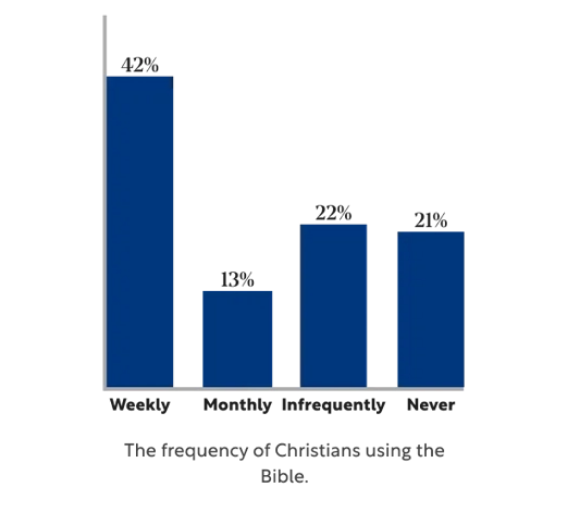
The report also notes that young Christians globally are the demographic most likely to describe religion as “important in daily life.” Eighty-one percent of young Christian adults gave that response — a figure that complicates stereotypes portraying younger generations as uniformly indifferent to spirituality.
At the opposite end of the spectrum, Europe, North America, and Australasia continue to experience broader declines in Christian identification. Yet even there, an important nuance emerges: young people who do identify as believers often report frequent Bible use and strong personal engagement with Scripture.
In other words, Christianity in many Western countries may be becoming smaller, but also more intentional and personally rooted.
The Bible and the Search for Meaning
Perhaps even more revealing than the data on practicing Christians is the report’s discovery that millions of non-Christians remain deeply curious about the Bible.
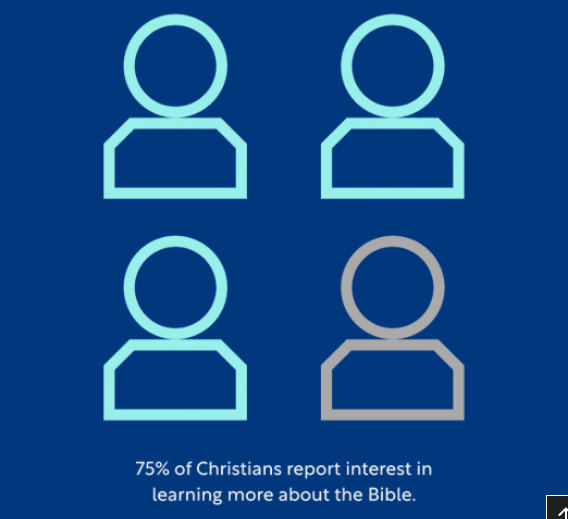
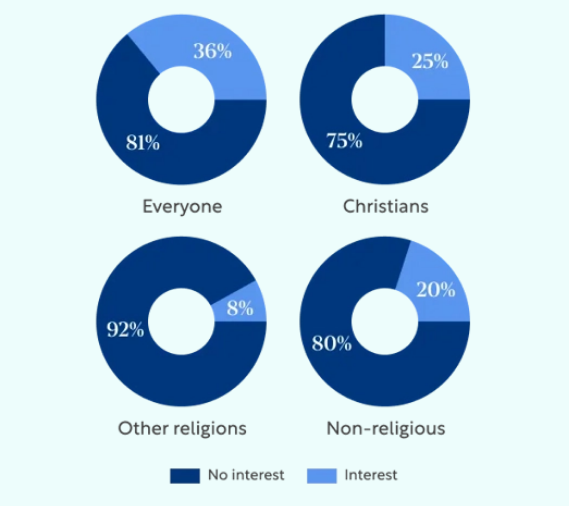
Researchers estimate that approximately 240 million non-Christians worldwide would like to learn more about Scripture. Among people who describe themselves as non-religious, one in five expressed interest in exploring the Bible further.
Many respondents who reject formal religious labels nonetheless acknowledged that the Bible could help answer life’s deepest questions or contribute to personal spiritual growth.
This suggests that secularization does not necessarily eliminate spiritual longing. Rather, many younger people appear skeptical of institutions while remaining open to transcendence, moral reflection, and existential meaning.
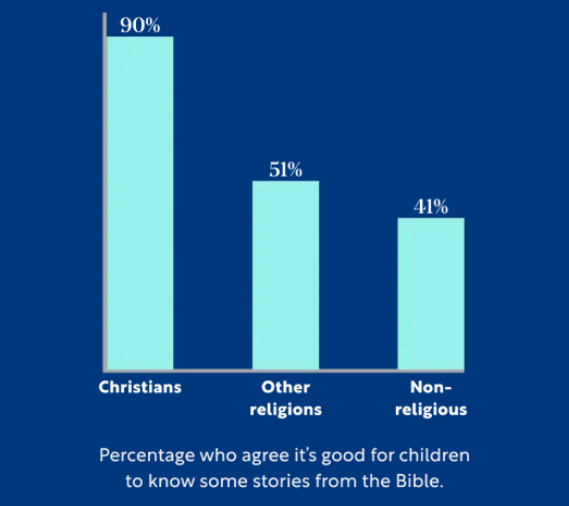
The survey also found that around 70 percent of respondents worldwide — including many non-Christians — believe biblical stories retain value in the moral formation of children.
That finding is especially significant in societies where debates over education, identity, and cultural transmission have intensified. Even among those distant from organized religion, there remains broad recognition that biblical narratives helped shape concepts of justice, forgiveness, human dignity, sacrifice, and compassion that continue to influence civilization.
Digital Evangelization Replaces Traditional Pathways
The report highlights another major shift: young people increasingly explore Christianity outside traditional church structures.
Rather than entering a parish or speaking first with clergy, many begin their journey through podcasts, videos, Bible applications, social media, and conversations with friends. Digital culture is reshaping the first contact many young adults have with Scripture.
This transformation presents both opportunities and risks for Christian communities. On one hand, digital platforms allow biblical content to reach people who might never cross the threshold of a church. On the other hand, fragmented online spirituality can lack the depth, stability, and communal dimension historically associated with Christian formation.
Still, the findings suggest that curiosity about faith remains very much alive beneath contemporary secular culture.
Asia: A Vast Spiritual Frontier
Among all the regions studied, Asia emerged as perhaps the greatest field for future evangelization.
According to the survey, half of Asians have never heard of the Bible, while 75 percent say they know virtually nothing about it. These numbers reveal not hostility toward Christianity so much as unfamiliarity.
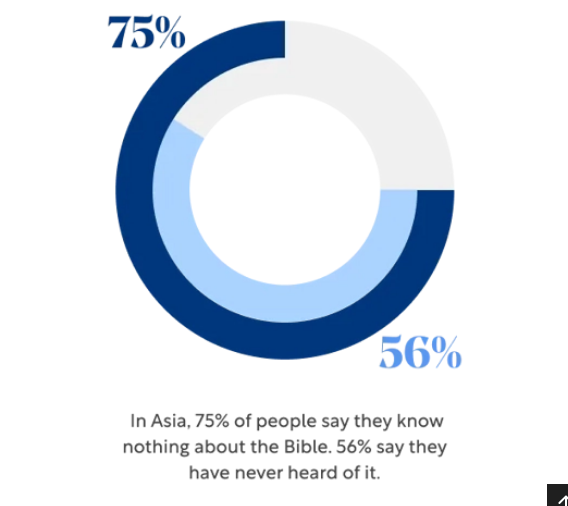
For Christian missions and churches, this represents both a challenge and an extraordinary opportunity. While Christianity often struggles in post-Christian Western societies burdened by fatigue or skepticism, large portions of Asia remain populations that have simply never encountered biblical teaching in a meaningful way.
At the same time, many young Asians who participated in the study — including those uncertain about religion — described the Bible as a possible source of wisdom and guidance for life’s ultimate questions.
Faith and Social Responsibility
Another important finding concerns the relationship between Bible engagement and social behavior.
Young Christians who actively study Scripture were found to be more likely to volunteer, donate to charitable causes, and assist others in everyday situations.
Researchers cautioned that economic and cultural contexts vary widely across countries, but they concluded that Bible reading appears linked not only to personal devotion but also to concrete practices of generosity, service, and solidarity.
This dimension is often overlooked in modern discussions about religion, which frequently reduce faith either to private emotion or political controversy. Historically, however, Christianity’s influence has extended deeply into charitable institutions, hospitals, schools, humanitarian efforts, and care for the vulnerable.
Three Words That Still Resonate
When participants were asked to summarize what the Bible represents in just a few words, three terms appeared more than any others: truth, wisdom, and comfort.
Those responses may help explain why Scripture continues to attract interest even in an age saturated with technology, entertainment, and ideological polarization. In societies marked by anxiety, loneliness, and moral uncertainty, many young people appear to be searching not only for information, but for coherence and hope.
The Patmos report does not suggest a dramatic global religious revival is already underway. Christianity continues to face serious decline in many historically Christian nations. Yet the data also indicates that predictions of the Bible’s irrelevance were premature.
For churches often tempted to discouragement, that may be one of the most important findings of all.
Thank you for reading our content. If you would like to receive ZENIT’s daily e-mail news, you can subscribe for free through this link.

Publicaciones relacionadas:
 Study reveals that 2 out of 10 adults have abandoned the faith they grew up in: Christianity and Buddhism most affected
 Australia: data suggest that more and more people are seeking God
 Vatican in Vietnam, Vietnam in China: diplomacy on the move
 Young people looking for answers in a messy world are turning to the Catholic Church
