

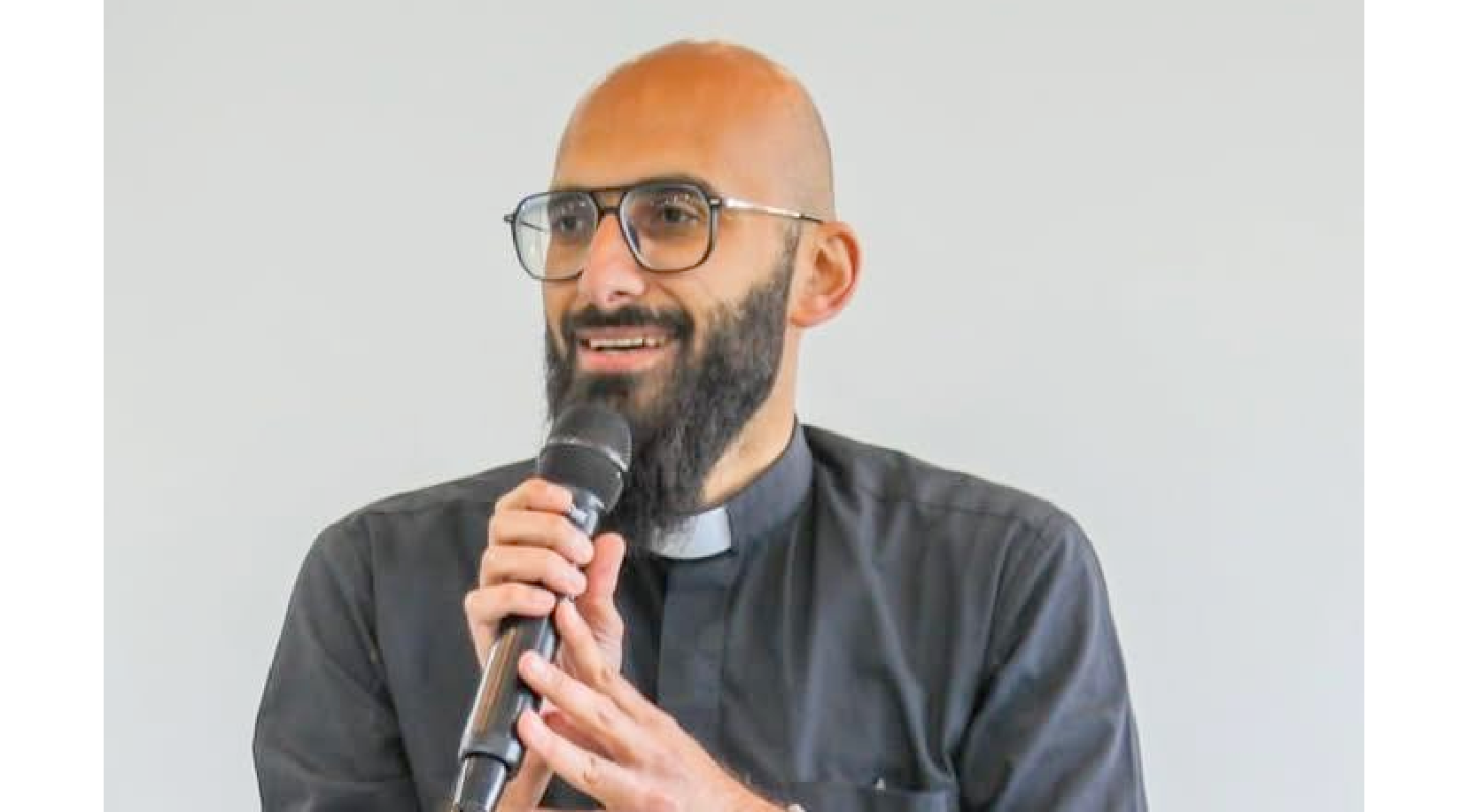
(ZENIT News / Jerusalem, 05.12.2026).- The forced departure of Father Louis Salman from the Palestinian town of Beit Sahour has become far more than an immigration dispute. For many Christians in the Holy Land, the decision by Israeli authorities not to renew the Jordanian priest’s residency permit is being interpreted as another sign of a steadily worsening climate for the region’s shrinking Christian population.
Father Salman, 36, celebrated his final Mass on May 10 at the Latin Church of Our Lady of Fatima in Beit Sahour, the town traditionally associated with the “Shepherds’ Field” of the Gospel accounts near Bethlehem. The farewell liturgy drew large crowds from across the Bethlehem governorate, including many young Palestinian Christians who regarded him not only as a parish priest, but as one of the most visible spiritual leaders of their generation.
His departure order came after what church sources described as an unusually long and intense security interrogation conducted by Israeli authorities. According to those same sources, officials justified the decision by citing the priest’s political positions, his strong public presence among Palestinian Christian youth, and statements in which he referred to Israel as an “occupying power.”
For many Palestinians, however, such language reflects mainstream international terminology rather than extremism. A large majority of United Nations member states support the establishment of a Palestinian state alongside Israel, while the Holy See itself has long recognized the State of Palestine.
The case has therefore become symbolic of a broader question: whether Palestinian Christian clergy are increasingly being pressured not only for political activism, but even for publicly articulating positions widely held within international diplomacy and among local Christian communities.
Father Salman’s influence among Palestinian youth helps explain why his removal has resonated so deeply. Before entering the seminary in Beit Jala in 2014, he studied computer graphics and animation at Princess Sumaya University for Technology in Jordan. He was ordained in 2021 and quickly became known for combining pastoral ministry with strong engagement in social and humanitarian causes.
His name gained international visibility in 2022 after the killing of Palestinian-American journalist Shireen Abu Akleh, a Christian correspondent for Al Jazeera who was shot while covering an Israeli military operation in Jenin. Father Salman presided over funeral rites and participated in the solemn procession that carried her coffin through Jerusalem. Images of Israeli police striking pallbearers during the funeral shocked Christians and many others around the world, becoming one of the defining visual moments of that year’s Israeli-Palestinian tensions.
In the years since, Father Salman became closely associated with the Palestinian Christian youth movement, serving as chaplain and mentor to many young believers struggling with emigration pressures, economic instability, and the fear that Christianity’s historic presence in the land of Christ’s birth could continue to diminish.
That fear is not abstract. Christians now represent only a small fraction of the population in the Holy Land, and church leaders frequently warn that political instability, restrictions on movement, economic hardship, and violence are accelerating emigration.
The controversy surrounding Father Salman’s expulsion unfolds amid a series of incidents that have heightened concern among Christian leaders.
Church officials and local Christians point to growing difficulties in obtaining or renewing visas for clergy from Jordan, Lebanon, Syria, and Egypt who serve Arabic-speaking congregations in the Palestinian territories. Christian institutions have also complained of increasing bureaucratic obstacles affecting schools, pastoral work, and religious celebrations.
In March 2026, Israel introduced a policy barring Palestinian Christian teachers from the West Bank from working in Jerusalem’s Christian schools, a move critics warned could weaken institutions that have served the city for generations.
At the same time, attacks by radical settlers against Christian communities and property in the West Bank have become a recurring source of alarm. Particular attention has focused on Taybeh, widely recognized as the last entirely Christian Palestinian town. Residents there accuse extremist settlers of attempting to intimidate families into abandoning their land through harassment, land seizures, threats, vandalism, and the establishment of nearby outposts considered illegal under international law.
Church leaders have repeatedly condemned attacks on agricultural lands belonging to Christian families and ecclesiastical institutions. Earlier this year, the Latin Patriarchate of Jerusalem described the destruction of church-owned olive groves and land by settlers using bulldozers as a “red line.”
Jerusalem itself has also witnessed repeated incidents involving clergy and religious. Christian leaders have documented episodes of priests and nuns being spat on, verbally abused, or physically harassed by extremist Jewish groups near holy sites. A widely circulated video in early May reportedly showed a Catholic nun assaulted near the Tomb of David.
Adding to the tensions were images circulated online in April allegedly showing an Israeli soldier damaging a statue of Christ and another placing a cigarette in the mouth of a Marian image. These incidents provoked outrage among many Christians worldwide. Cardinal Pierbattista Pizzaballa publicly condemned acts of desecration against Christian symbols, warning that such actions deepen fear among already vulnerable communities.
Israeli authorities, for their part, have often argued that security concerns require strict oversight in contested areas and reject accusations of systematic persecution. Yet many Palestinian Christians increasingly believe that the cumulative effect of administrative pressure, social hostility, and settler violence is steadily eroding their future in the land where Christianity was born.
For that reason, Father Salman’s departure is being interpreted not simply as the removal of one outspoken priest, but as a message directed at an entire community.
During the emotional farewell ceremony in Beit Sahour, approximately 150 young people from different Palestinian cities gathered to honor him. Many described him as a rare figure capable of speaking simultaneously about faith, dignity, national identity, and hope.
His supporters insist that his ministry was never centered on political militancy, but on accompanying young Christians trying to remain rooted in their homeland despite mounting uncertainty.
That distinction matters greatly in the Holy Land, where Christian communities often see themselves carrying a dual mission: preserving their spiritual witness while also maintaining a historic human presence that dates back to the earliest centuries of the Church.
As Father Salman crossed the border back to Jordan, many local believers were left asking whether the region can continue losing clergy, families, and young people without eventually reaching a breaking point.
Thank you for reading our content. If you would like to receive ZENIT’s daily e-mail news, you can subscribe for free through this link.

Publicaciones relacionadas:
 Israel damages Gaza Catholic parish with airstrike
 Lebanon requests diplomatic mediation from the Vatican to prevent Israel from attacking or displacing Catholic communities in the south of the country
 Israeli soldier vandalizes a crucifix in Lebanon: Israel responds, and so do the polls
 The fragile ceasefire in Lebanon is falling apart: civilians trapped, holy sites damaged, and the Church’s response with emergency aid
