(ZENIT News / Punjab, 04.17.2026).- The stillness of an Easter dawn was shattered in Pakistan’s Punjab province when a speeding truck drove into a Catholic procession, leaving one man dead and more than sixty injured. What unfolded in the early hours of April 5 in Wazirabad has quickly become more than a tragic accident; it has evolved into a test case for the protection, visibility, and rights of religious minorities in the country.
At approximately 3:30 in the morning, around 200 catholics faithful from St. Francis of Assisi Church were walking toward their place of worship, candles in hand, singing hymns as part of Easter celebrations. The procession moved along a road near the Alipur Chatha–Gujranwala route, a setting that, under normal circumstances, would have required at least minimal traffic control. Instead, a light cargo vehicle, locally known as a Shehzore, approached at high speed and struck the group with devastating force.
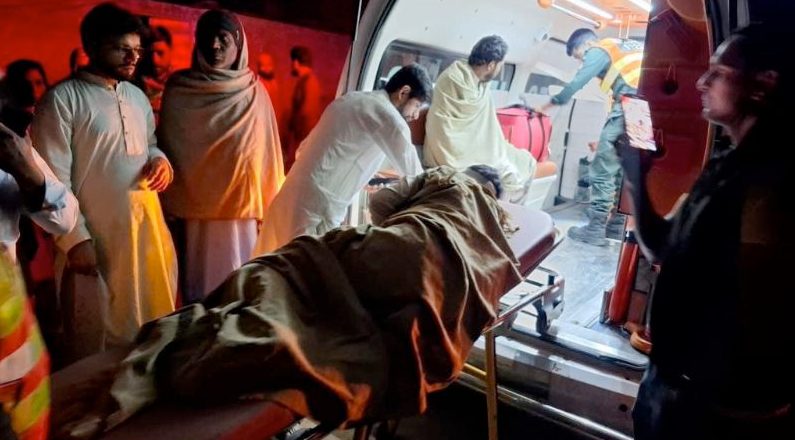
The impact killed Irfan Masih, a local worker, and injured dozens, many of whom required hospitalization. In the immediate aftermath, there was no coordinated emergency response. Survivors recount how those present were forced to improvise rescue efforts, physically overturning the truck to free people trapped beneath it. The delay in official intervention has since become one of the most contested aspects of the incident.
🚨EASTER SUNDAY TERROR ATTACK
Islamic terrorists in Pakistan just drove a truck into a crowd of Christian worshippers during an Easter Sunday vigil.
Multiple people are dead, and at least 60 more are critically injured.
And once again, the West is silent.
This is genocide. pic.twitter.com/NvBaGHVQh1— Samantha Smith (@SamanthaTaghoy) April 5, 2026
Police authorities have stated that they had not been informed of the procession and therefore did not deploy personnel to secure the route. This version is firmly rejected by church representatives and participants, who insist that prior notice had been given and that assurances of protection had been received. The discrepancy has deepened mistrust, particularly after reports that law enforcement arrived nearly an hour later, despite the proximity of a police station.
The driver, identified as Muhammad Bilal, fled the scene, while his assistant was detained and the vehicle seized. Charges have been filed under provisions related to reckless driving, but investigators have not yet clarified whether negligence alone explains the event. That uncertainty has opened space for suspicion within the local community. Several witnesses argue that the driver could not have failed to see a large, candlelit crowd on an otherwise clear road, raising the possibility—still unproven—of intentionality.
Such doubts are not emerging in a vacuum. For many Christians in Pakistan, the episode resonates with a broader sense of vulnerability. As a religious minority, often socially and economically marginalized, their public expressions of faith can carry implicit risks. Large gatherings, particularly those held in open or poorly controlled spaces, have historically exposed communities to both targeted violence and institutional neglect.
At the same time, the language used to describe the incident has varied sharply depending on the source. Some commentators have framed it in extreme terms, suggesting it reflects systematic persecution or even deliberate violence against Christians. Others, including representatives of Catholic organizations focused on justice and peace, have adopted a more measured tone, emphasizing the human toll while calling for a transparent and accountable investigation.
Survivors of the Easter Sunday terrorist attack are speaking out.
Islamic terrorists drove a truck into a crowd of Christian worshippers. Multiple dead. At least 57 injured.
“Christians have no rights in Pakistan. We had no security. No police. No help.”
But the West is silent pic.twitter.com/jI05HDs4j4
— Samantha Smith (@SamanthaTaghoy) April 5, 2026
This divergence highlights a recurring tension: how to interpret events that sit at the intersection of accident, negligence, and possible hostility. In contexts where trust in institutions is fragile, the absence of clear answers can quickly amplify the most severe interpretations.
What remains undisputed is the scale of the human impact. Families have been left grieving, dozens are recovering from injuries, and an entire community has seen one of its most important religious moments transformed into a scene of pain and loss. Easter, which commemorates life overcoming death, has in this case become a reminder of how precarious that hope can be in certain parts of the world.
The demand now is not only for justice in a legal sense, but for credibility in the response. A thorough investigation, clear communication from authorities, and concrete measures to ensure the safety of future religious gatherings will be essential if confidence is to be restored.
Thank you for reading our content. If you would like to receive ZENIT’s daily e-mail news, you can subscribe for free through this link.