

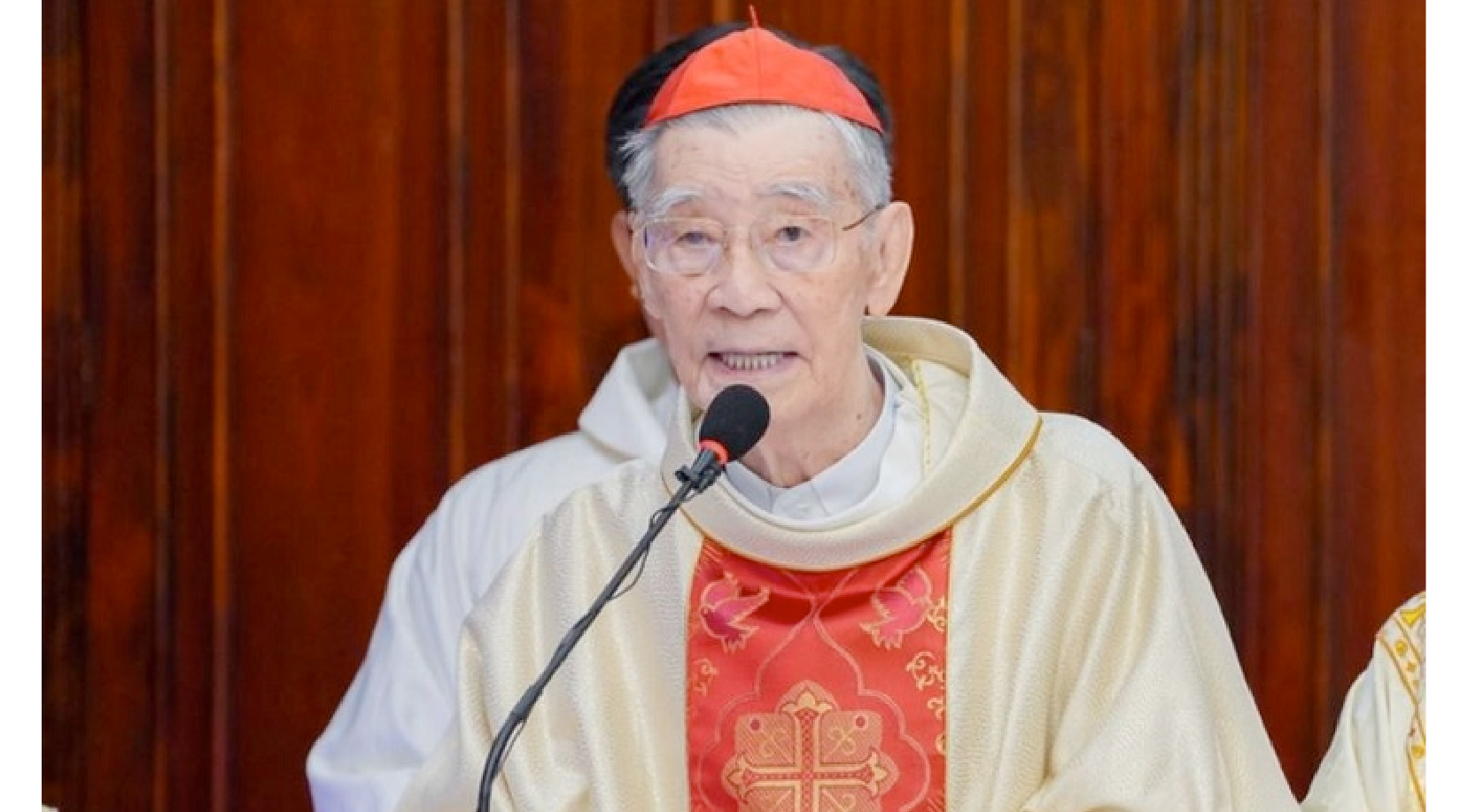
(ZENIT News – OMPress / Vietnam, 03.25.2026).- On Sunday, March 22, Cardinal Jean-Baptiste Pham Minh Mân, Archbishop Emeritus of Ho Chi Minh City, passed away at the age of 92. As a sign of mourning, all the parishes in the Asian city rang their bells. His life was marked by his advocacy for evangelization in a country dominated by the Communist regime. He worked actively to reopen seminaries, schools, and hospitals confiscated by the State.
He was appointed Archbishop of Thàn-Phô Hô Chi Minh – Ho Chi Minh City – on March 1, 1998, a position he held until March 22, 2014. During his pastoral ministry, he promoted local pastoral work, ordained dozens of priests, and, in 1999, presented a new Vietnamese version of the Bible, the fruit of thirty years of work. Jean-Baptiste Pham Minh Mân was named Cardinal by Pope Saint John Paul II in the Consistory of October 21, 2003. As a member of the College of Cardinals, he participated in the Conclaves that elected Popes Benedict XVI (2005) and Francis (2013).
Born on March 5, 1934 in Ca Mau, he was ordained a priest in 1965 and pursued theological studies in the United States of America before taking on the challenge of priestly formation in post-reunification Vietnam.
From the early years of his priestly formation, he worked to promote evangelization in a country that, after adopting Communist ideology, displayed its aversion to the Christian faith, causing serious losses to the Church: centers of pastoral, charitable, and educational activity, such as seminaries, Catholic schools, and private hospitals, were forced to operate at reduced levels and were later confiscated by the State. In this context, Jean-Baptiste Pham Minh Mân never wavered in what he considered a true mission, working tirelessly for their reopening.
In the mid-1970s, after the reunification of Vietnam under the Communist regime, he was entrusted with priestly formation, a task he carried out despite countless material and psychological difficulties. Even in 1988, when the government authorized six seminaries in the country to operate normally, including the «Saint Quy», where Pham Minh Mân had been appointed Rector, problems persisted, such as a shortage of facilities and professors, in addition to the prohibition, in place since 1975, against sending any priest abroad for higher studies.
In 2002, in response to the massive Vietnamese emigration to Japan in the late 1970s, the Prelate launched a vocations program in collaboration with the local episcopate to proclaim the Gospel in the Land of the Rising Sun. In subsequent years, this project also addressed the protection of migrants and issues related to labour exploitation.

Publicaciones relacionadas:
 Pope Francis removes Belgian bishop convicted of abuse from the clerical state
 Bishop: Church’s true influence is sharing God’s mercy, not chasing ‘likes’
 China recognizes first bishop appointed by Pope Leo XIV for a Chinese diocese
 This is how the inauguration of the new Catholic Archbishop of Westminster went
