

(ZENIT News / Jerusalem, 05.20.2026).- Jerusalem has long been a city where faith, memory, and politics intersect with unusual intensity. But recent events across Jerusalem and the West Bank suggest that what once appeared as isolated incidents are increasingly being perceived by religious leaders, human-rights organizations, and local communities as pieces of a broader and more troubling pattern: a climate in which polarization is hardening and vulnerable communities feel increasingly exposed.
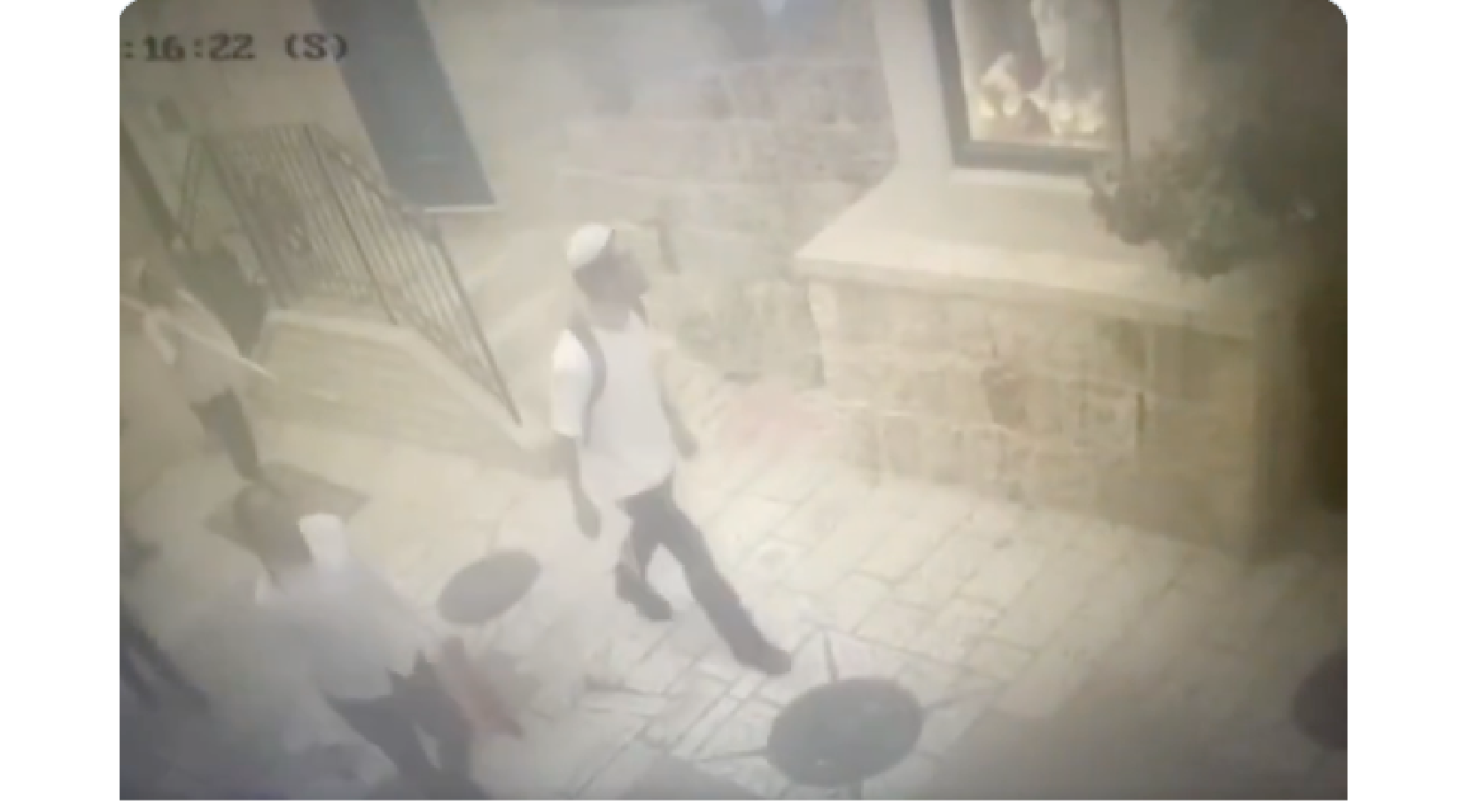
During Jerusalem’s annual Flags March on May 15 — a celebration marking Israel’s annexation of East Jerusalem after the 1967 Six-Day War — fresh controversy erupted after footage circulated showing radical Jewish youths spitting toward a statue of the Virgin Mary near New Gate in the Old City. The video was shared by Wadie Abunassar, coordinator of the Christians of the Holy Land Forum, who described the episode as yet another insult against Christian symbols and called for responsibility and urgent educational efforts.
Another insulting incident vs. a Christian symbol by a radical Jew: a participant of the “Flags’ Procession” (afternoon of May 14, 2026) spits on the statue of Virgin Mary at the New Gate area inside the Old City of Jerusalem.
Accountability and reeducation are urgently demanded! pic.twitter.com/X48UWE1BfP— Wadie (@WadieAbunassar) May 16, 2026
The incident occurred during a day already marked by tension. Large groups of religious nationalist marchers passed through sections of the Old City, including Muslim neighborhoods, amid reports of vandalism, harassment, and racist chants directed at Arab residents. Peace activists, including members of Jewish-Palestinian initiatives, attempted to create nonviolent protective corridors for civilians. Some later reported being assaulted or removed from sensitive areas, despite a major police deployment and several arrests.
For Christians in Jerusalem, however, the concern extends beyond a single episode. Clergy and religious communities have repeatedly warned that acts once considered sporadic are becoming more visible and more public. Priests and monks have increasingly reported being spat on or verbally abused in parts of the Old City. Recent outrage also followed an attack on a Christian nun in Jerusalem.
The Benedictine abbot of Mount Zion’s Dormition Abbey, Nikodemus Schnabel, recently expressed deep concern, describing what he sees as a new phase of anti-Christian hostility. Having himself previously experienced harassment, he drew attention to what he considers a significant change: actions that once occurred anonymously now happen openly and in daylight.
Christian communities in the Middle East are particularly sensitive to such developments because of their demographic fragility. In the Holy Land, Christians represent only a small minority, and church leaders have repeatedly warned that insecurity and social pressure risk accelerating emigration, further weakening communities whose presence predates many modern states.
Yet anxieties surrounding the region are not limited to Christian concerns. They intersect with a wider debate over the future of Palestinians in the occupied territories and the legal and humanitarian consequences of current policies.
Ver esta publicación en Instagram
Attention has recently focused on Khan al-Ahmar, a Palestinian Bedouin community in the West Bank located near the area traditionally associated with the Good Samaritan Inn. Israeli Finance Minister Bezalel Smotrich announced plans to advance the evacuation of the village, presenting the move as a response linked to international legal proceedings involving him.
Human-rights organizations reacted with alarm, arguing that such measures risk reinforcing what they describe as a coercive environment already affecting Palestinian communities in Area C of the West Bank. According to humanitarian data, five communities in Khan al-Ahmar comprise 159 households and 759 residents, including 387 children.
Critics contend that the issue is not simply one village, but a larger struggle over land, demographics, and political control. Under international humanitarian law, particularly the Fourth Geneva Convention, the forced transfer of protected populations in occupied territories is prohibited. Human-rights advocates warn that demolitions, planning restrictions, and displacement pressures may collectively contribute to a broader pattern of forced movement.
At the same time, another long-term trend continues to attract increasing scrutiny: violence involving Israeli settlers in the West Bank.
According to monitoring by the Israeli human-rights organization Yesh Din, more than 1,700 cases involving physical assaults, shootings, arson attacks, property damage, attacks on agriculture, and livestock theft have been documented between 2005 and 2025. The organization reports that more than 90 percent of investigations closed without indictments, while only around 3 percent resulted in convictions.
United Nations figures paint an equally troubling picture. Between 2023 and 2025, more than 4,500 settler attacks against Palestinians were recorded, resulting in at least 50 deaths, thousands of injuries, and approximately 3,900 displaced persons. In 2025 alone, documented incidents surpassed 1,600 — roughly five each day. The first months of 2026 have shown little sign of improvement, with more than 2,500 Palestinians reportedly displaced since the beginning of the year.
Ver esta publicación en Instagram
Some of the most affected areas include the regions around Nablus, Hebron, Ramallah, the Jordan Valley, and the South Hebron Hills, where entire rural communities have faced mounting pressure from violence, intimidation, and restrictions on land access.
Church leaders have not remained silent. Christian churches in the Holy Land have repeatedly condemned attacks against Palestinian communities and warned that impunity itself becomes a destabilizing force. Their interventions have included symbolic visits to affected villages, among them the entirely Christian village of Taybeh.
In one recent pastoral reflection, Pierbattista Pizzaballa drew attention to the asymmetries at the heart of the conflict, observing that there is a profound distinction between those who exercise power and those who experience its consequences.
The Holy Land remains a place where sacred geography and political reality cannot easily be separated. For Christians watching events unfold, concern is not only about attacks on statues, churches, or clergy. Increasingly, it is about whether communities of different faiths can continue living together in a region where fear, anger, and competing national narratives are becoming ever more difficult to contain.
Thank you for reading our content. If you would like to receive ZENIT’s daily e-mail news, you can subscribe for free through this link.

Publicaciones relacionadas:
 Israel continues to attack Christians and seize land from Palestinians now in the West Bank
 Israel: Destroying machines also raze a Catholic church in the West Bank
 The last historic Christian village in the Holy Land, threatened with annexation by the Jewish state of Israel
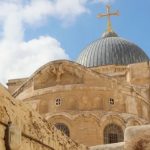 Israeli police prevent a Mass from being celebrated at the Church of the Holy Sepulchre in Jerusalem and bar Cardinal Pizzaballa from entering
