

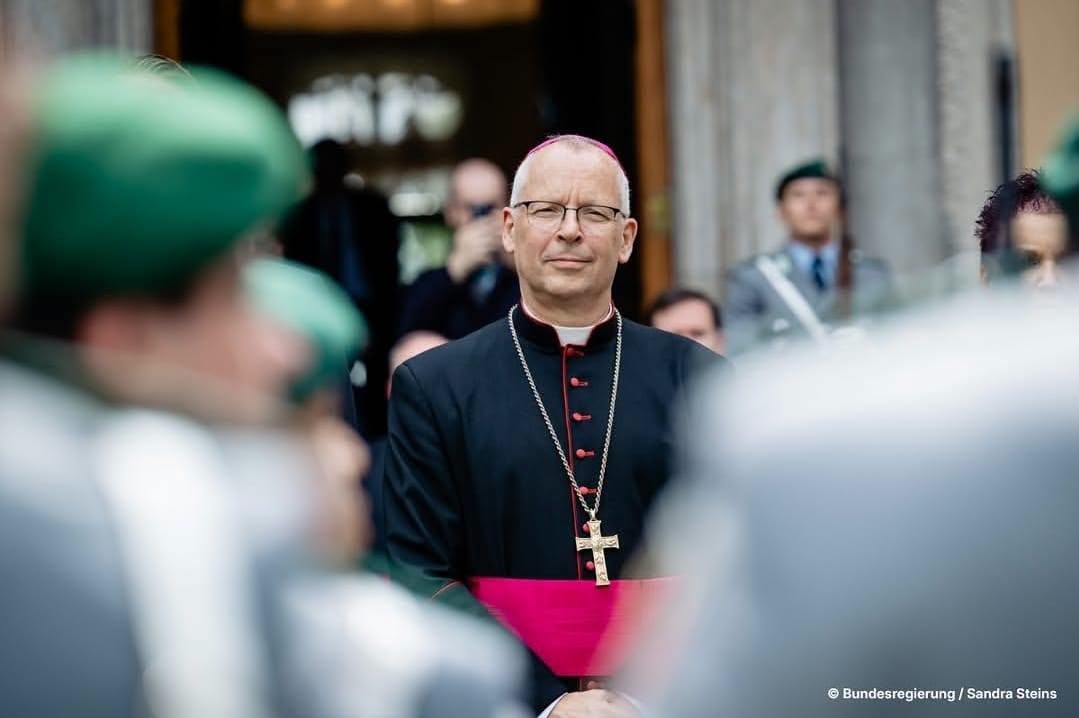
(ZENIT News / Speyer, 11.16.2026).- The Vatican has put the brakes on one of Germany’s most ambitious diocesan restructuring projects, ruling that the Diocese of Speyer must suspend its plans to replace 70 parishes with just nine until a new bishop has taken office. The intervention, communicated by Apostolic Nuncio Archbishop Hubertus van Megen after consultations with Vatican departments, has exposed a growing tension between the German Church’s drive for structural reform and Rome’s insistence on preserving the authority of a bishop during a vacancy.
The decision was conveyed in a letter dated November 9 and made public by the diocese on November 11. Speyer has been without a bishop since August, when Pope Leo XIV accepted the resignation of Bishop Karl-Heinz Wiesemann on health grounds. Wiesemann had supported several initiatives associated with Germany’s Synodal Path. In the meantime, former vicar general Markus Magin has been governing the diocese as its administrator.
Magin had intended to continue preparing the reorganisation during the vacancy, leaving the final decisions to his successor. Rome, however, considers even the continuation of the process problematic. Van Megen argued that it could create expectations, set changes in motion and generate personal commitments that might constrain the incoming bishop’s freedom to assess the situation and determine his own course.
At the heart of the dispute is Canon 428 of the Code of Canon Law, which establishes the principle sede vacante nihil innovetur — during a vacant see, nothing should be changed. The provision is intended to prevent an interim administrator from taking decisions that could prejudice the rights of the diocese or restrict the authority of the bishop who will eventually assume responsibility. Van Megen also stressed that the establishment, suppression or substantial modification of parishes belongs to the diocesan bishop. During the vacancy, the diocesan council of priests and pastoral council are suspended and cannot take binding decisions.
Magin has accepted the instruction and confirmed that the restructuring process will stop immediately and remain suspended until the new bishop has canonically taken possession of the diocese. But his response was far from enthusiastic. He described himself as disappointed, arguing that the Vatican’s decision fails to recognise the work already completed and the urgency of the changes facing Speyer.
The reform began in autumn 2024 under the title “Be a Blessing”. According to the diocese, the initial proposal received more than 3,500 contributions before being examined by five working groups. Its central proposal — reducing the number of parishes from 70 to nine larger units — was presented in October 2025. In June 2026, the diocesan assembly unanimously approved its main principles, which Wiesemann had formally adopted.
For Magin, continuing the preparatory work would not have deprived the next bishop of his authority. He maintains that decisions with binding legal consequences were expressly reserved for the new ordinary, and that the material already developed would have provided him with a carefully prepared basis for making his own choices. Suspending everything, he warned, risks undermining the confidence and motivation of clergy, employees and volunteers who have invested more than two years in the process. The next bishop, he fears, may have to spend valuable time rebuilding that trust before he can address the structural problems themselves.
Those problems are substantial. Speyer, in southwestern Germany, has approximately 423,000 Catholics and, like many dioceses across the country, is confronting declining membership, fewer priests and shrinking financial resources. Magin argues that the existing parish structure is increasingly difficult to sustain and that delays could place additional pressure on both paid staff and volunteers.
His criticism also touches on a broader question within the German Church: what does synodality mean in practice? Magin said he found it difficult to understand why diocesan leaders had not been consulted before the instruction was issued. In his view, stopping a reform shaped by extensive local participation sits uneasily with the Church’s stated commitment to listening and shared discernment.
The Vatican’s position, however, is that synodal consultation cannot override the canonical responsibilities attached to episcopal office. The incoming bishop must be free to decide whether the proposed reorganisation is appropriate, rather than inherit a process that may already have shaped expectations and made reversal difficult. The distinction is significant: consultation can inform a bishop’s decisions, but it does not transfer to an assembly or an administrator the authority that canon law assigns to the diocesan bishop.
The intervention also comes against the background of other far-reaching restructuring efforts in Germany. In January 2026, the Archdiocese of Freiburg reduced its 1,048 parishes to 36, while the Archdiocese of Paderborn is preparing to reorganise its 603 parishes into 21 pastoral areas. Such changes are presented as responses to declining numbers of priests, practising Catholics and available funds. Yet their scale has raised questions about the future of local parish life and the relationship between communities and their clergy.
Rome has previously expressed reservations about plans of this kind. In 2020, the Vatican opposed a proposal in the Diocese of Trier to reduce 887 parishes to 35, warning that some of the resulting units would be so large that they could encompass up to 100,000 faithful. Rural Catholics in certain areas might have to travel 80 kilometres or more to reach their parish church. That same year, the Congregation for the Clergy issued an instruction setting out principles for parish reorganisation, including the requirement that pastoral care remain under the ultimate direction of a priest even when a layperson is entrusted with certain responsibilities because of a shortage of clergy.
The practical consequences of consolidation have also become a concern among some priests. In an interview in October 2026, Father Fabian Schneider, who leads a recently merged parish in Freiburg comprising 40 former parishes and serving around 36,000 Catholics, described the sense among some local priests that they had lost authority and been reduced to the role of vicars.
Speyer’s next bishop will be appointed through a procedure rooted in the 1924 Bavarian Concordat, despite the diocese not being part of Bavaria. The cathedral chapter will submit recommendations to the Holy See, and the Pope will choose from among the candidates put forward through the concordat process. Before the appointment is formally announced, the Holy See also consults the Bavarian government about any possible political objections.
For now, the reorganisation remains on hold. Magin has urged diocesan staff and volunteers to respect the decision and continue serving their communities despite their disappointment. The dispute leaves the future bishop with a major pastoral and administrative challenge: he will inherit a diocese under pressure to adapt, but also a reform whose direction and pace he must now determine for himself.
Thank you for reading our content. If you would like to receive ZENIT’s daily e-mail news, you can subscribe for free through this link.

Publicaciones relacionadas:
 United States: this is the numerical status of permanent deacons in the country
 The “Catholic” Pro-Abortion Biden and the Opinions of the Pope and of An American Bishop
 German Catholics Question the Leader of Their Episcopate and Receive a “Meaningless Answer”
 Pope Francis on Cardinal Ouellet: There Is Not Enough Evidence to Open a Canonical Investigation for Sexual Aggression
