

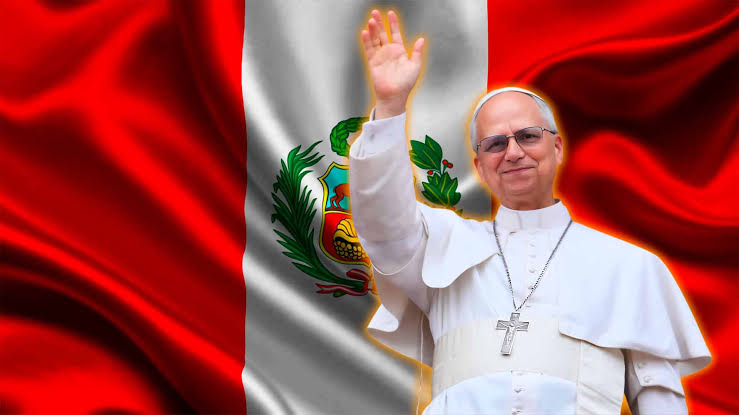
(ZENIT News / Lima, 09.09.2026).- Peru is preparing to spend 63.2 million soles—about $18 million—to welcome Pope Leo XIV in November, as the country mobilizes both public resources and a nationwide Catholic fundraising campaign for the return of a man many Peruvians consider one of their own.
The government authorized the transfer of the funds to the Ministry of Foreign Affairs to organize the Pope’s visit from November 11 to 16, according to a supreme decree published in the country’s official gazette on September 5.
Leo XIV’s journey will have an exceptional personal dimension. Born in Chicago, Robert Prevost spent more than two decades of his pastoral life in Peru, serving first as a missionary and later as a bishop. He acquired Peruvian citizenship in 2015, and his years in the Diocese of Chiclayo ultimately preceded his call to Rome by Pope Francis.
Now, for the first time as Pope, he is returning to a country where his pastoral history has given him a bond that few pontiffs have shared with a Latin American nation.
Four cities and a deeply personal return
The Pope will be in Peru from November 11 to 16 as part of his first South American journey, scheduled for November 6 to 16.
His Peruvian itinerary will include Lima, Chiclayo, Cusco and Pucallpa, taking him through markedly different regions of a country that played a decisive role in his life as a priest and bishop.
For many Peruvians, therefore, the visit is not simply a diplomatic or religious event involving a foreign head of state. Leo XIV is widely described in the country as the “Peruvian Pope,” a reflection of his citizenship and of the many years he devoted to pastoral service there.
The government’s financial commitment reflects the scale of the preparations.
The 63.2 million soles will come from the contingency reserve of the Ministry of Economy and Finance and will be incorporated into the Foreign Ministry’s budget for goods and services connected with the visit. The decree requires the ministry to specify the distribution of the resources through an official resolution within five days.
It also explicitly establishes that the funds cannot be used for purposes other than those for which they were transferred.
A national collection alongside public funding
The financial preparations are not being left exclusively to the State.
The Peruvian Church launched a nationwide collection on Thursday to help cover part of the costs associated with organizing the papal visit. Church leaders have presented the initiative not merely as a fundraising exercise, but as an opportunity for Catholics throughout the country to participate directly in the event.
Guillermo Inca, secretary general of the Peruvian Episcopal Conference and coordinator of Leo XIV’s visit, described the campaign as an expression of communion, participation and shared responsibility.
The emphasis, he said, is not on the size of an individual contribution but on allowing every person, parish and community to take part according to its possibilities.
Carlos García Camader, president of the Peruvian Episcopal Conference, likewise stressed that preparations for the visit should involve the entire country and encouraged Catholics to see themselves as active participants in welcoming the Successor of Peter.
That dual approach—public financing combined with voluntary contributions from the Church and the faithful—highlights a recurring challenge surrounding major papal journeys: how should an event of enormous religious, cultural and national significance be financed?
The cost of welcoming a Pope
Recent papal visits illustrate the considerable resources required to organize events involving enormous crowds, complex logistics and international security.
A previous papal visit to Spain required an investment of approximately €25 million. According to the figures provided, 45 percent came from private benefactors, companies and foundations; 30 percent was covered by dioceses and the Spanish Episcopal Conference; 20 percent came from participating public administrations; and 5 percent was raised through small donations from the faithful.
The upcoming papal journey to France is estimated to cost around €27 million.
Normally, the Church bears the principal costs associated with the religious dimensions of a papal visit, while the State assumes responsibility for public security and, in some cases, infrastructure connected with events that have a broader political and institutional character.
Peru’s preparations follow a different model in light of the exceptional scale and national importance attached to Leo XIV’s return.
More than an institutional visit
The November journey will inevitably include the formal elements associated with any papal visit. But its emotional center is likely to lie elsewhere.
Robert Prevost did not arrive in Peru as Pope. He spent years there as a priest and missionary, lived the ordinary challenges of pastoral ministry and eventually became bishop of Chiclayo.
The 63.2 million soles allocated by the government and the nationwide collection launched by the Church are therefore two expressions of the same national effort: one institutional, the other voluntary and ecclesial.
Thank you for reading our content. If you would like to receive ZENIT’s daily e-mail news, you can subscribe for free through this link.

Publicaciones relacionadas:
 Pope Leo’s visit to Argentina unofficially confirmed after audience with President Milei
 US Congress: bill introduced to prevent revocation of Pope Leo XIV’s citizenship and tax issues
 The Middle East, the spread of war, and the position of the Pope and the Catholic Church
 What Does Pope Leo XIV’s Letter to the President of Ukraine Say? Full Text
