

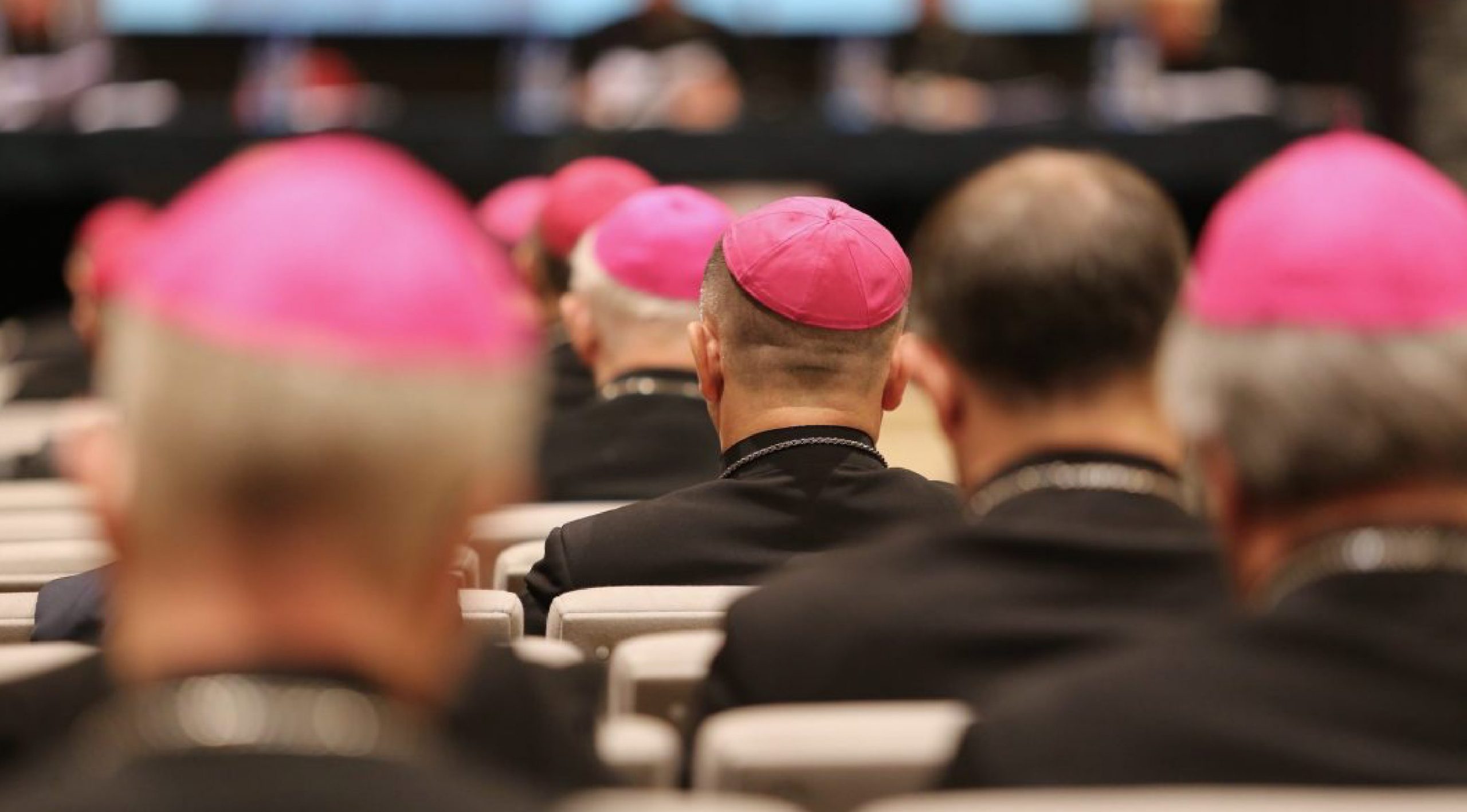
(ZENIT News / Warsaw, 03.07.2026).- A change in church governance took effect in Poland on March 1, marking one of the first concrete national implementations of Pope Francis’ reform of the Catholic Church’s penal law. Under the new rules, priests and church workers who violate ecclesiastical law may now face financial sanctions—sometimes amounting to tens of thousands of dollars.
The measure, promulgated by the Polish Episcopal Conference, is not a new invention of the country’s bishops but rather the practical application of a broader reform enacted in Rome in 2021, when Pope Francis revised Book VI of the Code of Canon Law, the section that regulates criminal offenses and penalties within the Catholic Church.
The updated legislation reintroduced provisions that had once existed in the Church’s earlier legal framework but had disappeared after the Second Vatican Council. In particular, the reform restored the possibility of imposing monetary penalties as part of what canon law calls “expiatory penalties,” a category of punishment intended to repair injustice and address scandal rather than merely correct the offender.
For decades, Catholic penal practice had emphasized so-called “medicinal penalties,” measures designed primarily to encourage repentance or reform. The revised framework acknowledges that certain violations may require sanctions that are explicitly punitive in order to restore the moral order within the Church community.
In practical terms, the Polish decree establishes how those penalties will function within the country’s legal and economic context.
The fines are calculated in relation to the national minimum wage. Currently, Poland’s gross monthly minimum salary stands at 4,806 zlotys—roughly 1,300 U.S. dollars for a full-time worker. Canonical fines must fall between half that amount and twenty times the minimum wage.
That formula sets the minimum penalty at 2,403 zlotys (around 650 dollars) and the maximum at 96,120 zlotys, which is close to 25,900 dollars.
The sanctions may be applied in a range of cases. According to the decree, they could be imposed for offenses such as disobedience to ecclesiastical authority, the misappropriation of church property, or acts of corruption such as bribery.
The authority imposing the penalty—either a diocesan bishop or a church tribunal—also determines where the money will go. In some situations, it may be directed toward charitable or ecclesial institutions.
In recent years, for example, bishops who were found to have mishandled abuse cases were asked by Vatican authorities to make financial contributions to the St. Joseph Foundation, an organization established by the Polish bishops in 2019 to assist victims of sexual abuse within the Church. Other penalties might be paid to Caritas or similar Catholic charities.
At the same time, the decree contains a safeguard designed to prevent financial sanctions from pushing a cleric or church employee into poverty.
If the penalty involves withholding ecclesiastical remuneration—another option provided by the updated canon law—it cannot reduce a person’s income below 3,605 zlotys per month, approximately 970 dollars. Church authorities must therefore balance the punitive dimension of the sanction with the obligation to ensure a dignified livelihood.
The rules governing these calculations were approved during a plenary assembly of the Polish bishops in Gdańsk in October 2025. Before taking effect, however, the decree required confirmation from the Vatican. That recognition, known in canon law as recognitio, was granted by the Dicastery for Bishops on January 26, 2026.
Canonists note that such local adaptations are not optional but expected.
Father Piotr Majer, a professor of canon law at the Pontifical University of John Paul II in Kraków, explained that episcopal conferences around the world must translate the universal norms of canon law into systems that reflect their own legal and economic circumstances.
“It is not the Polish episcopate that invented financial penalties,” Majer observed in comments to the Catholic news agency KAI. “They were introduced by Pope Francis. The bishops have simply adapted them to Polish realities.”
The purpose of such sanctions, he added, is twofold. They impose a tangible burden on the offender while also helping to restore justice within the Church community.
“A fine is not compensation for the victim,” Majer explained. “Restitution should occur independently of the penalty. Rather, the fine is a burden placed on the offender as a consequence of the wrongdoing.”
Yet the new system also highlights a practical distinction between clergy and lay employees of the Church.
In theory, financial penalties can be imposed on both groups. In practice, however, enforcing such sanctions against laypeople could prove extremely difficult. Civil courts in Poland are not bound by canon law, and a lay employee sanctioned by a church authority could potentially challenge the decision under labor law.
For that reason, Majer suggested that ecclesiastical courts would likely resort to other forms of discipline if dealing with a lay worker.
Clergy, on the other hand, fall directly under the Church’s internal jurisdiction. As a result, financial penalties imposed on priests or bishops can be effectively enforced through ecclesiastical authority.
The introduction of these measures reflects a broader shift within the Catholic Church toward more structured accountability mechanisms. The 2021 reform of penal law was widely interpreted as an attempt to ensure that church authorities apply sanctions more consistently—particularly in the wake of abuse scandals that exposed failures in disciplinary procedures.
By linking financial penalties to national economic standards and formalizing their application, the Polish bishops have created one of the clearest examples so far of how those reforms are being translated from the pages of canon law into everyday governance within the Church.
Thank you for reading our content. If you would like to receive ZENIT’s daily e-mail news, you can subscribe for free through this link.

Publicaciones relacionadas:
 Kazakhstan: parliament votes on law simplifying permanent residence for Catholic priests
 The Chinese capital has a new coadjutor bishop authorized by the Pope… and the government…
 Clergy Arrests, ICE Raids, and a City on Edge as Minnesota’s Churches Confront America’s Immigration Crackdown
 Young Hebrew-speaking Catholics aim to build a culture of respect and dialogue between communities
